
Sourcing horse ranch fence panels in bulk means weighing more than just price per panel. In twelve years of working with agricultural fencing projects, I have seen too many installations where low-cost panels failed within two seasons because of inadequate corrosion protection or substandard structural design. A horse fence must absorb impact, resist weathering, and maintain structural integrity for decades. This guide breaks down the engineering factors that distinguish a reliable wholesale horse fence panel from a short-term expense, covering material selection, certification-critical design details, coating systems, and the logistical realities of MOQ and factory-direct ordering.
What Specifications Matter Most in Horse Ranch Fence Panels
Panel height, rail configuration, and post dimensions form the foundation of any equine fencing system. For adult horses, a finished panel height of 54 to 60 inches is standard, while pony paddocks may use 48-inch panels. More important is the rail count: three-rail designs are adequate for calm stock, but four-rail panels provide better containment for young or high-energy horses. Vertical picket spacing must stay under 4 inches to prevent a hoof from slipping through.
Material gauge directly determines impact resistance. Aluminum panels typically use 6063-T5 alloy profiles with wall thicknesses between 2.0 and 3.0 mm for the top and bottom rails. Steel panels, often fabricated from Q235 steel tube, should carry a minimum wall thickness of 1.5 mm after galvanizing. Round or square post sections of 60 mm or larger anchor the assembly. A properly engineered panel uses connecting brackets that allow thermal expansion without loosening, a detail often overlooked in price-driven sourcing.
Our engineering team also evaluates deflection under lateral load. A well-designed 2.4-meter panel, when fixed to two posts, should exhibit less than 20 mm of permanent deformation when a concentrated 200 kg force is applied at mid-span. Ask your manufacturer for a structural test report rather than assuming a visual inspection confirms strength. These numbers are not theoretical; they come from ASTM E564 static load protocols applied to fencing samples.
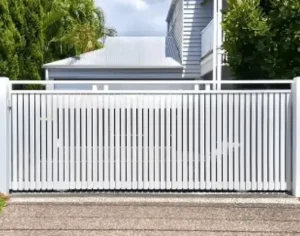
Steel vs. Aluminum: Selecting the Best Material for Horse Fencing
The choice between steel and aluminum is rarely a tie when the project’s environmental exposure and long-term maintenance expectations are clear. Both materials have a place, but their cost and performance profiles flip dramatically depending on the specific use case.
| Factor | Aluminum (6063-T5 Alloy) | Galvanized Steel (Q235) |
|---|---|---|
| Weight | Approximately one-third that of steel; easier to ship and install | Heavy; requires more robust post installation |
| Corrosion Resistance | Natural oxide layer resists rust; performs well in coastal/humid zones | Relies entirely on zinc coating; rusts if coating is scratched |
| Tensile Strength | 150–180 MPa | 375–500 MPa |
| Impact Toughness | Moderate; dents under high-energy strike but rarely cracks | Higher; deforms less under similar impact |
| Lifespan to First Maintenance | 15–20 years with proper powder coat | 8–12 years before recoating may be necessary, depending on environment |
| Relative Material Cost | Higher per kilogram | Lower per kilogram; however, freight cost may offset savings |
For coastal ranches where salt mist is a daily reality, I strongly recommend aluminum. The absence of a sacrificial zinc layer means no coating breach becomes a rust initiation point. In contrast, steel panels in these environments demand regular inspection and touch-up. Aluminum’s lighter weight also reduces shipping cost per unit, a factor that often surprises buyers during container consolidation.
Steel remains a practical choice for high-impact applications, such as bull enclosures adjacent to horse paddocks, where the extra stiffness is required. It also suits projects where initial budget constraints dominate and the ranch is located inland with low humidity. I have seen properly hot-dip galvanized steel horse fencing survive a decade in arid climates with minimal attention.
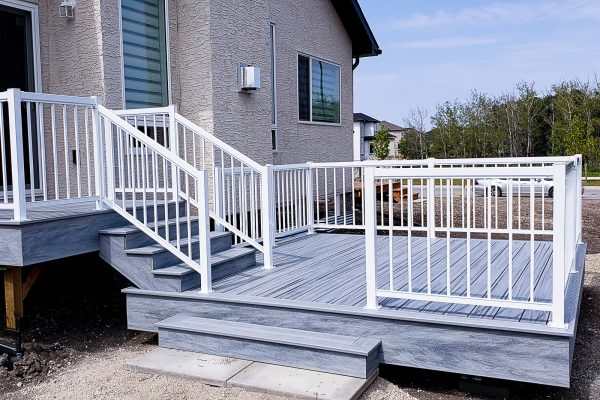
If your site sits near the ocean or experiences heavy seasonal rainfall, it is worth confirming the specific salt spray test hours (ASTM B117) of the powder coating system before finalizing your bill of materials. For ranch-scale decisions where these variables intersect, feel free to reach us at sales01@yulongkeji-ch.com with your location and panel length requirements.
Structural Design Features That Protect Horses from Injury
Material selection matters, but design geometry is what actually keeps horses from getting hurt. The most common injury mechanism I see is a hoof or leg caught between pickets when the gap exceeds 4 inches. That number is not an industry suggestion; it is a consensus derived from equine anatomy and embedded in ASTM F2957 for horse fencing systems.
Beyond spacing, the physical form of the rails matters. Top and bottom rails should have a continuous, radiused surface. Sharp-cornered extrusions, common in some low-cost industrial fencing repurposed for animals, create cut and abrasion hazards when a horse rubs against them. All fasteners should be recessed or capped. I have visited sites where exposed bolt heads caused lacerations, and the repair cost far exceeded the savings on the panel.
A critical and less-discussed factor is the bottom rail clearance. The lowest horizontal rail should be set 150 to 200 mm above grade. This gap allows horses to rise from a lying position without trapping a leg, and it prevents the rail from being buried in mud or manure, which accelerates corrosion from trapped moisture. Our engineering team also designs welded panel assemblies with full-perimeter welds at the rail-to-picket joints to maintain structural integrity under repeated lateral pressure.
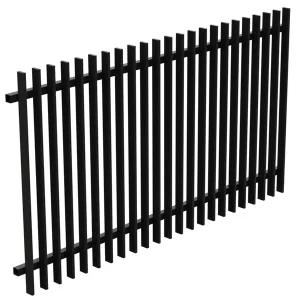
The Role of Surface Treatment in Long-Term Durability
The best alloy and the smartest geometry count for little if the coating system fails. Most quality horse fence panels rely on thermosetting powder coatings, specifically TGIC polyester or polyurethane, applied to a dry film thickness of 60 to 80 microns. The pretreatment sequence—alkaline degreasing, rinsing, and chromate or zirconium conversion coating—determines adhesion. I have audited coating lines where pretreatment reduction saved a few Yuan per panel but resulted in coating delamination within eighteen months of outdoor exposure.
For galvanized steel fence panels, the zinc layer is the first line of defense. A minimum hot-dip galvanizing coating weight of 120 g/m² (per ISO 1461) provides adequate protection for most agricultural settings, though coastal environments benefit from 200 g/m² or a duplex system of galvanizing plus powder coat. The zinc corrodes sacrificially, so any scratch that exposes base steel to the bare galvanized layer will still see rust sooner than an aluminum equivalent. Regular inspection of post-embedded areas—where moisture collects—is a maintenance step I always emphasize to ranch managers.
UV resistance is equally important for color retention. Powder coatings without UV stabilizers will chalk and fade within three to five years, turning a black fence grey and a white fence chalky. Ensure your supplier’s powder specification includes accelerated weathering test data, such as QUV-B exposure for 1000 hours with minimal gloss loss.
How to Navigate MOQ, Pricing, and Wholesale Ordering
One misconception I encounter frequently is the assumption that a lower MOQ always saves money. For custom horse fence panels, a typical minimum order quantity ranges from 100 to 200 panels per size and color combination. Below that threshold, the fixed costs of setup and color changeovers dominate. Buying a full container load of a single specification reduces per-unit cost dramatically and simplifies logistics.
Pricing variables include panel height, rail count, alloy grade, and coating specification. A 4-rail 6063-T5 aluminum panel with a 60-micron TGIC polyester coating will cost more than a 3-rail version, not only in material but also in production time. Steel panels, when galvanized and powder coated, follow a similar cost stack. Our factory-direct pricing model eliminates the distributor markup; our MOQ is set by production efficiency rather than warehousing constraints.
Lead times for standard-configuration panels typically run 20 to 35 working days from order confirmation. Custom dimensions or non-stock colors add 7 to 14 days. We load panels onto flat pallets and wrap them in weather-resistant film before container stuffing to minimize transit damage. Understanding your receiving yard’s unloading capability helps us specify the right packaging. I advise importers to clarify Incoterms early: FOB Shanghai works for clients with freight forwarders, while CIF destination ports suit those who prefer a single shipping rate.
Ranch owners who have dealt with rusted-through panels or bent rails know that true cost includes replacement labor and risk to horses. Choosing a manufacturer who documents material sourcing and coating performance moves your investment from a calculated risk to a verifiable decision. To begin your order, send your panel specifications and target quantity to sales01@yulongkeji-ch.com or call +8619086315193 for a factory-direct quotation and lead time estimate.
Common Questions About Buying Horse Ranch Fence Panels Wholesale
What is the typical MOQ for custom horse fence panels?
For panel designs tailored to a specific ranch layout, the standard MOQ is 100 to 200 units per size and color. Standardized panels, such as a 2.4-meter 4-rail aluminum configuration in black, can sometimes start at 50 panels. Because of the fixed setup costs, consolidating your full linear footage into one order often yields a better per-unit price than splitting into smaller batches.
I have seen suppliers advertise “certified” panels. Which certifications actually matter?
Meaningful certifications include material mill test reports (MTRs) for aluminum or steel confirming alloy composition and tensile strength, coating thickness measurement reports, and salt spray test results per ASTM B117 or ISO 9227. For structural performance, ask whether panels have been tested to ASTM E564 for static load resistance. A supplier who cannot produce third-party test documentation is selling a visual product, not an engineered one.
Is a four-rail fence panel necessary, or will a three-rail design work for my horses?
It depends on horse size and temperament. For calm geldings and mature mares, three rails may be sufficient if the top rail sits at 54 inches and the bottom rail clearance is correct. For stallions, foals, or mixed stock, a four-rail panel with closer vertical spacing reduces the risk of leg-through injury. I recommend four rails for any breeding operation or high-traffic paddock where horses exert more lateral pressure.
How do I prevent the posts from loosening in soft soil?
Post integrity depends more on the installation foundation than the fence panel itself. Use concrete footings with a minimum depth of 600 mm and a 200 mm diameter for corner and gate posts. Line posts can use driven anchors in well-compacted soil, but in sandy or wet ground, concrete-backfill is non-negotiable. Some of the worst panel failures I have investigated started with posts leaning after a single rainy season because the foundation was skimped on.
Can I expect color consistency across multiple containers of fence panels ordered in different batches?
Color variation between production batches is a known challenge in powder coating. Reputable manufacturers control this by reordering powder from the same lot number and maintaining strict oven temperature profiles. Minor shade differences are technically unavoidable under direct sunlight; however, a well-managed quality system keeps the variation within an acceptable Delta E of 1.0 measured spectrophotometrically. When placing phased orders, specify that all panels must come from a single powder lot. Share your project phasing plan with us, and we can reserve material stock to ensure consistency across shipments—reach our team at sales01@yulongkeji-ch.com with your timeline and color code.
If you’re interested, check out these related articles:
Steel vs Aluminum Fencing: Budget, Durability, and Value
Aluminum vs Wood Fence: Cost, Care, and Lifespan Compared
Aluminum Perimeter Fencing for Solar Farms: Key Specifications and Global Sourcing
Stainless Steel vs Aluminum Railing: Outdoor Project Comparison