
Deck and balcony buyers face a specification choice that changes the entire guard assembly: horizontal vs vertical cable railing can look similar in a rendering and perform very differently once wind, code review, and installation sequencing come into play. I have worked on both orientations across rooftop terraces, coastal decks, and residential balconies, and I have seen too many orders stall because the orientation was treated as a styling decision. Frame stiffness, post spacing, and tensioning access all shift with cable direction. My recommendation is to lock the structural load path first, then choose the orientation that serves the view and the occupant. This article separates those engineering differences from the visual preference.
How Does Horizontal vs Vertical Cable Railing Change the System Design?
Horizontal cable railing runs continuous cables through holes or guides in intermediate posts, with tensioners set at each end post. The cables span like a light tensile structure, and the end posts carry the accumulated pull. Vertical cable railing places the cables or rods between a top rail and a bottom rail, with fittings anchored at both ends. The vertical elements transfer little continuous tension into the posts; the top and bottom rails carry most of the deflection and load. This distinction drives almost every downstream specification. Buyers cannot simply substitute one orientation into the same post layout and assume the hardware quantities will match.
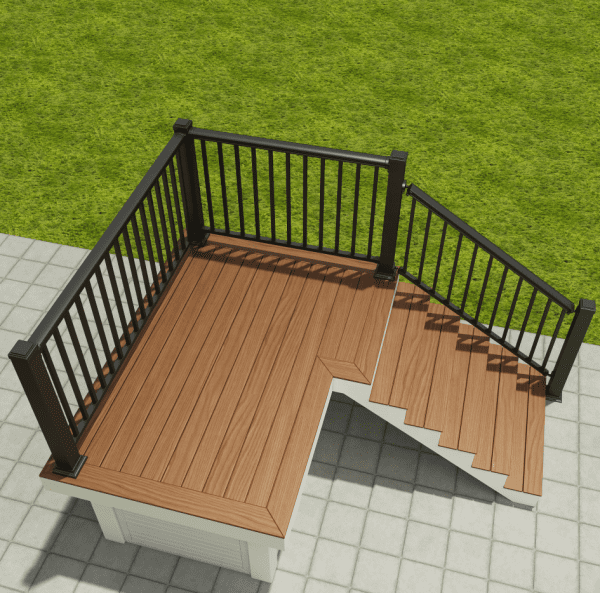
| Factor | Horizontal cable railing | Vertical cable railing |
| End posts | Carry continuous cable tension and pull-in load | Carry guard load but less accumulated tension |
| Intermediate posts | Require aligned holes for cable passes | Usually not penetrated; the rails carry vertical element loads |
| View and rhythm | Long horizontal sight lines and open view corridors | Closer vertical rhythm, stronger visual boundary |
| Maintenance | Retensioning and full cable replacement | Individual vertical element replacement |
| Common fit | Wide decks, coastal view walls, rooftop terraces | Stairs, balconies, child safety areas |
In horizontal systems, the number of cable penetrations and the need for precise hole alignment make intermediate post placement less forgiving. In vertical systems, cleaner sight lines depend on cable spacing and rail deflection, not on continuous cable routing through posts. This is why manufacturers should be asked for the actual hardware layout, not just a per-foot price.
Which Building Code Requirements Apply to Each Cable Railing Orientation?
The 2021 International Building Code (IBC) and the 2021 International Residential Code (IRC) treat both orientations as guard infill. The infill openings must still resist passage of a 4 inch sphere after load is applied, and guard height requirements remain the same: 36 inches for many residential applications, 42 inches for commercial and multifamily guards. The difference is where the load is resisted. Horizontal cables can deflect sideways between posts, so inspectors often check that cable tension and post stiffness keep the opening from enlarging under a concentrated load of 200 pounds. Vertical cables can bow between the top and bottom rails, so the rails and their connections to the posts become the main inspection point.
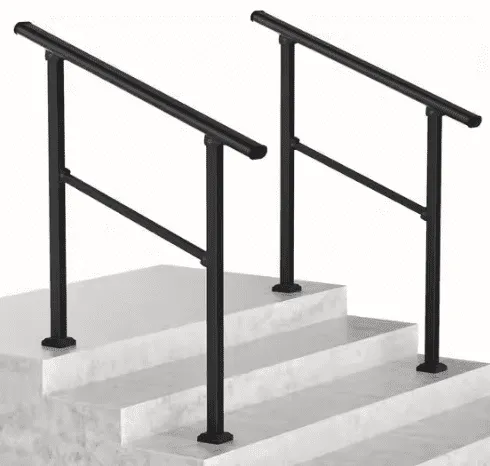
For buyers, the code path should not be assumed. A horizontal cable system on a rooftop exposed to wind may need closer post spacing or intermediate stiffeners than a vertical cable guard on the same deck. Local amendments sometimes impose a tighter sphere test for horizontal cables because cable deflection can be more difficult to verify after installation. I have found that submitting a complete hardware schedule and tensioning sequence with the permit package reduces plan review questions more than adding extra cable rows at random.
How Does Cable Railing Orientation Affect Wind Load, Tensioning, and Long-Term Performance?
Wind load and maintenance behavior follow the load path. A horizontal cable system under wind load acts like a series of small cables loaded across their length between posts. The end posts take repeated pull-in force, and that creep can loosen tensioners over the first year. Vertical cables do not accumulate the same end pull, but the top rail becomes a spanning beam. If the top rail is too light, it flexes and the vertical elements lose their visual alignment without actually failing.
On a coastal rooftop terrace our team detailed, horizontal cable runs held alignment better when single long spans were divided into shorter runs with fixed intermediate posts. The exposed outer corner kept losing cable tension until we changed the end post anchoring from a surface mounted plate to a core drilled and grouted connection. The cable tension then stayed within the adjustment range through a winter storm season. This kind of site detail rarely appears in a product photo, but it changes whether the guard remains code compliant after installation.
Vertical cable railing is not maintenance free, but it is usually simpler to repair. A damaged vertical cable can be released and replaced without retensioning an entire run. In horizontal systems, one damaged cable often requires releasing tension from the full span, and corrosion inside the post holes can make that replacement slow. Marine or pool environments therefore push buyers toward materials first. T316 stainless steel cable and hardware hold up better in salt spray than 304, and the post material must match the exposure. Aluminum posts in chloride rich air need a premium finish or isolation details to avoid galvanic corrosion at the fittings.
What Should Buyers Confirm Before Ordering Horizontal or Vertical Cable Railing?
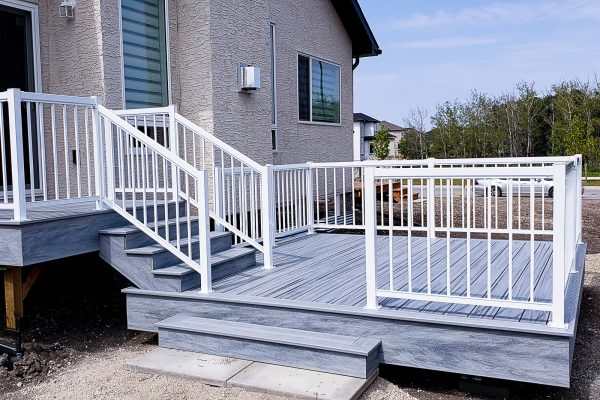
A horizontal vs vertical cable railing order should begin with the frame, not the cable. The bill of materials should start with guard height, local code edition, post material and spacing, top rail profile, bottom rail form, end post anchorage, and the finish system. Then the cable package can be selected: strand construction such as 1×19 for smooth appearance and 7×7 for tighter bends on stair transitions, cable diameter, swage or mechanical fittings, and the required take up length at each tensioner. Mixing hardware sets from different sources often creates fit problems at the transition posts and stair return points.
Before a buyer releases an order, I check these five points in sequence:
- Confirm the guard height and load requirement from the project code, not a generic drawing note.
- Verify whether the deck structure can take the end post forces for horizontal cable runs.
- Select cable diameter, strand, and finish for the actual exposure.
- Confirm the top rail stiffness for vertical cable runs and the hole alignment for horizontal passes.
- Match the tensioner thread, end fitting, and protective sleeve with the specified post wall thickness.
If your plan mixes level runs with stair transitions or uses nonstandard post spacing, confirm the cable take up, bracket angles, and end post reinforcement before you finalize the bill of materials. Send your deck plan and local code version to sales01@yulongkeji-ch.com.
How Do You Finalize a Horizontal vs Vertical Cable Railing Order?
Orientation decisions usually stall because the frame design has not been locked against the deck structure. Buyers do not want to order a complete cable package and then discover the end posts are too light, the holes do not align, or the local inspector rejects the deflection path. Hubei Yulong’s engineering team reviews the deck plan, post layout, exposure condition, and applicable code edition at the same time, so the quote matches the installation reality instead of a catalog photo. Send your part list, orientation choice, and project drawings to sales01@yulongkeji-ch.com or call +8619086315193.
What Else Should Buyers Check Before Ordering Cable Railing?
Do horizontal and vertical cable railings meet the same safety codes?
Yes, both orientations must meet the same guard performance requirements in the 2021 IBC and IRC. The infill opening test does not change because the cable changes direction, but the structural path does. A horizontal cable guard resists the test load through cable tension and post stiffness, while a vertical cable guard relies more directly on the top and bottom rails. Both can pass when the frame and hardware are selected as a system. The risk appears when buyers pair one manufacturer’s cable set with a locally fabricated frame and assume the code path has already been handled.
Which orientation is easier to keep clean in salt or pool air?
Many buyers assume vertical cables catch less airborne salt because they have less horizontal surface, but the bigger factors are finish, alloy, and drainage details. Horizontal cables can keep the view line clean, yet they create a long lower chord where moisture and cleaning agents can sit. Vertical cables drain more directly through the bottom rail and make inspection between elements faster. In pool cages and coastal edges, we prefer vertical runs with a sloped bottom rail detail and proper weep holes when the frame can carry the added machining cost. Horizontal runs work well too, but the tensioner covers and post penetrations need a sealing schedule that the installer must actually follow.
Can a project switch from horizontal to vertical cable railing after fabrication starts?
It depends on where the frame design stands. If the top and bottom rails are already formed, vertical cable railing usually only requires a revised cable spacing, fittings, and anchor points. If the intermediate posts were drilled for horizontal cable runs, switching becomes expensive because those holes cannot be filled without visible patches. If no posts have been fabricated, the change is mostly a drawing revision. The safest point to decide is before the post drilling and hole alignment are released to production. Changing earlier costs very little; changing later can turn a clean frame into a rework risk. Send your deck dimensions, post type, and local code edition to sales01@yulongkeji-ch.com and we will confirm the most practical orientation before you commit.
If you’re interested, check out these related articles:
Hot-Dip Galvanized vs Powder-Coated Fence: Performance & Value
Steel Fence Coating: Epoxy, Polyester, PVC for Longevity
Aluminum Perimeter Fencing for Solar Farms: Key Specifications and Global Sourcing
Wholesale Aluminum Fence Panels: MOQ, Pricing, and Lead Time Strategies