
Hot-Dip Galvanized vs. Powder-Coated Fence: Which Treatment Delivers Better Long-Term Value?
Steel fencing fails for predictable reasons. Moisture finds its way through compromised coatings. Salt air accelerates what would otherwise take decades. The surface treatment you choose determines whether your fence holds up for five years or fifty. Hot-dip galvanizing and powder coating represent fundamentally different approaches to this problem—one relies on sacrificial chemistry, the other on polymer barriers. Getting this decision right matters more than most project specs suggest, particularly when the installation faces aggressive environmental conditions or needs to balance protection with visual requirements.
How These Two Surface Treatments Actually Work
The performance gap between hot-dip galvanized and powder-coated fences traces back to their application methods and protective mechanisms. These aren’t interchangeable processes with cosmetic differences. They protect steel through entirely distinct pathways, which explains why each excels in specific conditions while struggling in others.
Hot-Dip Galvanizing Creates a Metallurgical Bond
The hot-dip galvanizing process submerges fabricated steel into molten zinc heated to roughly 450°C. What happens next isn’t just coating—it’s a metallurgical reaction. Zinc-iron alloy layers form at the interface, topped by an outer layer of pure zinc. This layered structure delivers corrosion resistance through two mechanisms working simultaneously: the zinc creates a physical barrier while also providing sacrificial protection to the underlying steel. If the surface gets scratched or nicked, the zinc corrodes preferentially instead of the steel. The coating doesn’t just sit on top of the metal; it becomes part of it. Zinc coating thickness typically ranges from 45 to 85 microns depending on steel thickness and immersion time, directly influencing how long the protection lasts.
Powder Coating Builds a Polymer Shield
Powder coating takes a completely different approach. Fine polymer resins receive an electrostatic charge and get sprayed onto prepared steel surfaces. The charged particles cling to the grounded metal, then the assembly moves into a curing oven. Heat melts the powder into a continuous, smooth polymer layer that bonds mechanically to the substrate. This process delivers excellent UV resistance and chip resistance, along with the color flexibility that makes powder coating popular for architectural applications. The absence of volatile organic compounds during application also makes it a cleaner process from an environmental standpoint. Where galvanizing offers chemistry-based protection, powder coating provides a tough physical barrier—effective until that barrier gets breached.
Real-World Performance Under Environmental Stress
Lab specifications tell part of the story. Field performance tells the rest. Both hot-dip galvanized and powder-coated fences extend steel fence lifespan significantly compared to untreated material, but they respond differently to specific environmental challenges.
| Feature | Hot-Dip Galvanized Fence | Powder-Coated Fence |
|---|---|---|
| Corrosion Resistance | Superior, especially in harsh environments; sacrificial protection. | Excellent barrier protection; susceptible if scratched. |
| Abrasion Resistance | Good, due to hard zinc-iron alloy layers. | Very good, polymer layer is tough and flexible. |
| UV Resistance | Inherently resistant, no degradation from sunlight. | Excellent, formulated for UV stability. |
| Weather Durability | Exceptional in varied climates, low maintenance requirements. | Strong, but performance depends on coating quality. |
| Self-Cleaning | Good, zinc patina forms and washes away dirt. | Moderate, smooth surface can be cleaned easily. |
Why Galvanized Steel Outperforms in Coastal Installations
Hot-dip galvanized steel fence handles marine environments and coastal areas better than powder coating alone. Salt air and persistent moisture create exactly the conditions where sacrificial protection proves its worth. The galvanic corrosion mechanism means zinc corrodes preferentially, protecting the underlying steel even when the surface sustains minor damage. This makes galvanized fences the more reliable choice for coastal installations where salt spray resistance determines whether a fence lasts a decade or three decades.
What the Numbers Say About Total Cost of Ownership
Initial price tags mislead. A fence that costs less upfront but needs replacement in fifteen years often costs more than a premium installation that lasts forty. Maintenance requirements, repair complexity, and replacement cycles all factor into the real economic picture.
| Cost Factor | Hot-Dip Galvanized Fence | Powder-Coated Fence |
|---|---|---|
| Initial Cost | Moderate to High, depending on zinc thickness and steel complexity. | Moderate, can vary widely based on powder type and application. |
| Maintenance Costs | Very Low, typically requires minimal upkeep for decades. | Low to Moderate, occasional cleaning or touch-ups may be needed. |
| Repair Options | Spot galvanizing or zinc-rich paints for minor damage. | Touch-up paints for scratches; re-coating for extensive damage. |
| Expected Lifespan | 50+ years in rural, 20-25 years in industrial/coastal. | 15-20 years, depending on environment and quality. |
| Lifecycle Value | High, due to long service life and minimal maintenance. | Good, offers balance of aesthetics and protection at reasonable cost. |
Repairing Powder Coat Damage Without Full Replacement
Powder-coated fences can be repaired when scratched, though results vary with damage severity. Minor scratches respond well to touch-up paint formulated to match the original powder coat color and sheen. Deeper damage requires more preparation—thorough cleaning, sanding to create adhesion, then applying a liquid repair coating. These repairs restore both appearance and protective function, though they rarely achieve the seamless quality of factory-applied finishes. For isolated damage, touch-up works fine. Widespread deterioration typically warrants professional re-coating of affected sections.
When Appearance Drives the Decision
Functional requirements and visual expectations often pull in different directions. Both hot-dip galvanized and powder-coated fences serve legitimate purposes, but they occupy different aesthetic territories.
Hot-dip galvanized fences present a utilitarian metallic gray that develops a natural patina over time. This raw, industrial appearance works well for utility installations, industrial parks, and applications where durability matters more than decoration. The finish signals strength and reliability rather than design sophistication. Color customization isn’t really an option—you get zinc gray, and it weathers into a matte finish over years of exposure.
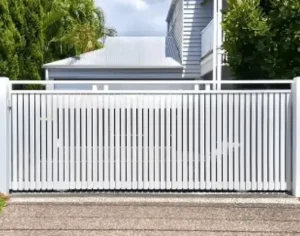
Powder-coated fences open up extensive color choices and finish options, from matte to high-gloss. This flexibility allows integration with architectural design requirements and environmental beautification goals. Residential communities, commercial developments, and urban projects where visual harmony matters tend to favor powder coating for this reason. An Aluminum Slat Fence or Aluminum Privacy Screen Panels can be powder-coated to match specific design palettes. Products like Residential Iron Fence and Commercial Metal Fence benefit substantially from powder coating’s aesthetic range.
The Lifespan Gap Between These Two Approaches
Environmental conditions determine actual service life more than any specification sheet. Hot-dip galvanized fences commonly achieve 25 to 50 years in less aggressive environments, with some installations exceeding that range in rural or dry climates. Powder-coated fences typically deliver 15 to 20 years of service, though high-quality coatings in mild conditions can push beyond that. The durability comparison comes down to this: galvanizing offers longer-term protection through chemistry, while powder coating provides solid defense with greater aesthetic flexibility over a somewhat shorter period.
Matching Treatment to Project Requirements
The right choice depends on what you’re actually trying to accomplish. Environmental exposure, maintenance capacity, aesthetic requirements, and budget constraints all weigh into the decision.
Projects facing harsh environmental conditions—coastal exposure, industrial atmospheres, or locations where maintenance access is limited—generally favor hot-dip galvanizing. The sacrificial protection mechanism handles abuse that would compromise a powder coat barrier. When aesthetic customization, color matching, and smooth finishes take priority, powder coating delivers what galvanizing cannot.
Many installations benefit from combining both treatments in a duplex system. Hot-dip galvanizing goes on first, providing the corrosion-resistant foundation. Powder coating follows, adding color, UV protection, and enhanced appearance. This layered approach captures the strengths of both technologies—the chemistry-based protection of zinc plus the barrier and aesthetic properties of polymer coating. Duplex systems cost more initially but often prove economical over extended service periods.
Frequently Asked Questions About Fence Treatments
Is hot-dip galvanized steel fence better for coastal regions?
Hot-dip galvanized steel fence handles coastal conditions more reliably than powder coating alone. The zinc coating provides superior salt spray resistance through galvanic corrosion protection—the zinc sacrifices itself to protect the steel substrate. This mechanism continues working even when the surface sustains minor damage, making galvanized fences the stronger choice for marine environments where salt exposure is constant.
Can powder-coated fences be repaired if scratched?
Minor scratches on powder-coated fences respond well to touch-up paints formulated for powder coat repair. These products restore both appearance and protective function for isolated damage. More extensive deterioration requires professional attention—thorough surface preparation followed by re-coating of affected sections. Repairs work, but they rarely match the seamless quality of original factory application.
What is the typical lifespan difference between hot-dip galvanized and powder-coated fences?
Hot-dip galvanized fences typically deliver 25 to 50 years of service depending on environmental conditions, with rural installations often exceeding that range. Powder-coated fences generally last 15 to 20 years, though quality coatings in mild environments can extend beyond that. Galvanizing provides longer-term protection, particularly in aggressive conditions, while powder coating offers solid durability with aesthetic flexibility.
Are there eco-friendly considerations for either hot-dip galvanizing or powder coating?
Both processes have environmental advantages. Hot-dip galvanizing uses recyclable zinc and extends steel service life substantially, reducing replacement frequency and associated resource consumption. Powder coating produces minimal volatile organic compounds during application and generates less waste than liquid painting processes. Neither treatment is inherently superior from an environmental standpoint—the sustainability calculation depends on application context and service life expectations.
How does Hubei Yulong ensure the quality and durability of its treated steel fences?
Hubei Yulong maintains quality through automated production lines and controlled surface treatment processes. Testing protocols verify coating thickness, adhesion, and corrosion resistance at multiple production stages. The aluminum and zinc steel fencing systems undergo evaluation for weather durability and long-term performance before shipping. This systematic approach ensures that specified protection levels actually get delivered to project sites.
Partner with Hubei Yulong for Your Fencing Needs
For guidance on selecting the right fencing solution for your project requirements, or to explore Hubei Yulong’s range of aluminum and zinc steel fencing systems, contact our technical team. The right surface treatment decision depends on your specific conditions—environment, aesthetics, budget, and expected service life all factor in.
Email: sales01@yulongkeji-ch.com
Phone: +8619086315193
If you’re interested, check out these related articles:
YLOONG Solutions: Engineered for Security, Designed for Performance