
Cable railing systems succeed or fail long before the first cable is tensioned. The decisions that matter most are post stiffness, hardware grade, cable construction, and code geometry, not the view through the infill. For decks, stairs, pools, and waterfront homes, I see buyers focus on style while the real outcome is set by marine grade stainless steel, accurate spacing, and a layout that resists deflection under load. That means working from the posts inward rather than treating the cables as a thin decorative layer.
Cable Railing Systems Resolve Visibility and Safety Conflicts
The open sightline is the main reason owners choose cable infill over vertical balusters or glass. Horizontal runs hold the view while preserving fall protection, but that open feel depends on spacing discipline. A 4-inch sphere cannot pass through the infill, and that is the controlling requirement on guardrail openings in most U.S. code jurisdictions. For cable infill, cable centers typically land between 3 and 3.5 inches on the vertical, with allowance for cable deflection and post movement under load.
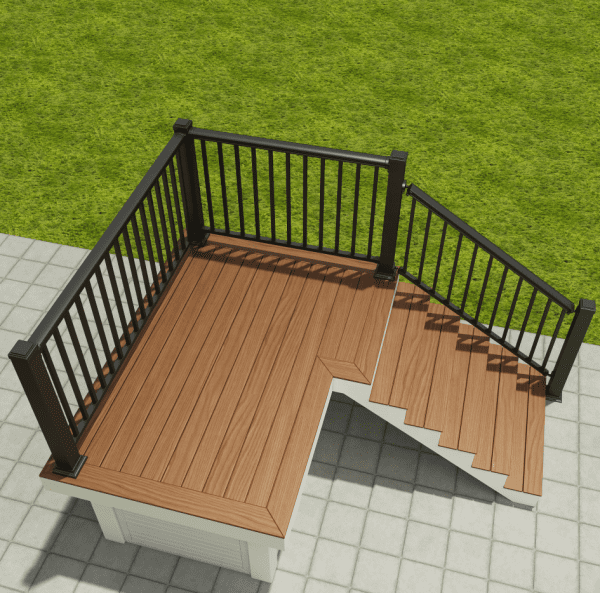
Cable does not act as the primary load path. Posts and top rails carry the code-required loads. Buyers sometimes assume more cable runs make the system stronger. They do not. Additional closely spaced cables improve safety only when they keep the opening under the sphere limit, and they add tension load at the end posts.
Deck and Stair Cable Railing Specifications Start With Code Geometry
Guard height, infill opening, and handrail geometry govern deck and stair cable railing layouts before material selection. Residential decks in the United States are commonly designed around a 36-inch guard height, while many commercial and multifamily conditions call for 42 inches. Stair runs add a second layer because guard height is measured vertically from the stair nosing, and the cable plane follows the stair angle.
What Changes From a Deck Guard to a Stair Guard
On a horizontal deck guard, the lines stay level and terminal loads are simpler. On a stair guard, the raked cable plane changes the relationship between post spacing and code height. The top rail should follow the stair slope, and the connection at the first and last post cannot rely on friction alone. This is also where mismatched fittings appear first because the angle forces every component out of its usual plane.
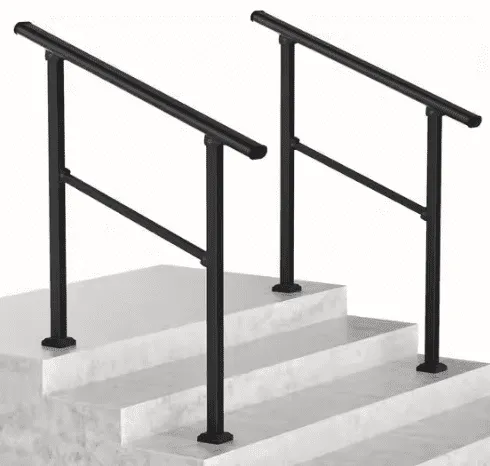
Stair transitions are the most common field failure point. If the top and bottom posts are not aligned to the same rake angle, the cables twist or bind at the intermediates. We specify through-post layouts on angled runs so each cable passes cleanly through the post face, and we keep angle transitions short rather than forcing one cable to wrap around a sharp outside corner.
| Cable construction | Flexibility | Best use |
|---|---|---|
| 1×19 | Low stretch, stiff | Straight deck and level runs |
| 7×7 | Moderate flex | Stair transitions and irregular posts |
| 7×19 | Higher flex | Curved or complex waterfront railings |
Marine Grade Hardware Determines Waterfront Service Life
Coastal air and pool chemicals create chloride exposure that ordinary stainless grades do not resist equally. T316 marine grade stainless steel contains molybdenum, which gives it measurably better pitting resistance than T304 in salt-heavy environments. For cable railing, that specification should extend beyond the wire to swages, tensioners, end fittings, and exposed fasteners. A single T304 fitting can become the first point of corrosion.
Coastal projects also expose aluminum posts to chloride. A quality powder coated aluminum post works well if the coating is intact and cut ends are sealed. Unprotected cut edges are where corrosion starts. For high-exposure sites, we lean toward T316 stainless posts or powder coated aluminum systems with stainless contact hardware rather than mixed metal assemblies.
If your program involves an oceanfront deck, a chlorine pool surround, or a marina edge, it is worth confirming the exact alloy and coating system before finalizing your bill of materials. Send the site exposure, span length, and railing height to sales01@yulongkeji-ch.com for a compatibility check.
Post Spacing and Tensioning Shape Long Term Performance
Post spacing is never only about cost per linear foot. Every intermediate post is a point of lateral stiffening for the tensioned cable assembly. If the post spacing grows, the cables deflect more under the same load, and the top rail may feel flexible even when the cable itself is strong. For 1/8-inch 1×19 T316 cable in straight residential runs, 4-foot post centers are a reliable working baseline. Longer runs should move closer together, not stretch the spacing.
Overtensioning adds little safety and can deform end posts, strip threads on tensioners, or bow a lighter post line out of plane. Undertensioning leaves visible sag and lets a hand move the cables too easily. On straight deck runs we tension 1×19 cable to a modest fraction of its breaking strength, enough to hold a clean line without loading end posts to their limit, and we check every intermediate post after the run is seated.
Where Do Terminal Posts Fail Under Cable Load
Terminal failure appears first at the top of an end post, where the tension force creates a bending moment. If the post core or blocking is undersized, the post rotates inward and the outer cables lose tension. The clearest warning is a visibly leaning terminal after the first full tension pass. We also flag parallel runs that share one end post because those loads add instead of distributing.
Factory Cable Railing Kits Reduce Field Fitting Problems
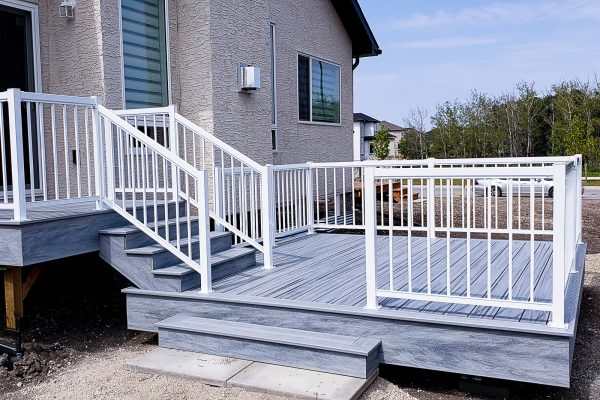
Mixed-source projects repeatedly fail on the same detail: cable diameter, thread pitch, and swage size do not match. A kit assembled from one factory eliminates that issue before the crate leaves the line. Hubei Yulong supplies cable railing systems with matched T316 stainless steel cable, swaged ends, tensioners, and aluminum or stainless steel posts, built to the post layout and code height you confirm on site.
Projects should not stall over hardware mismatches or unclear tensioning instructions. If your deck, stair, or waterfront layout is ready, send your part list, post plan, and cable length to sales01@yulongkeji-ch.com or call +8619086315193. We will confirm stock compatibility, delivery timing, and whether your drawing needs a post size adjustment before you commit.
Buyers Ask These Questions Before Ordering Cable Railing Systems
What cable spacing meets code?
A 4-inch sphere cannot pass through any opening in the guard. For cable railing systems, this usually means vertical cable centers between 3 and 3.5 inches, with the exact spacing set by cable diameter, deflection under load, and local code edition. Some suppliers reduce spacing near stairs or where the guard is higher. I would not accept a quote that only states it meets code without a spacing table tied to the post layout and expected load.
Do I need T316 stainless for a pool or oceanfront railing?
Many buyers assume any stainless steel is salt resistant. T304 can pit in chloride-rich air, especially where fittings trap moisture and salt. T316, and ideally 316L for welded components, contains molybdenum and holds up far better around oceans and pools. The wire alone is not enough. Every tensioner, swage, and exposed fastener should match the same marine grade.
How far apart can cable railing posts be spaced?
It depends on post section, cable diameter, run geometry, and local wind loading. For a straight deck using 1/8-inch 1×19 T316 cable and stiff terminal posts, 4-foot centers are a common working baseline. Angled stair runs, long spans, and high-wind sites usually need closer posts or heavier sections. We adjust spacing after reviewing the post plan rather than treating one number as universal.
What is the most common mistake in cable railing projects?
In the layouts our team reviews, underbuilt end posts cause most rework. The tension load concentrates at terminals and corners, not in the middle of the run. If the end post deflects or rotates, every cable loses line and the guard feels loose no matter how strong the wire is. The fix is a heavier end post, a reinforced core, or an additional structural connection. If your drawing has long uninterrupted runs or multiple corners, send it to sales01@yulongkeji-ch.com and we will confirm the post requirements before you order.
If you’re interested, check out these related articles:
Wrought Iron vs Ornamental Steel Fence: Cost & Alternatives
Aluminum Fencing for Coastal & Humid Environments
Frameless Glass Balustrade: Designs for Stairs, Pools & Balconies
Round Aluminum & Galvanized Steel Fence Posts: Ultimate Guide