
WPC privacy fence panels solve a real problem for garden and patio spaces where you want to block sightlines without the upkeep of wood or the sterile look of pure vinyl. The material is a wood-plastic composite, which means it resists moisture, insect damage, and UV fading in ways that traditional timber simply cannot. But the application matters just as much as the material. The way you anchor a panel in damp garden soil, the wind load it faces on an exposed patio, and the visual integration with existing hardscaping are all factors that determine whether a WPC installation will look sharp for a decade or start showing problems in year two. From an engineering standpoint, the success of a WPC privacy fence in gardens and patios depends on four areas: anchoring method, environmental exposure, structural system, and design intent. This article breaks down those factors so you can specify or install panels correctly, whether you are working with flowerbed soil or a concrete patio slab.
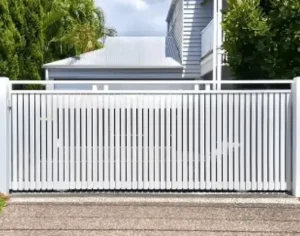
What Makes WPC Privacy Panels Suitable for Outdoor Living Spaces
WPC privacy fence panels combine wood fiber and recycled plastic under heat and pressure, creating a dense board that holds its shape across a wide temperature and humidity range. For gardens and patios, the practical benefit is that the panels do not warp when one side faces damp soil and the other faces full sun. We have seen this stability across multiple installations where solid wood boards would have cupped within the first season.
The panels also carry a Class B fire rating and resist fungal decay, which matters when fence lines run close to compost heaps, mulch beds, or irrigation spray. Most standard panels come in 6ft widths with tongue-and-groove or slat profiles, offering full visual block. For garden use, the material’s density also provides a degree of sound dampening, reducing traffic noise in urban patio settings.
A key specification to confirm is the panel core structure. Hollow-core WPC panels save weight and cost but transmit more sound and may flutter in strong wind. Solid-core panels are heavier and better for patios exposed to consistent crosswinds. I recommend solid-core for any installation where the fence serves as a windbreak or where privacy is the primary function.
Anchoring WPC Panels in Garden Soil Versus Patio Hard Surfaces
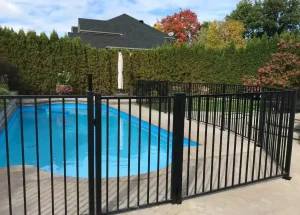
The biggest installation variable between a garden and a patio is the substrate. Garden soil is rarely load-bearing in the way that a concrete pad is. When we design a fence line through a garden, we specify aluminum posts embedded in concrete footings at least 24 inches deep, with gravel drainage at the base. The aluminum post resists the moisture that would eventually corrode a steel post in soil, and it provides a rigid frame that prevents the WPC infill panels from sagging as the ground shifts seasonally.
For patios, the challenge is different. You are anchoring into an existing concrete slab or paver base, which means the post must be surface-mounted with a base plate and expansion bolts. The wind load becomes the dominant force. I have seen installations where the post-to-base connection was under-specified, and within a year the entire fence line leaned under south-facing sun and wind. For patio applications, we use a thicker base plate and four-bolt pattern rather than a two-bolt, and we verify that the slab itself is at least 4 inches thick before specifying anchor depth.
| Factor | Garden Installation | Patio Installation |
|---|---|---|
| Anchoring Method | Aluminum post in concrete pier, 24 in deep | Surface-mount base plate with expansion bolts, 4-bolt pattern |
| Main Challenge | Soil moisture, ground movement | Wind load, bolt pull-out |
| Recommended Post Material | Aluminum (corrosion-resistant in soil) | Aluminum (lightweight for surface loads) |
| Panel Selection | Solid-core for soil-side moisture resistance | Solid-core for windbreak performance |
| Drainage Requirement | Gravel base in footing | Ensure slab slopes away from post base |
How Moisture, Shade, and Plant Contact Affect WPC Panels Over Time
Garden environments create microclimates that most general fence guides overlook. A WPC panel installed behind a dense shrub line or under tree canopy will see less UV exposure but significantly more moisture retention from morning dew and soil evaporation. This is not a problem for the WPC composite itself, but it does affect the hardware. Stainless steel fasteners and bracket systems become essential in high-humidity garden settings because standard galvanized hardware can develop surface rust within two seasons when trapped behind foliage.
The other consideration is thermal expansion. WPC expands and contracts with temperature, and in a garden where one section of the fence runs in full sun and another in deep shade, the panel gaps need to accommodate differential movement. A common installation error is butting panels tightly against the post channel. We leave a 6mm expansion gap inside the post channel on each side, which allows the panel to move without buckling the post or cracking the WPC edges.
Patio installations, particularly those with a southern exposure, face a different thermal challenge: radiative heat from the paving surface. On a summer afternoon, the air temperature at panel level can be 10°F higher than ambient. This accelerates surface expansion and can cause binding if the gap is insufficient. The fix is the same 6mm clearance, but also verifying that the panel color is lighter, as darker WPC profiles absorb more heat and expand more. For sunny patios, greys and light browns perform better than charcoal or black.
If your garden includes climbing plants trained on the fence, use a trellis adapter system rather than attaching plant wires directly to the WPC panel face. The constant moisture and root tendrils can work into surface micro-crevices over time, degrading the appearance.
Design Integration: Matching WPC Panels with Aluminum Post Systems
A WPC panel is only as straight as the post system holding it. In both garden and patio settings, we pair WPC infill with aluminum posts, and for good reason. Aluminum does not rust, it is one-third the weight of steel, and it can be powder-coated to match or contrast the WPC color. The post extrusion incorporates a channel that captures the panel edge with an internal rubber gasket, which seals against moisture and dampens vibration.
For gardens, the post cap design matters. Open-top posts collect rainwater that eventually drips down into the panel channel. A sealed post cap with a slight dome shape directs water away and prevents standing moisture inside the post. On patios, the post aesthetics often matter more because the fence is viewed up close from seating areas. We offer a range of post styles including flat-top with concealed fasteners, which cleans up the sightline.
The connection between the WPC panel and the aluminum post is the stress point. In high wind, the panel acts as a sail and transfers load to the post channel. If the channel width is too tight, the panel can’t move and stresses the post; too loose, and it rattles. The correct fit is a 3mm to 4mm gap on each side, with the rubber gasket taking up the space. This is a detail we adjust in the factory based on the panel thickness tolerance, so when ordering, specify the exact panel thickness to get the right channel slot.
Long-Term Maintenance and What to Expect After Five Years
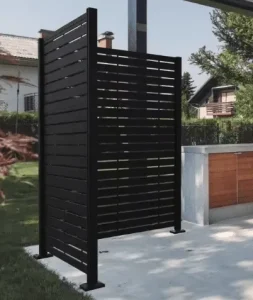
One of the reasons WPC privacy fence panels make sense for gardens and patios is that the maintenance cycle is minimal, but not zero. After five years, you can expect the surface to have lightened by one to two shades due to UV exposure, which is normal and does not affect structural integrity. The color change is typically uniform if the panels are from the same production batch, so the fence still looks consistent.
Cleaning is straightforward: a soft brush and mild soapy water twice a year removes pollen, dust, and bird droppings. Pressure washing is discouraged because high-pressure spray can erode the wood-fiber surface slightly, creating a fuzzy texture over time. If you notice green algae on panels in shaded garden areas, a diluted white vinegar solution applied with a sponge removes it without harming the composite.
The hardware inspection schedule is once per year. In garden settings, check the post footing for any soil erosion around the concrete pier; in patio settings, check that anchor bolts remain at the specified torque. Loose bolts allow the post to wobble, which transfers vibration to the panel edges and accelerates gasket wear.
With proper installation and these basic checks, a WPC privacy fence in a garden or patio application should hold its appearance and function for 15 to 20 years. The limiting factor is usually the post system, not the WPC panels themselves, which is why the aluminum post choice matters from the start.
Common Questions About Using WPC Privacy Panels Outdoors
Are WPC fence panels suitable for coastal garden environments?
Yes, but with a specific hardware specification. The WPC composite itself is saltwater-resistant and does not corrode. The risk is the metal brackets and fasteners. In coastal gardens within 500 meters of saltwater, I recommend 316-grade stainless steel screws and brackets rather than standard 304. 316 marine-grade stainless contains molybdenum, which resists pitting from chloride exposure. The aluminum posts should be powder-coated to AAMA 2604 standard for coastal durability. With those hardware upgrades, WPC panels perform well in seaside gardens where painted steel would show rust blooms within two years.
Can I install WPC privacy panels directly into existing garden soil without concrete?
You can, but I do not recommend it for a privacy fence that will stand for more than a few seasons. Garden soil compacts unevenly, and freeze-thaw cycles will shift posts out of alignment. The panel joints will open up, and the fence line will look wavy. The minimum acceptable installation is a concrete pier at least 8 inches in diameter and 24 inches deep for each post, regardless of soil type. If you are installing a short decorative border rather than a full-height privacy barrier, direct soil embedding with a post anchor base may be sufficient, but for panels taller than 4 feet, use concrete footings.
How do I stop climbing plant moisture from damaging the WPC surface?
The moisture from climbing plants is not a threat to the WPC composite, but the physical attachment and trapped debris can be. Use a separate aluminum trellis frame attached to the post, offset from the panel face by at least 2 inches. This allows airflow behind the plant mass and prevents tendrils from wedging into panel joints. If you attach wires or clips directly to the panel face, surface abrasion from wind movement will slowly wear the WPC texture. A standoff trellis system keeps the fence structurally isolated and the panel surface clean. If your project requires a specific trellis adapter, share your panel layout and we can confirm compatibility with our aluminum post systems at sales01@yulongkeji-ch.com or +8619086315193.
Do WPC fence panels provide enough privacy for a patio overlooked by neighbors?
Yes, but you need to specify the correct panel profile. Solid-tongue boards or overlapping slat designs achieve 100% visual block. Some slat-style WPC panels with a gap between slats still allow sightlines at an angle, so if your patio is overlooked from a second-story window, a gap design will not completely eliminate the sightline. For maximum privacy, choose a panel with zero-gap tongue-and-groove assembly and a height of at least 1.8 meters. The aluminum post system should also be designed with a flush panel face to avoid any narrow gaps at post junctions.
Is WPC fencing a better long-term investment than pressure-treated wood for a damp garden?
From a lifecycle cost perspective, WPC wins in damp garden conditions. Pressure-treated wood in constant soil moisture and shade typically shows warping within three to five years and requires re-staining every two years. WPC panels do not need staining, will not warp from one-sided moisture exposure, and retain their original dimensions. The upfront cost for WPC is higher, but eliminating the re-staining labor and the eventual board replacement within the first decade makes it cheaper over 15 years. For damp gardens where wood decay is predictable, WPC is the lower-maintenance and more durable choice. If you are comparing supplier options for a WPC fence system, send your part number and quantity to sales01@yulongkeji-ch.com and we’ll confirm material specs and availability for your timeline.
If you’re interested, check out these related articles:
Aluminum Pool Fence Safety: Standards, Heights, & Supplier Guide
Steel vs Aluminum Fencing: Budget, Durability, and Value
Aluminum Gate Hardware: Hinges, Latches, and Lasting Security
Commercial Aluminum Fencing: 5 Key Business Applications