
When a pet owner picks a playpen, they are implicitly trusting the manufacturer to have eliminated every hidden danger—a weld that might snap under a dog’s weight, a sharp edge left from the stamping line, or a coating that leaches toxins when chewed. That trust is not built on the product’s appearance. It is built on the repeatable quality control steps embedded in the manufacturing process. For importers and retail buyers sourcing pet playpen panels, a supplier’s willingness to share specific QC documentation is at least as important as the visual finish of the panels, because pet safety depends on verifiable manufacturing controls, not promises.
Materials and Construction That Go Into a Safe Pet Playpen Panel
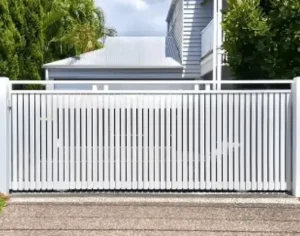
A pet playpen panel seems simple—a rectangular frame with a wire or slat infill—but the material choices directly determine how it will survive a rambunctious puppy or an anxious cat. We manufacture panels from two material systems: cold-rolled steel wire with a hot-dip galvanized or zinc-aluminum alloy coating, and extruded aluminum alloy 6063-T5 for sheet-style panels. Steel wire delivers the toughness needed for large-breed dogs; aluminum panels reduce weight without sacrificing stiffness and resist the corrosion that comes from constant cleaning.
The infill matters as much as the frame. For wire panels, we use steel wire with a minimum tensile strength of 380 MPa. The wire is drawn to consistent diameter—typically 3.5 mm or 4.0 mm for structural panels—because undersized wire is the most common hidden cost-cutting we see in the market. After welding, every panel receives a powder coating based on polyester or epoxy-polyester chemistry, cured at 180–200 °C to achieve full cross-linking. The powder contains no heavy-metal pigments: we verify this through batch-level material certifications from our coating suppliers, not by assuming a generic “non-toxic” label. For aluminum panels, the extrusion die geometry is cut to hold the slat angle and profile within a 0.3 mm tolerance band, so that assembled panels line up without pinching gaps.
How We Control Quality During Panel Manufacturing
The difference between a panel that protects a pet and one that injures it usually comes down to four or five manufacturing steps that most buyers never see. We treat these as non-negotiable hold points, not spot checks.
The first is weld integrity. Wire intersections are joined by automated spot welding with controlled current and electrode pressure. After welding, a sample from each batch—typically two panels per 500—undergoes a destructive pull test. The acceptance criterion is that the wire must break before the weld separates. If a weld pops, the entire batch is quarantined and the machine parameters are re-validated. We have seen panels from other factories where surface welds looked clean but failed at 40% of the wire’s breaking strength. That is a leg that snaps when a dog leans into the corner.
Second is edge finishing. Stamped steel clips, gate hinges, and latch mechanisms all generate shear burrs. Our standard is that no edge accessible to a pet may exceed a 0.1 mm burr height—essentially undetectable by touch. This applies to every panel, not just a sample. Operators use a tactile glove check and, for complex stampings, a magnified visual comparison against a limit sample. Deburring is tedious; it is also the step most likely to be skipped in a price-driven production run, and the one most responsible for the “sharp edge” complaints we hear from importers switching suppliers.
Third is coating adhesion, which matters both for corrosion protection and for pet ingestion risk. We perform a cross-hatch adhesion test per ASTM D3359 on one panel per batch. The coating must achieve a 4B or 5B rating—meaning virtually no flaking along the scribe lines. Flakes that detach during installation or cleaning will end up in a pet’s mouth, and flaking also exposes the metal substrate to urine and cleaning chemicals, triggering rust that weakens the panel over time.
Fourth, dimensional control. The most overlooked pet safety dimension is the gap between wires or slats. For small-breed dogs and cats, a gap exceeding 30 mm can become a head-entrapment hazard. We use a go/no-go gauge in-process: a 30 mm ball must not pass through any infill opening on a panel intended for small animals. For panels targeting medium to large dogs, the opening is matched to the species, but the principle is the same—test with a physical gauge, not a visual estimate.
The table below summarizes the key inspection points that are built into our routine production flow.
| QC Checkpoint | Method | Acceptance Limit |
|---|---|---|
| Weld strength | Destructive pull test on sample panels | Wire break before weld separation |
| Edge burr height | Tactile glove + magnified visual | ≤ 0.1 mm on any pet-accessible edge |
| Coating adhesion | Cross-hatch tape test (ASTM D3359) | Rating 4B or 5B |
| Dimensional tolerance | Caliper and fixture gauge | ±1 mm on frame dimensions |
| Infill gap spacing | Go/no-go ball gauge | 30 mm ball must not pass through (small-pet panels) |
| Powder cure | Solvent rub test + gloss meter | No softening; gloss within batch target ±5 units |
Safety Testing Every Panel Must Pass
Beyond in-process checks, each finished panel type undergoes periodic design-verification testing to confirm that the product meets the safety expectations of a retail end user. This is where things like collapse under a pet’s weight get addressed before the product ever reaches a crate.
We test load-bearing capacity with a static vertical load applied to the top rail of an assembled panel, in the worst-case orientation. For a standard 600 mm tall pet playpen panel, the acceptance load is 30 kg applied at mid-span with no permanent deformation beyond 2 mm—a figure drawn from years of feedback on what a large dog can impose jumping against a side. The test is repeated after 500 hours of salt spray exposure (ASTM B117) to ensure that corrosion doesn’t secretly weaken the panel. A panel that looks fine after a year in a coastal warehouse but fails under moderate force is a liability waiting to happen.
For folding wire panels, we drop-test the assembled configuration: a 20 kg sandbag dropped from 400 mm onto the hinge area to simulate a panicked pet hitting the gate at full speed. The hinge must not disengage, and the panel must remain latchable after impact.
Coating toxicity is addressed through migration testing. A powder-coated sample is immersed in a 3% acetic acid solution at 40 °C for 24 hours, simulating the worst-case stomach chemistry of a chewing pet. The leachate is analyzed for lead, cadmium, mercury, and hexavalent chromium. Acceptable levels are below the limits set by EN 71-3 for toy safety—an intentionally strict benchmark because pet playpens are effectively chewed on like toys.
What to Look for When Sourcing Pet Playpen Panels
Most importers evaluate panels by requesting a sample, looking at the finish, and testing the folding mechanism. Those are valid, but they only reveal what the factory prepared to show you. The following four requests separate manufacturers that run a real QC system from those that produce to a price point.
First, ask for batch-level test records, not a one-time lab certificate. A factory that can only show a third-party test report from three years ago is telling you that the report was for an audit, not for production control. We provide a QC inspection sheet with every export shipment, listing actual measured values for weld pull strength, coating adhesion, and dimensional sampling for that specific order.
Second, request a salt spray test report for the exact coating system used on your panels—not a generic comparison. If your market is humid, you need to know how many hours your panel’s zinc or powder coating withstood before red rust appeared on the substrate. That number should be above 500 hours for an indoor/outdoor pet panel.
Third, ask how the factory checks gap spacing for small-pet panels. This is usually a go/no-go gauge, and you should see it referenced in the QC plan. If they cannot answer immediately, it means head-entrapment risk is not being actively managed.
Fourth, verify that the powder coating lot certifications include heavy-metal content statements. Even if the coating appears safe, some low-cost polyester powders still use lead-based pigments for certain bright colors. A material certification should list the absence of restricted metals explicitly.
When a factory can produce these documents without hesitation, the product’s safety is predictable. When it cannot, you are gambling with the only thing your brand cannot afford to lose: the trust of a pet owner.
When Pet Safety Depends on Manufacturing Quality, Partner With a Factory That Shows the Proof
No amount of end-user instruction sheet will compensate for a panel that fails under load or sheds toxic coating flakes. As an importer, your reputation rests on the manufacturing decisions made before you ever saw the sample. We have built our pet playpen panel production around documented, repeatable QC hold points—from weld pull tests and edge-deburring to salt spray corrosion tracking and heavy-metal migration testing—because we know that the end user won’t see those steps, but their pet will feel the result.
If you are sourcing pet playpen panels and want to see what a complete QC packet looks like, send your panel specifications and estimated quantity to sales01@yulongkeji-ch.com or call +8619086315193. We will share a sample quality file from a recent order so you can evaluate our documentation yourself.
Common Questions About How Pet Playpen Panels Are Manufactured and Tested
Are the coatings on pet playpen panels really safe if a dog chews on them?
The powder coating we use is formulated without lead, cadmium, mercury, or hexavalent chromium. But a “non-toxic” label on a brochure means nothing—we verify it through migration testing in a 3% acetic acid solution that simulates stomach fluid. The test report showing leaching levels below EN 71-3 toy safety limits is available with every production batch. If a supplier cannot show a batch-specific heavy-metal certificate, assume the panel was coated with whatever was cheapest that day.
How do you make sure the welds won’t break when a 30 kg dog leans into the corner?
We pull-test welds on sample panels from every batch, and the wire must snap before the weld lets go. That means the joint is stronger than the wire itself—a condition that automated spot welding with controlled pressure and current can achieve reliably, provided someone actually checks it. Many factories trust the machine settings and skip the test; we do not.
What stops a small dog from getting its head stuck between the wires?
Every panel intended for small breeds is checked with a 30 mm go/no-go ball gauge in-line. The ball must not pass through any opening. This is the simplest safety measure in the factory, but it is also the one that disappears the moment a production line is pushed for speed. We build the gauge check into the final inspection step for each panel, not just a sample audit.
Will the panel rust if I sell it in a humid or coastal market?
The answer depends on hours of salt spray resistance. Our hot-dip galvanized steel wire panels withstand more than 500 hours in a neutral salt spray chamber before red rust appears on the substrate, and our aluminum panels eliminate rust risk entirely. We also test panels that have completed 500 hours of salt spray to confirm they still carry the design load—so you know corrosion doesn’t secretly weaken the structure before the customer sees it.
Can you match custom panel sizes and designs for a private-label order?
Yes, custom sizing and branding are standard for OEM orders. Once you provide your target dimensions, infill pattern, and color, we produce a pre-production sample against your spec, then run it through the full QC checklist before starting the main batch. Requesting that pre-production QC report for the sample itself is a step we recommend to every importer—it confirms that the factory’s quality system is active on your project, not just on a previous one. If you are ready to discuss a custom pet playpen panel order, share your requirements by email at sales01@yulongkeji-ch.com or call +8619086315193, and we will walk you through the sampling and QC documentation process.
If you’re interested, check out these related articles:
Decorative Iron & Ornamental Steel Fence: Residential & Commercial Solutions
Hot-Dip Galvanized vs Powder-Coated Fence: Performance & Value
Steel Fence vs Wrought Iron: Modern Options for Durable Fencing
Steel Fence Quality Control: Essential Pre-Shipment Checks
Aluminum Fence Grades: Understanding T5 and T6 Strength