
Choosing a garden pet fence that keeps your dog or cat secure without turning your yard into a metal box is the central challenge I see in design inquiries. Too many property owners end up with solid panel fencing that blocks every sightline to their flower beds and landscaping. As a metal fencing engineer who has spent more than a decade working with aluminum and steel systems, I can say the solution isn’t a weaker fence. It’s a smarter infill choice. This article walks through the key decisions involved in selecting an outdoor pet fence that delivers safety and durability while leaving your garden’s entire view intact.
What Makes a Pet Fence Safe and View-Friendly
Pet safety starts with some non-negotiable minimums. For dogs that can jump, a fence height of at least 1.2 meters is typical; for larger breeds, 1.5 meters or more may be required. A gap under the fence wider than 50 millimeters invites smaller pets to squeeze through. These numbers are not arbitrary. They come from observing how animals interact with boundaries, something I’ve addressed repeatedly in project consultations.
View-friendliness is a separate design target. If the fence uses infill elements that are too dense or too wide, the garden might as well be walled off. The goal is to find a material and pattern that gives you the sightline while still preventing a curious pet from getting a paw hold or pushing through. In my experience on jobsites, I’ve seen lightweight tube fences fail because the horizontal rails became climbing steps for active dogs. That’s why I recommend a design where vertical infill sits flush between rails with no exposed footholds, an approach that maintains both security and transparency.
Choosing Between Aluminum and Steel for a Garden Pet Fence
The two leading material options for a durable garden pet fence are aluminum and galvanized or zinc-plated steel. Both have excellent strength-to-weight ratios when the gauge is chosen correctly, but they serve different environments and budgets.
| Material | Corrosion Resistance | Weight | Typical Cost | Best For |
|---|---|---|---|---|
| Aluminum | Excellent (natural oxide layer) | Light | Moderate | Gardens near coasts, high-humidity areas |
| Steel | Good with proper coating (zinc or powder) | Heavier | Lower | Large perimeters, areas with high wind loads |
Aluminum’s self-passivating surface means a scratch won’t necessarily lead to rust, a significant advantage in a garden where sprinklers hit the fence daily. Steel, when hot-dip galvanized to at least 80 µm zinc thickness and topped with a polyester powder coating, offers a lower upfront price. In either case, the alloy or steel grade matters. For aluminum fencing, I generally specify 6063-T5 or 6061-T6 extrusions because they provide the bending strength needed to resist a leaning dog without permanent deformation. For steel, a wall thickness of at least 1.5 mm on the vertical pickets keeps the fence rigid.
It’s common to see aluminum chosen for a garden where aesthetics are a priority, while galvanized steel is often preferred for larger or more remote perimeters where cost control is tighter. Both can be powder coated in a wide range of RAL colors, so there’s no visual compromise.
Infill Transparency: Vertical Bars, Mesh, and Spacing Standards
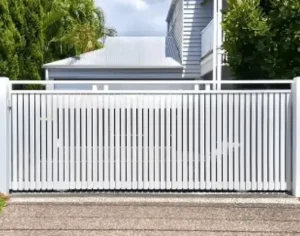
The infill design is where view preservation is won or lost. The two most effective transparent infill types for gardens are vertical aluminum bars and galvanized wire mesh panels. Vertical bars, typically slender rectangular profiles spaced 75 mm to 100 mm apart, create a clean architectural look and offer an unobstructed view of the garden behind. The spacing must be narrow enough to prevent a pet’s head from getting through, yet wide enough to avoid creating a solid wall effect.
For smaller pets or mixed-species households, a 50 mm × 50 mm wire mesh panel mounted inside a metal frame provides an even higher safety barrier without turning the fence opaque. I’ve specified this combination on projects where the client needed to secure cats and small dogs while keeping an open vista toward a lake or hillside. The mesh practically disappears from ten meters away.
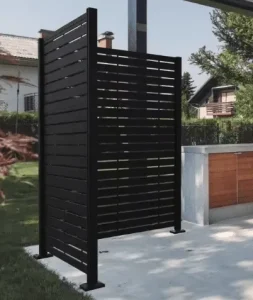
A note on horizontal rails: these should be kept to a minimum. Most standard two-rail systems are fine for a garden fence, but I generally avoid adding a third rail unless the pet is a known climber. Every extra rail adds a visual line that breaks the view.
Post Installation and Ground Conditions in Garden Settings
No matter how good the fence panel is, if the post isn’t anchored properly, the whole system loosens within a season. Garden soil is often soft and regularly disturbed by irrigation, so the post foundation must account for that.
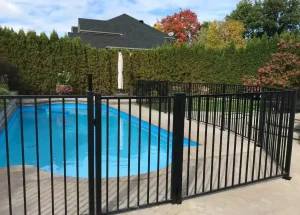
The three most common anchoring methods are direct concrete footing, steel spike anchors driven into the ground, and surface-mounted base plates bolted to an existing deck or patio. For a stand-alone pet fence running through a lawn or flower bed, a concrete footing with a depth of at least 400 mm for a 1.5-meter-high fence is standard. The post should be centered and plumb, with the concrete allowed to cure for 48 hours before panel attachment. In very soft or sandy soils, I increase the footing depth to 600 mm and use a wider diameter. A free-standing fence that isn’t connected to a house wall will catch wind loads, so I also recommend spacing posts no more than 2 meters apart for any fence over 1.2 meters tall.
Where you can’t dig, heavy-duty steel spike anchors are a workable alternative for lighter aluminum fences under 1.2 meters. But I caution against spikes if the garden has large trees with expansive root systems that will shift the ground over time. A post that moves even a few millimeters will cause the gate to misalign, and once a gate sags, it becomes an escape point.
Coatings and Long-Term Care
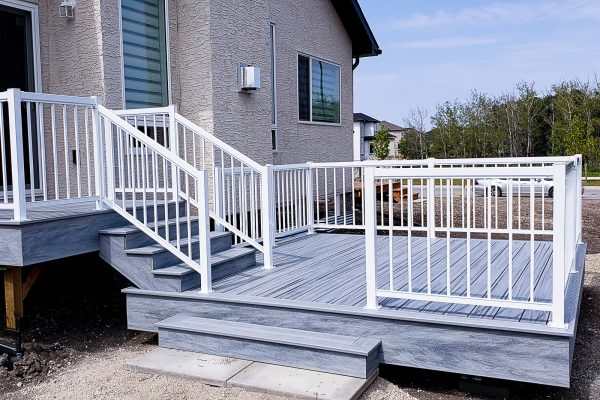
Powder coating is the standard finish for garden pet fences, and it does more than provide color. A high-quality polyester powder layer of 60–80 µm bonds to the metal surface and resists UV degradation, moisture, and the mild abrasion of a pet brushing against the pickets. For coastal gardens or areas with heavy rainfall, I suggest specifying a marine-grade powder or an additional fluorocarbon topcoat.
Maintenance is straightforward. Twice a year, wash the fence with a mild detergent and water to remove pollen, dirt, and any salt spray. Check for chips in the coating, especially near the base where a lawn mower or trimmer might nick the post. A scratched area down to bare metal on a steel fence needs immediate touch-up with a zinc-rich primer and matching paint to prevent rust spotting. On aluminum, scratches are less urgent but still worth sealing for appearance. Gate hinges and latches should be lubricated annually with a dry silicone spray to keep the action smooth.
A well-chosen outdoor pet fence built from properly coated aluminum or galvanized steel, with the right infill transparency and secure posts, will last 15 to 20 years with minimal intervention.
Answers to Common Questions on Garden Pet Fences
Does an aluminum pet fence provide enough strength for large dogs?
Both 6063-T5 and 6061-T6 extrusions, when designed with thick enough walls and proper post spacing, handle the impact of a 30-kilogram dog leaning or jumping against the fence repeatedly. The fence’s overall rigidity depends more on post anchoring and rail connection integrity than on the material alone. I’ve seen aluminum ranch fencing contain horses when sized correctly, so a domestic dog is not a structural challenge if the right gauge is chosen.
Will a see-through fence really keep my cat inside?
A cat can climb most vertical bar fences unless the bar profile is completely smooth and any horizontal rail is removed or located at a level that denies a jumping-off point. A better solution for cats is a wire mesh infill with top-out overhang panels that angle inward, creating a barrier that the animal cannot scale. We’ve supplied this configuration to several small-animal rescue centers and it works reliably.
What if my garden has a steep slope?
Racked panels, where the panel follows the slope while staying level, are the standard fix. The fence post height stays consistent while the panel is stepped or cut at an angle to match the ground. This keeps the top of the fence safe an even height without creating a large gap at the bottom. For slopes beyond 15 degrees, I recommend a stepped post arrangement with custom panel fabrication.
How long does a garden pet fence order take from a factory?
Standard aluminum and steel panel systems typically require 4 to 6 weeks for production once the design is confirmed, plus shipping time depending on your location. Custom colors, unusual heights, or integrated gate packages add another 1 to 2 weeks. My team always advises clients to send the property layout early so we can check post spacing against your pet’s specific escape behaviors before locking in the order.
Does a powder-coated fence require repainting over time?
No, a quality powder coating applied over a proper pretreatment layer will not peel or flake in normal use, and it does not need repainting. You may see some gradual fading of very dark colors after a decade of intense sun exposure, but the structural protection remains intact. If you want to maintain the original color depth, a light polish with a silicone protectant once a year slows the fading process. If you’re evaluating a fence that will face south in a hot climate, selecting a mid-tone RAL color rather than a deep black can keep the appearance fresh longer.
For a pet fence that matches your garden’s layout and your pet’s specific habits, you can reach me directly at sales01@yulongkeji-ch.com or call +8619086315193. Send your garden dimensions and we’ll confirm the right post spacing, infill type, and coating spec for your project.
If you’re interested, check out these related articles:
Aluminum Gate Hardware: Hinges, Latches, and Lasting Security
Aluminum Fence Grades: Understanding T5 and T6 Strength
Aluminum Fencing for Coastal & Humid Environments