
When a forklift carrying 2,000 kg of palletized goods passes through your facility entrance twelve times per hour, the gate standing between your operation and the outside world faces stresses that residential hardware cannot survive. Heavy-duty steel gates for industrial use require specific engineering decisions around frame thickness, material grade, and opening mechanism that directly affect both security performance and total cost of ownership over a fifteen to twenty year service life. I have worked on gate specifications for manufacturing plants, logistics centers, and secured storage facilities where the wrong material choice led to premature failure within three years, while properly specified gates continued operating with minimal maintenance after a decade. This guide covers the sizing parameters, steel grades, surface treatments, and pricing factors that procurement teams and facility engineers need to evaluate before committing to a supplier.
What Makes a Steel Gate “Heavy-Duty” for Industrial Applications
The term heavy-duty gets applied loosely in marketing materials, but in engineering terms it refers to specific structural characteristics that separate industrial gates from commercial or residential products. Frame members on heavy-duty gates typically use rectangular hollow sections (RHS) with wall thicknesses of 3mm to 6mm, compared to 1.5mm to 2mm on standard gates. The difference matters because gate frames experience repeated stress cycles from opening and closing, wind loading, and occasional impact from vehicles or equipment.
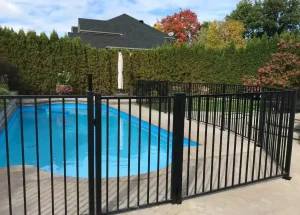
I have seen gates specified as “heavy-duty” fail at weld points within two years because the frame sections were undersized for the span. A 6-meter wide swing gate using 50mm x 50mm x 2mm tubing will sag at the latch side regardless of hinge quality. The same gate built with 80mm x 40mm x 3mm RHS maintains alignment because the section modulus resists bending under its own weight and operational forces.
| Specification | Standard Industrial | Heavy-Duty Industrial |
|---|---|---|
| Frame tube wall thickness | 2.0mm to 2.5mm | 3.0mm to 6.0mm |
| Typical RHS dimensions | 50mm x 50mm | 80mm x 40mm or 100mm x 50mm |
| Maximum recommended span (swing) | 4 meters | 8 meters |
| Infill bar diameter | 12mm to 16mm | 16mm to 25mm |
| Hinge load capacity | 150kg per leaf | 400kg+ per leaf |
The infill design also distinguishes heavy-duty construction. Vertical bars welded at closer spacing (typically 100mm to 130mm centers) provide both security against intrusion and structural rigidity that prevents racking when the gate is operated. Horizontal rails at top, middle, and bottom positions tie the assembly together and distribute loads across the frame rather than concentrating stress at connection points.
Standard Industrial Gate Sizes and Custom Dimensioning
Industrial facilities rarely fit standard residential gate dimensions. Vehicle access points for trucks require clear openings of 4 meters to 12 meters, while pedestrian gates may need only 1 meter to 1.2 meters. The height requirement depends on security level and local regulations, with most industrial applications specifying 1.8 meters to 2.4 meters.
Swing gates work efficiently up to about 4 meters per leaf. Beyond that span, the lever arm created by the gate’s weight places excessive stress on hinges and posts, and the arc of travel consumes too much space. For openings wider than 8 meters, sliding gates become the practical choice because the gate weight transfers vertically through wheels rather than horizontally through hinges.
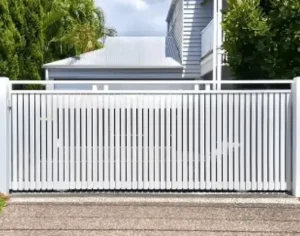
Cantilever sliding gates eliminate the need for a ground track, which matters in facilities where forklifts, trucks, or other heavy equipment cross the threshold regularly. A ground track collects debris, ice, and damage from vehicle traffic. The cantilever design suspends the gate from an overhead or side-mounted rail system, keeping the travel path clear. The engineering tradeoff is that cantilever gates require approximately 50% additional length beyond the opening width to accommodate the counterbalance section.
When specifying custom dimensions, the critical measurements include:
– Clear opening width (the actual passage dimension)
– Overall gate width (including overlap for sliding gates or hinge clearance for swing gates)
– Height from finished grade to top rail
– Ground clearance (typically 50mm to 100mm for swing gates, 75mm to 150mm for sliding gates)
– Post center-to-center distance
I always recommend measuring the actual site conditions rather than working from drawings alone. Concrete aprons settle, grade changes occur during paving, and existing fence lines may not be perfectly straight. A 20mm discrepancy between drawing and reality can mean the difference between a gate that operates smoothly and one that binds or leaves a security gap.
Steel Grades and Their Performance Characteristics
The steel grade selection affects corrosion resistance, weldability, and long-term structural performance. Most industrial gates use mild steel grades in the S235 to S355 range (European designation) or ASTM A36 to A572 (US designation). These grades offer good weldability, adequate strength for gate applications, and reasonable cost.
S235JR (or equivalent A36) provides yield strength around 235 MPa, which handles most gate applications where the primary loads are self-weight and wind. For gates in high-wind areas or those requiring enhanced security ratings, S355J2 (yield strength 355 MPa) allows thinner sections to achieve the same structural performance, reducing weight without sacrificing strength.
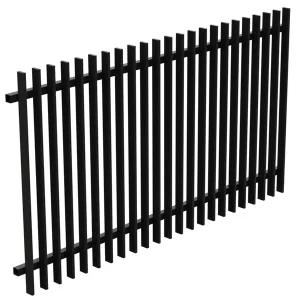
Weathering steel (Corten) appears occasionally in architectural applications where the rust-colored patina is desired aesthetically. For industrial gates, weathering steel offers no practical advantage over properly coated mild steel and costs significantly more. The protective oxide layer that forms on weathering steel also stains adjacent concrete and masonry, creating maintenance issues in facility settings.
Stainless steel grades (304 or 316) make sense only in specific environments: food processing facilities where hygiene requirements prohibit painted surfaces, coastal installations with direct salt spray exposure, or chemical plants where atmospheric corrosion would defeat conventional coatings. The material cost premium of 4x to 6x over mild steel means stainless gates are specified only when the application genuinely requires them.
| Steel Grade | Yield Strength | Best Application | Relative Cost |
|---|---|---|---|
| S235JR / A36 | 235 MPa | Standard industrial gates | 1.0x baseline |
| S355J2 / A572-50 | 355 MPa | High-wind or security-rated gates | 1.15x to 1.25x |
| Corten A/B | 355 MPa | Architectural (not recommended for industrial) | 1.3x to 1.5x |
| 304 Stainless | 215 MPa | Food processing, clean environments | 4x to 5x |
| 316 Stainless | 220 MPa | Marine, chemical exposure | 5x to 6x |
Surface Treatment Options That Determine Service Life
The coating system applied to a steel gate has more influence on service life than the steel grade itself. A properly galvanized and powder-coated gate will outlast a bare or poorly coated gate by a factor of three to five, even if the underlying steel is identical.
Hot-dip galvanizing immerses the fabricated gate in molten zinc at approximately 450°C, creating a metallurgical bond between the zinc and steel. The resulting coating thickness of 45 to 85 microns (depending on steel thickness) provides both barrier protection and galvanic protection. When the coating is scratched, the surrounding zinc sacrifices itself to protect the exposed steel, preventing rust spread.
Powder coating applies a dry polymer powder electrostatically, then cures it in an oven at 180°C to 200°C. The resulting film (typically 60 to 100 microns) provides excellent UV resistance, color retention, and abrasion resistance. Powder coating alone, without galvanizing underneath, offers barrier protection only. Once the coating is breached, corrosion begins and spreads under the film.
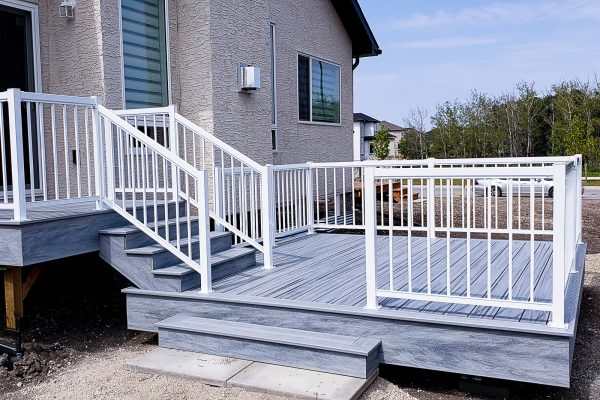
The duplex system combining hot-dip galvanizing with powder coating delivers the longest service life. The galvanizing handles any coating breaches while the powder coat protects the zinc from atmospheric weathering and provides the desired color. In my experience, duplex-coated gates in moderate industrial environments show minimal degradation after fifteen years, while powder-coat-only gates in the same conditions require touch-up or recoating within seven to ten years.
Liquid paint systems (epoxy primer plus polyurethane topcoat) remain common in some markets but offer inferior performance compared to powder coating for equivalent film thickness. The primary advantage of liquid paint is field application capability for repairs or color changes, while powder coating requires factory application.
Pricing Factors and What Drives Cost Variation
Industrial gate pricing varies widely based on size, material, coating, hardware, and automation requirements. A basic 4-meter wide manual swing gate in galvanized steel might cost $1,500 to $2,500 at factory-direct pricing, while a 10-meter automated cantilever gate with duplex coating and integrated access control can exceed $15,000.
The major cost drivers break down as follows:
Size and weight: Material cost scales roughly with the square of the gate dimensions. A gate twice as wide and twice as tall requires four times the steel, plus heavier posts, larger hinges, and more robust automation equipment.
Opening mechanism: Manual gates cost the least. Electric swing gate operators add $800 to $2,000 per leaf depending on capacity. Sliding gate motors range from $1,200 for light-duty units to $4,000+ for heavy-duty industrial operators rated for continuous cycling.
Coating specification: Galvanizing adds 15% to 25% to the bare steel fabrication cost. Powder coating adds another 10% to 20%. The duplex combination typically adds 30% to 40% over bare fabricated steel, but the extended service life usually justifies the investment.
Hardware quality: Hinges, latches, and guide wheels from European or North American manufacturers cost two to three times more than Chinese-sourced equivalents. The performance difference is real: premium hinges maintain adjustment over hundreds of thousands of cycles, while budget hardware loosens and wears within a few years.
Access control integration: Basic keypads add $200 to $500. Card readers, intercom systems, and integration with facility security networks can add $2,000 to $10,000 depending on complexity.
For bulk orders, factory-direct pricing from manufacturers like Hubei Yulong typically runs 30% to 50% below distributor pricing for equivalent specifications. The tradeoff is longer lead times (typically 4 to 8 weeks versus 1 to 2 weeks from stock) and the need to manage international logistics for overseas buyers.
Selecting the Right Gate Configuration for Your Facility
The decision between swing gates, sliding gates, and bi-folding gates depends on available space, traffic patterns, security requirements, and budget constraints.
Swing gates offer the lowest initial cost and simplest maintenance. They work well for openings up to 8 meters (two 4-meter leaves) where adequate swing clearance exists. The main limitations are space consumption during operation and vulnerability to wind loading when open.
Sliding gates suit wider openings and space-constrained sites. Track-mounted versions cost less but require ground track maintenance. Cantilever designs eliminate ground track issues but need 150% of the opening width for the gate run-back area.
Bi-folding gates (also called speed gates) open faster than swing or sliding gates, making them suitable for high-traffic entrances. The folding mechanism adds complexity and cost, but cycle times of 8 to 12 seconds versus 20 to 30 seconds for conventional gates can significantly improve traffic flow at busy facilities.
Security rating requirements may dictate specific configurations. Gates rated to LPS 1175 (UK) or ASTM F2781 (US) standards for forced entry resistance require specific frame constructions, locking mechanisms, and installation details that constrain design options. If your facility requires a rated security gate, start with the rating requirement and work backward to acceptable configurations rather than selecting a gate style first.
For facilities handling hazardous materials or requiring controlled access logging, the gate specification must include integration points for access control systems. This means specifying conduit runs, controller mounting provisions, and safety sensor locations during the design phase rather than adding them as afterthoughts.
If your project involves specific security ratings, unusual dimensions, or integration with existing facility systems, confirming these requirements with your supplier before finalizing specifications prevents costly changes during fabrication. Send your site dimensions, security requirements, and traffic patterns to sales01@yulongkeji-ch.com or call +8619086315193 to discuss configuration options that match your operational needs.
Common Questions About Industrial Steel Gates
What steel thickness should I specify for a 6-meter wide industrial gate?
For a 6-meter swing gate (two 3-meter leaves), frame members should use minimum 3mm wall thickness RHS, typically 80mm x 40mm or larger. The hinge-side stile carries the most stress and may warrant 4mm wall thickness on gates expected to see heavy use. Sliding gates of the same width can use slightly lighter sections because the weight transfers through wheels rather than cantilevering from hinges. The infill bars should be minimum 16mm diameter solid round or 20mm x 20mm square tube at 100mm to 120mm centers for security applications.
How long does hot-dip galvanizing last on an industrial gate?
In moderate industrial environments (urban or suburban locations without direct chemical exposure), hot-dip galvanizing alone provides 25 to 40 years of corrosion protection before maintenance is needed. Adding powder coating extends this to 40 years or more while maintaining appearance. In aggressive environments (coastal, chemical plant, or heavy industrial), galvanizing alone may show white rust (zinc corrosion) within 10 to 15 years, making the duplex coating system worthwhile. The coating thickness matters: specify minimum 85 microns for gates in challenging environments.
What is the typical lead time for custom industrial gates?
Standard configurations using common sizes and finishes typically ship within 2 to 4 weeks from order confirmation. Fully custom gates with non-standard dimensions, special coatings, or integrated automation require 4 to 8 weeks. Security-rated gates with certification requirements may need 8 to 12 weeks due to testing and documentation requirements. For project planning purposes, allow 6 weeks minimum from specification finalization to delivery, plus installation time. If your timeline is tight, discuss expedited production options with your supplier early in the specification process.
Should I choose a swing gate or sliding gate for my facility entrance?
The decision depends primarily on available space and opening width. Swing gates need clear space equal to the gate width in the direction of swing, plus they cannot be used on sloped approaches exceeding about 5%. Sliding gates need lateral space equal to the opening width (or 150% for cantilever designs) but work on any grade and in tighter spaces. For openings wider than 8 meters, sliding gates are almost always the better choice. For openings under 5 meters with adequate swing clearance, swing gates cost less and have fewer mechanical components to maintain.
How do I verify gate quality before accepting a bulk shipment?
Request factory inspection before shipping or use a third-party inspection service. Key checkpoints include: weld quality (full penetration, no porosity or undercut), coating thickness measurement at multiple points, dimensional verification against drawings, hardware function testing, and documentation review (material certificates, coating reports). For automated gates, witness a cycling test of at least 50 operations. If you are importing from overseas, the cost of pre-shipment inspection ($300 to $800 typically) is minor compared to the cost of receiving non-conforming product. Share your quality requirements with your supplier and request their standard inspection protocol before production begins.
If you’re interested, check out these related articles:
Aluminum Fence Post Installation: Depth, Spacing & Anchoring
Assembled vs Welded Aluminum Gates: Performance, Cost, & Use Cases
Steel Fence vs Wrought Iron: Modern Options for Durable Fencing