
Fence materials comparison usually starts with unit price, but the specification that matters most is the coating system and the post anchoring method, because those two details decide whether a fence remains safe and stable after years of wind, salt, and thermal movement. I work with aluminum, zinc steel, WPC, and chain link systems across residential, commercial, municipal, and industrial projects, so my approach is to define site conditions before locking a panel design. This article moves through material selection, corrosion resistance, privacy options, chain link specification, and the hidden cost drivers that appear only at installation and maintenance stage.
Which Fence Material Matches Your Site Conditions
Site conditions always override appearance. A coastal property with salt spray should not default to a light gauge steel panel, while an industrial perimeter with climb risk should not default to a low rail aluminum design just because it is lighter. I usually narrow the options by four project inputs: wind exposure, security requirement, visibility, and maintenance access. Once those are fixed, the material table below becomes an elimination tool rather than a price list.
| Material | Best Application | Installation Weight | Maintenance Need | Corrosion Resistance |
|---|---|---|---|---|
| Aluminum | Residential and commercial light security, pools, coastal sites | Low | Low; wash surfaces and check fasteners | High with powder coating |
| Zinc steel | High security, industrial, municipal, gates | High | Medium; inspect coating and touch up cuts | High with hot dip galvanizing plus topcoat |
| WPC composite | Privacy screens, garden screens, coastal windbreaks | Medium | Low to medium; wash and check plank expansion | High for panel; post must be aluminum or coated steel |
| Chain link | Utility, sports, perimeter, temporary site control | Low to medium | Low; inspect wire coating and tension | Medium; galvanized or PVC coated |
When wind load dominates, the post schedule and panel rail depth matter more than the panel material itself. Aluminum panels keep their shape in salt zones but need adequate section depth for tall panels. Zinc steel carries higher security loads with smaller profiles but adds installation weight. WPC gives you a solid privacy face with low maintenance, while chain link keeps visibility and airflow open at the lowest installed cost for standard perimeters.
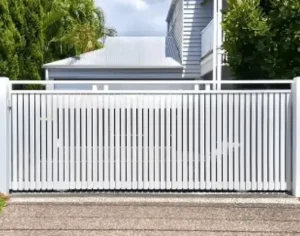
How Do Aluminum and Steel Fencing Systems Compare for Corrosion Resistance
Aluminum Extrusions and Powder Coating
Aluminum fence systems built with 6063 alloy extrusions and a high performance powder coating resist red rust because the base metal does not oxidize aggressively the way steel does. The coating still serves a cosmetic and barrier function. When architectural projects specify AAMA 2604 finishes, they are asking for a film that holds color and gloss longer than a standard polyester finish. From our production experience, the more critical check is the cut end and fastener area. An uncoated exposed edge on a cut picket becomes a starting point for filiform corrosion in humid or coastal air, so we specify closed picket ends or touch up procedures before shipment.
Zinc Steel and Hot Dip Galvanizing
Zinc steel fence panels behave differently. A hot dip galvanized coating bonds metallurgically to the steel substrate, which means a scratch around a bolt head still leaves a sacrificial zinc layer around the exposed steel. That is a real advantage in industrial areas and high security perimeters where panels get struck by maintenance equipment. The trade off is weight. Thicker wall steel sections raise shipping cost and installation labor, and if the galvanized layer is then powder coated for color, the quality of the primer system between zinc and topcoat determines whether the finish will stay bonded.
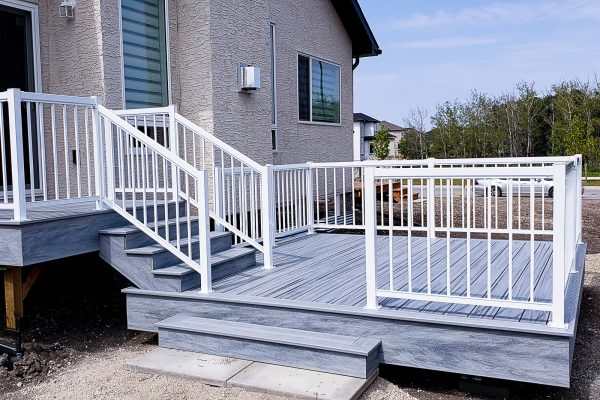
I have seen a school perimeter maintain its aluminum handrail and fence finish for over ten years in a humid region while an adjacent lightly coated steel rack rusted at the post base within three. The difference was not the base metal alone. The aluminum system used hidden fasteners and consistent coating coverage at the post cap.
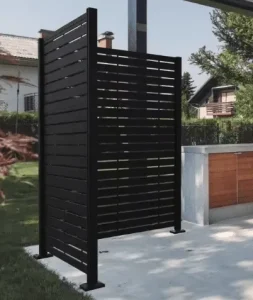
When Does WPC Fencing Make Sense for Privacy and Coastal Projects
WPC composite panels make sense when you need visual screening plus low maintenance, but they should never be treated as a structural substitute for aluminum or steel rails. The core is usually wood fiber or wood flour bonded in a polyethylene matrix, so the panel resists rot and termite attack far better than solid wood, but it expands and contracts more than metal as temperature changes. That thermal movement must be absorbed by slot allowances in the rail, or the panel will bow between posts.
In coastal projects, WPC works well as an infill panel because salt air does not eat into the composite the way it would into unprotected wood. The weak point is the post. We specify aluminum posts or heavy coated steel posts for any WPC screen over 1.2 meters high, because a WPC post has low bending resistance and can deflect under wind load or gate operation. Buyers should ask for water absorption and color fastness test reports before approving a panel, especially when the site faces direct sun and marine exposure.
If your program combines salt exposure with high wind load, it is worth confirming the post reinforcement and thermal movement allowance before finalizing the bill of materials. Email your project wind zone and panel height to yloongfence@gmail.com and we will match the right post and slot system.
What Should Buyers Check Before Ordering Chain Link Fence
Chain link fence remains the most practical choice for large perimeters, sports courts, utility enclosures, and temporary site control. The specification errors I see most often are not in the mesh panel but in the wire gauge and post schedule. A 1.8 meter high perimeter with 11 gauge wire and terminal posts every 30 meters may look acceptable on paper but will sag between posts within a few years under wind and bottom tension.
Start with use case. For industrial or utility security, specify 9 gauge core wire with a galvanized or PVC coated finish and 2 inch mesh to make climbing difficult. For sports and pedestrian control, 11 gauge or 11.5 gauge with 2.25 inch mesh is common and cheaper to ship. The terminal posts, end posts, and corner posts carry the tension load, so those should be larger diameter and deeper embedded than line posts. If the site has frost or soft ground, you need to confirm post depth and concrete backfill before comparing panel prices.
Many buyers treat chain link as a low cost package and overlook the top rail, tension wire, and fittings. Those small components are what keep the mesh taut and close the gaps that become maintenance problems later.
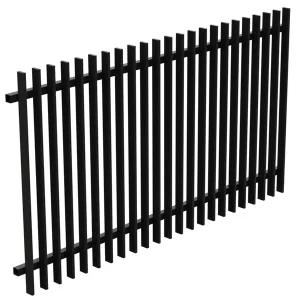
Why Do Coating Systems and Post Anchoring Decide Long Term Costs
Most fence failures we review start at the base of the post or at a cut edge, not in the visible panel face. That is why I tell buyers to spend specification effort on the coating system and the post anchoring method before comparing unit prices. A fence panel with a good aluminum profile but a thin powder coat will show color fade in three to five years in strong sunlight. A hot dip galvanized post embedded in concrete without a drainage path can hold water at the base and accelerate section loss where the post meets grade.
The post embedment depth should follow the frost line and the panel wind load. For a 1.8 meter aluminum fence in soft ground, a post embedment of 0.6 to 0.9 meters is common, but the exact depth comes from the site specific wind calculation. Concrete backfill below grade and a slight slope away from the post base keep water from pooling. Above grade, the post cap and fastener selection matter more than many buyers expect. Exposed carbon steel screws on an aluminum system will stain the panel and create a galvanic cell, so the hardware should be stainless steel or the same material family as the post.
Most fence specification problems surface not in the visible panel but in the interface between coating, post embedment, and hardware. If your project has specific wind load, terrain, or salt exposure requirements, send your site conditions and material quantities to yloongfence@gmail.com or call +8619072006155 with the fence height, panel length, and post anchoring method. We will confirm the appropriate material system and check the coating specification so you can issue a purchase order without guessing.
What Else Should Buyers Ask About Fence Material Selection
Does WPC fencing require reinforced posts?
Most WPC fence panels perform best when the horizontal rails and posts are aluminum or coated steel, not WPC. The composite panel is strong in weathering resistance but too flexible to carry gate hardware or long spans on its own. For a 1.5 meter privacy screen, we specify an aluminum post with a routed slot that accepts the WPC plank while leaving room for thermal expansion. Without this allowance, the panel can bow in summer heat. Buyers should ask the supplier to confirm post spacing, panel weight, and wind load before approving a WPC system, especially for exposed garden or rooftop locations.
Is chain link fence strong enough for a real security perimeter?
Chain link fence is often treated as a temporary or low security option, but a commercial grade system with 9 gauge wire, 2 inch mesh, and tension bars at terminal posts can serve as a real perimeter barrier. The weakness is usually not the mesh itself but the post schedule and top rail. A chain link fence with small diameter line posts and no intermediate bracing will lean or sag under climbing or wind load. For security perimeters, we recommend heavy duty terminal posts, bottom tension wire, and line posts embedded below the frost line. If the site also needs visual screening, aluminum slat or WPC privacy panels can be added behind the chain link mesh.
Which material works best for a coastal or salt air location?
For coastal salt air, the best material depends on the required height and privacy. Aluminum with a high performance powder coat handles salt spray well because it does not rust, as long as the cut edges and fasteners are specified correctly. Zinc steel with hot dip galvanizing also works if the zinc layer is thick enough and any field welds are touched up. WPC infill panels resist salt air but need aluminum posts. The condition that changes the answer is visibility: choose chain link or aluminum pickets for open views, choose WPC or slat panels for privacy, and always specify stainless steel or coated fasteners to avoid galvanic corrosion at connection points.
What details speed up a fence sourcing inquiry?
In our project review work, the inquiries that move fastest are those that include the wind zone, post embedment depth, panel height, and finish requirement. Instead of asking only for a price per meter, list the site conditions, the length of straight runs, the number of gates, and whether the ground is concrete, soft soil, or frost affected. This lets us check post sizing and coating compatibility before pricing. If you are not sure which material fits the site, send the basic dimensions and a photo of the location to yloongfence@gmail.com and we will narrow the material options before you commit to an order.
If you’re interested, check out these related articles:
Frameless Glass Balustrade: Designs for Stairs, Pools & Balconies
Stainless Steel vs Aluminum Railing: Outdoor Project Comparison
Aluminum vs Vinyl Fence: Maximizing Longevity and Value