
A data center perimeter fence is a delay barrier first and a physical denial system second. Data center security fencing has to force an intruder to work in view of cameras, produce noise, and lose time before reaching the server hall wall. That is why the anti-intrusion line starts with small-aperture welded steel mesh and moves outward to gates, detection, and coatings. My position after twelve years of metal fence engineering is straightforward: for primary anti-intrusion protection, galvanized steel mesh belongs on the defensive line. Aluminum serves the low-threat frontage, not the inner perimeter where delay matters most.
Threat Conditions That Shape Data Center Security Fencing
A server farm perimeter is not a warehouse boundary. An intruder who reaches the building wall has already crossed the buffer that gives security staff time to respond. I have worked on data center fence packages where the initial drawing called for decorative aluminum pickets at 2.1 m height, and the design looked clean in the render but would have failed as soon as anyone put a boot on the horizontal rail. The correction was to start from the threat condition, not the appearance.
For most data centers, the fence line has to address an opportunistic climber looking for toe holds and wide apertures, a patient intruder with hand tools testing wire diameter and mesh joints, and a vehicle approach where a bollard or crash-rated barrier has to take the load. A data center security fence should delay the first two and direct the third toward controlled access.
That changes the panel requirements. The mesh aperture should be small enough to reject a finger grip and a boot toe. Posts and rails should sit on the protected side so the outer face offers no climbing steps. The bottom of the panel should be buried, set in a concrete curb, or held close to compacted ground so lifting is not quick. A 2.4 m height is a common starting point, but height alone does not create anti-intrusion performance if the mesh is climbable.
Anti-Climb Mesh and Welded Wire Panel Configurations
The panel most often specified for high-security perimeter work is small-aperture welded mesh. A 358 configuration, with about 76.2 mm by 12.7 mm openings and 4 mm wire, leaves almost no space for a hand hold or a boot toe. The narrow vertical opening also makes bolt cutters harder to position around the wire. In projects I have reviewed, replacing a standard chain link fence with this mesh changed the security conversation because the fence itself became a physical delay, not just a mounting surface for signs.
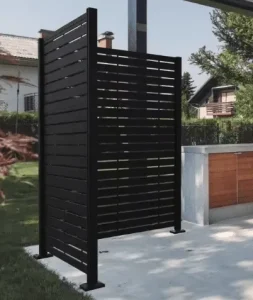
Chain link still has uses as an outer boundary marker or as a vegetation fence, but it is not a primary data center anti-intrusion layer. The wire is thin, the diamond openings flex, and a determined intruder can cut through quickly with hand tools. If an owner insists on chain link for the outer line, the inner defensive line should still be welded mesh.
Panel assembly matters as much as mesh geometry. We prefer welded panels with tamper-proof fasteners. Exposed bolts on the attack side are a convenience for the intruder. Posts set at 2.5 m centers or less reduce panel flex when someone leans a cutting bar against it. If a detection cable will be attached later, the panel must be rigid; loose wire systems create nuisance alarms.
Why small-aperture mesh defeats climbing
Small-aperture mesh defeats climbing because it removes the two contact points a climber needs: a finger hold and a toe hold. With a 12.7 mm vertical opening, the fingertips cannot curl around the wire and the boot toe cannot wedge in. The same geometry forces a cutting tool into a narrow work window, which increases the time and noise of attack. A welded joint also transfers force across the panel, so cutting one wire does not open a large flap.
Steel and Aluminum Tradeoffs in Data Center Security Fencing
Steel and aluminum both have a place, but the place is not interchangeable. For the primary anti-intrusion line, galvanized steel welded mesh is my default. Steel offers greater resistance to cutting and prying, and it carries the tensile stress of a rigid panel without requiring oversized posts. The tradeoff is mass. A steel panel weighs more, so posts, footings, and shipping costs rise. That is acceptable on a defensive perimeter because the whole point is delay and resistance.
Aluminum is lighter and naturally corrosion resistant, and it works well for decorative screening, office frontages, and low-threat zones inside a campus. The problem is cutting resistance. An aluminum extrusion is easier to sever with a portable saw than a galvanized steel wire or bar. I have recommended aluminum panels for data center visitor areas and utility screens, but never as the only barrier between a public road and a generator yard.
The surface treatment is not a detail. Hot-dip galvanizing gives the steel core a sacrificial zinc layer. A polyester powder coat then adds color and seals the surface against weathering. In coastal or humid sites, this combination matters more than the panel shape. Cut edges and field welds need zinc-rich repair before the fence goes into service, otherwise corrosion starts at the weakest point.
| Factor | Galvanized Steel Mesh | Aluminum Panel |
| Intrusion delay | High. Wire resists cutting and prying. | Moderate. Extrusions cut faster with power tools. |
| Weight | Heavier. Posts and footings carry more load. | Lighter. Easier to handle and ship. |
| Corrosion behavior | Zinc layer sacrifices first, powder coat seals. | Natural oxide layer resists salt and humidity. |
| Typical role | Primary anti-intrusion line and gate leafs. | Low-threat frontage and screening. |
| Recoating and repair | Field repairs possible, cut edges need zinc repair. | Color retention is strong, cuts remain visible. |
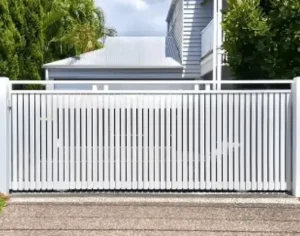
When aluminum makes sense in a data center perimeter
Aluminum makes sense where the risk is low and the architectural requirement is high. A visitor entrance, an office terrace, or a screen around cooling equipment can use aluminum slat or privacy panels without reducing the defensive value of the inner welded steel line. The key is separation. The aluminum zone should not create a climbable step onto the steel line, and it should not be sold as anti-intrusion protection.
If your data center perimeter combines a welded steel defensive line with an aluminum screen at the entry, it is worth confirming the transition detail before ordering. Send the site plan and gate opening widths to yloongfence@gmail.com and I will check the fence-to-gate interface for climb paths and post load conflicts.
Gate, Detection, and Lighting Integration Points
The gate is usually the weakest point in any data center security fencing system. A fence panel can be rigid and the gate can still flex if the leaves are undersized, the hinges are exposed, or the latch is mounted on the attack side. For secure perimeters, I specify double-leaf steel gates with tamper-proof hinges and a monitored latch. The gate post spacing has to account for the full swinging load plus wind load, not just the leaf weight. When a vehicle gate is part of the entry, a separate crash-rated barrier or bollard should carry the vehicle impact, because a standard sliding gate will not.
Fence-mounted detection works best on a rigid panel. Vibration or fiber optic sensing on a welded mesh panel produces fewer nuisance alarms than on a loose chain link fence. The detector should be zoned so the alarm tells security staff which segment was touched. That zoning is a design requirement, not an afterthought.
Lighting is part of the intrusion delay. Fixtures placed on the protected side should wash the outer face of the fence, so an intruder appears as a silhouette against the light. Dark pockets at gate recesses and corner posts invite tampering. I have walked fence lines where the lights were installed, but half the panel length was in shadow, and the camera view added little value.
The interface points matter more than the individual components. A good security fence can be degraded by a gate latch that releases under pressure or a detection conduit that creates a climbing step. The specification should list every penetration, conduit, and sign mount on the attack face, because those small items become the hold points.
Sourcing Data Center Security Fencing Without a Specification Gap
The most common problem I see in RFQs is a short perimeter description: “2.4 m high security fence, galvanized.” That leaves out the mesh aperture, wire diameter, post spacing, base detail, gate hardware, and coating class. Each missing line can turn an anti-intrusion fence into a boundary marker. When we review those documents at Hubei Yulong, the first step is to convert the site conditions into a panel specification that can actually be manufactured and installed.
That process covers the fence line as a system. We check the climb geometry, the post embedding method, the gate interfaces, and the coating requirements for the local environment. The result is a fence package that matches the delay objective, not just the drawings.
Send your data center site plan, required height, gate openings, and detection type to yloongfence@gmail.com or call +8619072006155. We will confirm the panel configuration, production lead time, and shipping details for your project.
Common Questions About Data Center Security Fencing
How high should a data center security fence be?
A 2.4 m height is a common starting point, but the mesh geometry matters more than the number alone. A rigid welded panel at 2.1 m with no toe holds can be harder to climb than a flexible 2.4 m fence with horizontal rails on the attack side. I usually specify 2.4 m for the defensive line, then add a concrete curb or buried base and keep all rails on the protected side. Local data center or critical infrastructure codes may set a different minimum height, so the final drawing should reflect the site requirement.
Is chain link fence acceptable for a server farm perimeter?
Many people assume chain link is a security fence because it appears around industrial yards. That assumption fails for a server farm perimeter. The wire is light, the diamond pattern flexes, and an intruder with hand tools can cut through it quickly. Chain link works as an outer boundary marker, but it should not be the last barrier before the data hall. Where used, it belongs outside a welded steel mesh line that creates the actual delay. The inner panel should have the small aperture and rigid structure that force a longer attack.
What is the difference between anti-climb and anti-cut fencing?
In the data center projects I have reviewed, the difference comes down to attack time. Anti-climb fencing removes the hand and toe holds that make climbing possible, usually through small mesh apertures and protected rails. Anti-cut fencing uses heavier wire or bar sections that resist cutting and prying. A 358 welded mesh panel handles both in a practical way. The 12.7 mm opening denies the grip, and the 4 mm galvanized wire resists hand tools longer than light chain link. That combination is why this panel type appears repeatedly in critical infrastructure specifications.
Does aluminum have any role in data center security?
The better question is not whether aluminum can be used, but where it can be used. Aluminum works for visitor entrances, equipment screens, and low-threat frontages where corrosion resistance and appearance matter more than delay time. The mistake is replacing the welded steel defensive line with aluminum pickets or slats and still describing the perimeter as secure. The right configuration separates the zones: aluminum at the public face, welded steel at the critical boundary, and no climbable step between them. Share your site layout and we will confirm which zones can safely use aluminum at yloongfence@gmail.com.
If you’re interested, check out these related articles:
Commercial Aluminum Fencing: 5 Key Business Applications
Aluminum Fences: School & Playground Safety Compliance
Steel Fence vs Wrought Iron: Modern Options for Durable Fencing
Steel Fencing for Parking Lots: Maximizing Car Park Security
Wholesale Steel Garden Fence Panels: Distributor Pricing & Supply