
A commercial blade fence gives an office building more than a boundary line. It defines the first impression of a corporate property while managing sightlines, airflow, and unauthorized access. What makes the system work is the adjustable blade angle combined with the aluminum alloy and powder coating selected for the specific site. I have worked on commercial fencing specifications where the same basic product was installed on a sheltered office park and a coastal corporate headquarters, and the long-term outcomes were entirely different because of one decision: the coating specification. This article explains how blade fence design, security performance, and material durability interact, so procurement teams and facilities engineers can specify with confidence rather than guess.
Blade Fence Design for Corporate Aesthetics
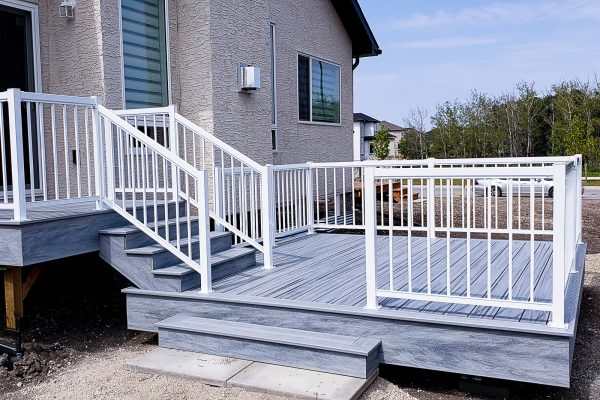
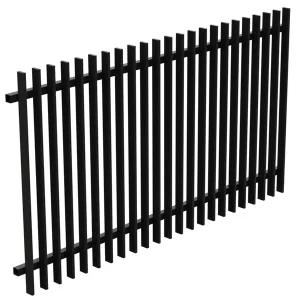
The visual impact of a perimeter fence on a commercial office building is immediate. Blade fence profiles create clean horizontal lines that complement modern glass facades and linear architectural features more naturally than vertical bar or mesh panels. The aluminum blades can be set at angles from nearly flat to steep, producing distinctly different visual densities without changing the panel framework.
Color selection is not just an aesthetic afterthought. A dark architectural grey or textured black blade fence against a light-coloured office exterior provides the contrast architects typically want for corporate branding, while the matte surface of a quality powder coat absorbs reflection rather than creating glare into office windows. Most large commercial projects I see select RAL 7016 anthracite grey or RAL 9005 jet black, but the factory should offer a full RAL palette for matching existing metalwork. The modular panel system also means replacement of a single damaged section is straightforward, which matters for facilities teams managing multiple sites.
Security Performance of Blade Fence in Commercial Settings
The security value of a blade fence starts with its physical barrier characteristics. Standard blade fence panels are typically 1.8 m to 2.4 m high, with blade spacing and angle limiting both reach-through and footholds. Unlike ornamental steel fences with decorative rings or finials that can serve as climbing aids, a properly specified blade fence presents flush vertical surfaces between horizontal blades. From an anti-intrusion perspective, that is a measurable advantage.
For office buildings that require additional perimeter hardening, the post and frame structure can accept integrated razor wire or electronic detection systems without altering the fence’s lines. We have worked on installations where the blade fence formed the architectural layer while a secondary sensor cable ran behind the top rail, invisible from the street side. The key is that the fence does not advertise its security function; it just performs it. Specification sheets should confirm the aluminum gauge used in the blades—2 mm is typical for commercial grade—and the post wall thickness, because these numbers determine cut resistance far more than the blade angle.
Aluminum Alloy and Surface Treatment for Urban Durability
The difference between a blade fence that looks new after ten years in a polluted urban corridor and one that looks chalked and oxidized within three years is the combination of alloy grade and coating system. For outdoor architectural applications, 6063-T6 aluminum alloy is the industry workhorse: it extrudes cleanly, accepts powder coating well, and has the corrosion resistance needed for exteriors. Some suppliers may offer 6061 alloy, which is stronger but extrudes with a slightly rougher surface that can show through the coating.
The coating process matters more than most buyers realize. A single-stage polyester powder coat might pass a visual inspection at delivery but begins to lose gloss and adhesion under UV and acid-rain exposure within two to three years. A proper commercial specification calls for a pretreatment layer of chrome-free conversion coating, followed by a primer layer, then a super-durable polyester powder coat with a minimum thickness of 60 microns. The factory I work with uses a vertical powder coating line with automatic recovery to maintain consistent film thickness across every blade, and we bake at precisely controlled temperatures to ensure full cross-linking. That level of process control is what separates a 15-year finish from a short-term one.
Blade Angle Engineering: Balancing Privacy, Visibility, and Airflow
The single most misunderstood parameter in blade fence specification is the blade angle. It is not simply a style choice. The angle sets the relationship between privacy, outward visibility, and wind loading. A blade nearly closed, say 15 degrees from horizontal, blocks almost all direct sightlines from ground level at perpendicular angles but also catches wind like a solid wall. On a tall office building in a wind corridor, that increases post load requirements and may demand deeper footings.
I usually recommend a 30-degree blade angle for commercial office applications where the fence faces public sidewalks or parking areas. At that angle, passersby see the building’s landscaping through the fence rather than a solid barrier, which keeps the property feeling open during the day, but direct line-of-sight from across the street is broken. The same angle permits enough airflow to reduce wind pressure by roughly 40 to 50 percent compared with a vertical solid panel of the same height, although local wind codes should always be checked. If your site is adjacent to a busy road and noise reduction is a priority, know that blade fences are not acoustic barriers—they will not significantly attenuate traffic sound regardless of blade angle.
Specifying Blade Fence for Office Building Projects: What to Ask Your Supplier
When procurement starts for a commercial office fence project, I advise my clients to ask three questions before comparing per-metre prices. First, request the coating specification in writing: pretreatment type, primer layer (if any), topcoat chemistry, and film thickness in microns. A verbal assurance that it is “powder coated” is not enough. Second, ask for the blade profile extrusion drawing with wall thickness called out at the thinnest point, not just at the edges. Third, confirm whether the supplier can provide complete panel assemblies with pre-punched post holes and all mounting hardware, because on-site fabrication adds labour cost and quality variation that almost always erode the initial price advantage.
Factory-direct suppliers like Hubei Yulong can customise blade width, length, and angle to the project’s architectural drawings, which matters when the fence must align with existing hardscape or integrate with a specific gate design. For a visual reference, see our aluminum blade fence panels product page. If your project involves a perimeter over 300 metres, a reliable factory will also provide a wind load calculation based on your chosen blade angle and post spacing, which local engineers often require for permit approval.
Common Questions from Commercial Office Fence Buyers
Do blade fences meet typical commercial building security codes?
They can, but compliance depends on the specific height, post spacing, and site conditions. Most commercial building codes require a minimum perimeter barrier height of 1.8 m for liability protection, and blade fence panels are easily manufactured to that dimension and taller. Security codes that mandate anti-cut features or specific climb resistance may require additional specification such as reduced blade spacing at the base or a smooth top rail with no projections. Your supplier should be able to provide a specification sheet showing compliance with any required standards for commercial installations.
How does aluminum blade fence hold up in salty coastal air?
Significantly better than galvanized steel. The aluminum itself is inherently corrosion resistant, but the weak point is any cut edge or drilled hole where the protective oxide layer is breached. That is why a full powder coating system—with proper pretreatment—seals the entire component. In coastal environments, I specify a minimum 80-micron coating thickness and require that all fasteners be stainless steel, not zinc-plated steel, to prevent galvanic corrosion at connection points. When those details are locked in, an aluminum blade fence will outlast steel fencing in salt-laden air by a wide margin.
Is blade fence suitable for office parks with high wind exposure?
Yes, and in some ways it is better than solid panel fences because the gaps between blades allow wind to pass through, reducing the structural load on the posts. But this requires engineering. The blade angle, post size, post spacing, and footing design all interact. For a 2-m-high blade fence at 30-degree blade angle in a region with 150 km/h design wind speed, we typically use 80 mm x 80 mm aluminum posts at 2-metre spacing with 400 mm x 400 mm concrete footings. Those numbers shift for every project, so never skip the wind load calculation from the manufacturer.
What is the typical lead time for a custom commercial blade fence order?
Standard commercial orders with factory-stocked profiles and standard powder coat colours can ship within 4 to 6 weeks from drawing approval. Fully custom blade widths, non-standard RAL colours, or large project volumes above 1000 linear metres may extend lead time to 8 to 10 weeks. Ocean freight transit time adds on top of that depending on destination. I recommend requesting a production schedule with milestone dates—extrusion, coating, quality inspection, packing—so you can track progress instead of waiting for a single shipping date.
Does a blade fence require ongoing maintenance?
Minimal compared to steel or wood fences. The powder-coated surface is self-cleaning under normal rainfall, and there are no joints that trap moisture. An annual visual inspection to check for loose fasteners and to clean any accumulated debris at the base of the panels is usually sufficient. In urban areas with heavy diesel soot or industrial fallout, a soft pressure wash every two years will prevent surface staining from embedding into the coating. When your office facility team is responsible for maintaining the property, the low ongoing cost is one of the strongest arguments for aluminum blade fence over painted steel alternatives.
A commercial blade fence is not a catalogue item you drop into any project without thought. The blade angle, alloy grade, and coating specification directly determine whether the fence still performs and looks good five years from now. If your firm is evaluating blade fence for an office building and needs factory-direct technical support on wind loading, custom colours, or project-specific specifications, send your site plan and requirements to sales01@yulongkeji-ch.com or call +8619086315193. Our engineering team can confirm the correct specification before you finalize your bill of materials.
If you’re interested, check out these related articles:
Steel Fence vs Wrought Iron: Modern Options for Durable Fencing
High-Security Steel Fencing: Protecting Government & Military Assets
Industrial Steel Security Fences: Anti-Climb & Anti-Cut Protection
Freestanding Outdoor Privacy Screens: Patio & Balcony Solutions