
Aluminum railing systems prices shift more with configuration and code compliance than with raw material alone. For deck, stair, and balcony projects, buyers who compare only a per linear foot number often miss the cost drivers that change a factory quote by 30 percent or more. This article explains the pricing structure from a production engineer’s view, covering how post design, infill type, finish, and installation conditions shape pricing for deck, stair, and balcony applications in 2025.
What Determines Aluminum Railing Systems Prices?
Factory pricing for aluminum railing systems starts with three inputs that are fixed before the surface treatment is even selected: post profile, infill type, and finishing system. A deck rail with square balusters and a standard polyester powder coat will not quote at the same price as a balcony rail with perforated aluminum panels and a fluorocarbon finish.
Post profile is the first variable. Rectangular posts are common in our quotations because they align cleanly and accept most bracket sets, but larger post sections become necessary for tall balcony runs or high-wind sites. Infill follows. Baluster railings cost less at the panel line than cable, glass, or perforated metal infill, but installation time can rise when opening limits are tight. Finishing is the third variable. Our automated surface treatment line applies polyester or fluorocarbon powders, and the fluorocarbon carries a higher cost because it delivers better salt spray resistance.
I have inspected coastal warranty samples, and most coating failures begin at cut edges or hardware joints rather than across the panel face. That is why our marine grade quotations include sealed hardware pockets and edge treatment, not only a thicker coating. A buyer who asks for only a price per meter has not yet defined the post, the infill, or the finish. No accurate aluminum railing systems price can be built until those three are locked.
How Much Do Deck, Stair, and Balcony Aluminum Railing Systems Cost?
Deck, stair, and balcony applications use the same aluminum materials, but the cost per linear foot changes because the engineering and component package changes. The table below shows factory ex works ranges we use for standard 2025 project quotations. These are not installed prices. They cover the railing system and primary hardware before freight, site labor, and local code adaptations.
| Application | Factory price range per linear foot | Main cost driver |
|---|---|---|
| Deck railing kit | 22 to 38 USD | Post section and infill pattern |
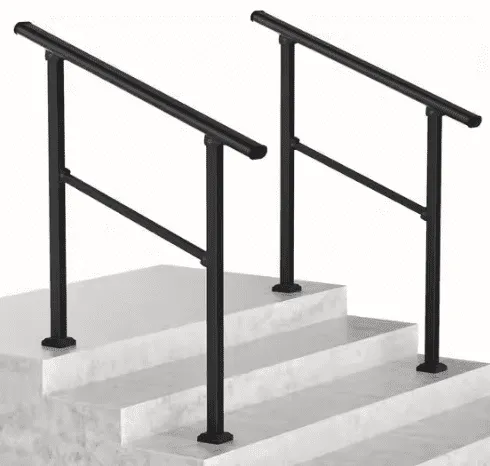
| Stair railing kit | 26 to 45 USD | Adjustable angle hardware and landing returns |
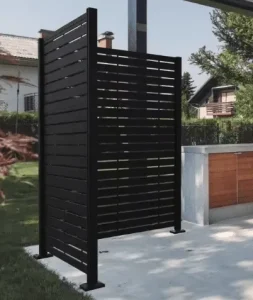
| Balcony railing panel | 24 to 42 USD | Panel height and perforated or slat infill |
| Coastal or high-moisture railing | 28 to 48 USD | Marine grade finish and non-corrosive hardware |
| Commercial or high-traffic railing | 35 to 60 USD | Reinforced posts, load testing, and documentation |
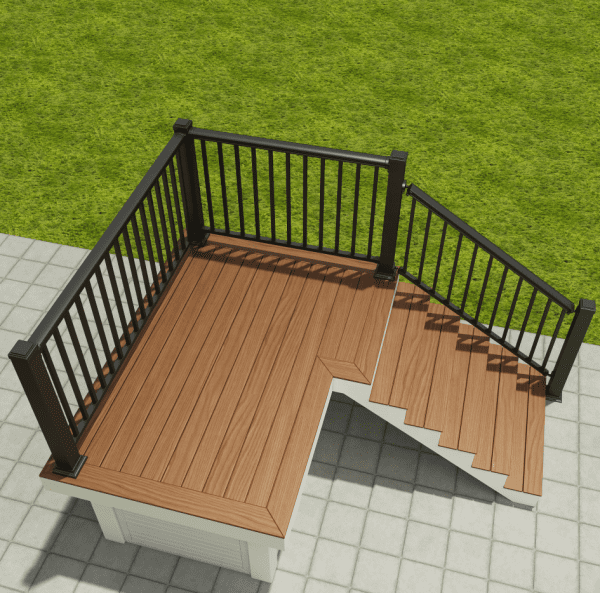
A deck kit is usually the most economical because post lengths and panel runs are repetitive. Stair railing moves higher because every flight introduces angle cuts, adjustable brackets, and often a graspable handrail. Balcony panels sit between the two, but the wide range reflects infill choice more than structural demand. Perforated aluminum panels cost more than standard balusters, yet they reduce sight lines and wind load in coastal applications.
If your order includes deck, stair, and balcony elevations in one program, confirm whether one post and bracket system can cover all three before finalizing the bill of materials. A mixed inventory of post types adds freight volume and site handling cost that no unit price worksheet will show. Send your elevation drawings and quantities to sales01@yulongkeji-ch.com, and we will check where the price can be consolidated.
Which Code and Material Factors Change a Railing Price Estimate?
Code requirements affect price earlier than alloy choice. A 36 inch residential deck rail may use a standard kit, while a 42 inch balcony rail, a commercial stair with a graspable handrail, or a pool barrier with opening limits enters a different structural class. The difference is not the aluminum weight alone. It is the post sizing, fastener package, and the documentation behind the design.
Deck and stair codes mostly follow local versions of the IRC. We keep standard post and baluster spacing designs for 36 and 42 inch heights, with infill spacing sized to reject a four inch sphere. Balcony and pool applications add wind load and corrosion risk. In those quotations, our engineers specify a heavier post wall or reduced post spacing before we release pricing.
Material grade is a secondary cost factor, but it still matters after geometry is settled. Most profiles we produce are 6063 aluminum, suited for complex extrusion shapes and standard railing loads. We quote 6061 aluminum when the system must carry a more demanding load or welded connection. We do not change alloys to win a quote. We state the grade on the quotation so buyers can compare equal specifications instead of equal prices.
What Should Buyers Check Before Comparing Railing System Quotes?
Most quote comparisons I review place factory, trading, and installed pricing in the same column, then rank suppliers by unit price. That ranking is easy to read and often wrong. The split that matters is factory price, delivered price, and installed price. At factory level, buyers should compare profile specification, alloy and wall thickness, finish standard, hardware set, and export packaging.
A lower line price that excludes edge treatment, hardware, or bundled post kits is not lower. In replacement projects where we have reviewed failed imported railing, the original saving was usually consumed by missing components, freight weight, or rejected weld lines. A responsible factory quote should red-line the drawing and list each component against the price.
If you are preparing a 2025 purchase list for deck, stair, or balcony railing, send the project drawings, quantity per system, and site condition notes to sales01@yulongkeji-ch.com or call +8619086315193. We will confirm material specification, current inventory, and a factory quotation matched to the exact configuration.
Questions Contractors Ask About Aluminum Railing Systems Pricing
Does the price list include powder coating?
Yes, our standard quotations include powder coating unless the drawing specifies mill finish. The coating cost is built into the unit price because bare aluminum would fail quickly in outdoor service. We quote polyester powder for most deck and stair projects. For coastal or high-traffic applications, fluorocarbon is available at a higher cost and longer finish life. If a comparison quote seems much lower, check whether it is for mill finish, because adding coating later changes the project price.
Why do stair railing kits cost more than deck kits?
It depends on the stair geometry and landing count. A straight deck run uses repeated panels and standard posts, so production time is predictable. Stair railing requires angle cuts, adjustable brackets, and usually a separate graspable handrail. Each landing return adds more connection points and more labor. When we price a stair kit, we do not charge a simple premium. The quotation follows the measured rise and run, because a steep or irregular stair needs components that a standard deck kit does not.
Can you match an existing railing style?
In projects we have supplied, matching starts with a section drawing or a physical sample, not a photo. Aluminum extrusions vary in wall thickness and profile shape, and two similar looking rails can behave differently under load. We ask for the original profile dimensions, baluster spacing, and finish standard. From those inputs, our engineering team checks whether the profile can be produced on our existing extrusion dies or whether a new die is required. New dies are the main reason a small custom run carries a higher unit cost.
What information do you need for an accurate factory quote?
Send the drawings, elevations, or site measurements that show the linear runs, post locations, height, and infill type. Also include the finish standard and the quantity per railing system. If the project is near salt water or must meet a specific local code, note that early. With those details, we can return a factory quotation with material, finish, hardware, and packaging separated. Share your requirements at sales01@yulongkeji-ch.com and we will confirm pricing and lead time before you release the order.
If you’re interested, check out these related articles:
Steel Fence Coating: Epoxy, Polyester, PVC for Longevity
Custom Aluminum Gates: OEM & ODM Solutions for Global Projects
Decorative Iron & Ornamental Steel Fence: Residential & Commercial Solutions
Chain Link Pool Fence: Codes, Heights, Gates & Pricing Guide