
Most aluminum railing system failures do not begin on site. They begin earlier, in an extrusion run where wall thickness drifted low or a powder coat line ran too cool. That separation between what a drawing shows and what a factory actually ships is why buyers need to understand the manufacturing sequence, not just the final price. We manufacture aluminum railing systems from billet to packaged kit, and the steps in between determine how the railing performs years after installation. This walkthrough covers what we check at each stage and what you should verify before your order leaves the factory.
What Happens Before Aluminum Railing Production Starts
Every order at Hubei Yulong starts with a drawing review, not a cutting list. We check post centers, panel widths, baluster spacing, and mounting detail before we order aluminum billet. The most common drawing error I see is a railing specified with a thin wall profile on a long commercial guard run. That wall can work for a short residential section, but it flexes too much under load on a long clear span. We flag that before production because the failure shows up after installation, not during it.
| Alloy and temper | Best use in railing systems | Why we specify it |
|---|---|---|
| 6063 T5 | Handrail profiles, balusters, infill | Good formability, consistent finish on visible surfaces |
| 6063 T6 | Load bearing top rails, longer spans | Higher tensile strength after full heat treatment |
| 6061 T6 | Heavy structural posts, gate frames | Stronger than 6063, harder to extrude into thin railing profiles |
| 6463 | Bright anodized architectural trim | Smoother surface after finishing |
For most guardrail work we specify 6063 T5 or T6. T5 is not an automatic downgrade. It holds shape well in thin baluster profiles and finishes cleanly. The problem starts when a buyer asks for 6061 T6 in every component. 6061 is stronger, but it pushes extrusion cost and complexity up without a matching benefit in typical railing sections. We reserve 6061 T6 for posts and gate frames where the load path concentrates.
How Do We Extrude and Cut Aluminum Railing Components
Aluminum railing profiles begin as cylindrical billets. We heat each billet, push it through a steel die, quench the extruded shape, and age it to the specified temper. That sequence locks in straightness and wall thickness. I look for three things after extrusion: die lines, twist, and wall variation. A light die line can disappear under powder coating, but a deep line becomes a stress riser in a load bearing rail. We reject those profiles before cutting.
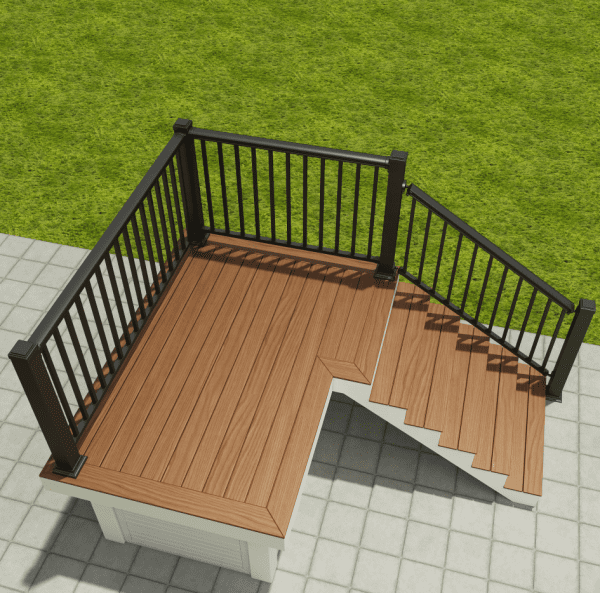
Cutting and machining then follow with length tolerances checked against the approved drawing. A post that arrives short changes baluster spacing on site. We check square cut ends on every production run, and we machine screw ports and internal connectors before powder coating. Doing this before finishing lets us catch chips, burrs, or wrong hole positions while the stock is still bare aluminum.
How Are Welded and Assembled Aluminum Railing Systems Built
Some buyers assume welded aluminum railing is always stronger than assembled railing. That assumption is too broad. A properly machined mechanical joint with internal connectors can outperform a poor weld, while a clean structural weld remains the right choice for heavy commercial traffic. We build both. The final decision is driven by use, span, finish, and shipping cost.
In our assembled systems, posts, top rails, balusters, and brackets are machined so each connection indexes into the next. This keeps the railing square during installation and reduces field drilling. For welded systems, we fixture top and bottom rails before welding to control distortion. I check weld penetration and visible porosity at the first article stage, not only at final inspection.
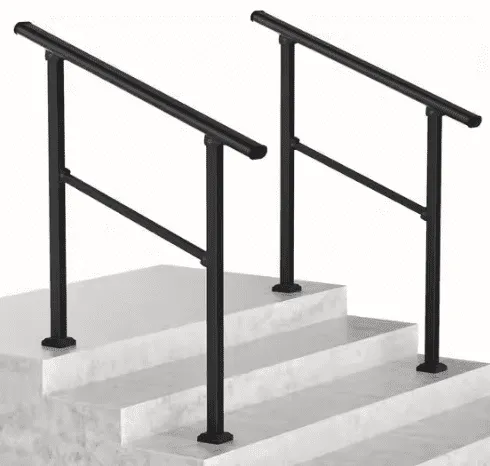
If your project involves stair runs with irregular rise, curved sections, or post mounted glass on aluminum rails, confirm the connection geometry before you lock the BOM. Send the drawing or site measurements to sales01@yulongkeji-ch.com and I will check the points that usually fail first.
How Does Powder Coating Protect Aluminum Railing Systems
Aluminum does not rust like steel, but it still oxidizes. The finish is what keeps a railing looking clean in coastal and high traffic conditions. Before powder reaches the railing, we run a multi stage pretreatment process that removes grease and creates a conversion layer on the aluminum surface. Skipping this stage or shortening it is one reason some railing finishes peel within two years.
Powder is applied electrostatically and cured in a convection oven. The critical checkpoint is dry film thickness. We measure thickness on flat faces, cut edges, and drilled holes, because corrosion tends to start where the coating is thinnest. A buyer cannot see this in a photo. The supplier should be able to state the coating standard and the thickness range. If the answer is vague, the coating system probably is too.
After curing we run adhesion and impact checks on sample profiles. For projects near saltwater we require stainless fasteners or sealed aluminum rivets. A high quality aluminum rail can still collect corrosion at a low grade steel screw. That failure is common and avoidable at the order stage.
What Should Buyers Confirm Before Ordering Aluminum Railing Systems
The most expensive railing order is the one that reaches the port with the right price but the wrong fixing method. A drawing is not complete until it shows post anchoring, baluster spacing, finish class, and the longest component length. We ask every buyer to confirm those items because each one changes the profile, machining, and packaging.
Send your part number, profile drawing, quantity, and destination port to sales01@yulongkeji-ch.com or call +8619086315193. We will confirm wall thickness, powder coating class, post configuration, and packaging before the order is released. That single check catches most problems before they reach the container.
Which Aluminum Railing Manufacturing Questions Do Buyers Ask Most
Can you mix assembled and welded aluminum railing in one project
Yes, mixing is common when the transition is planned at the start. A straight balcony run may use assembled panels for cost and flat packing, while a stair section with heavy foot traffic switches to welded frames for stiffness. The mistake happens when the two systems meet at a corner without a common post or matching rail height. We set the post schedule first and choose the connection method from the load, not from a preference for one system.
Why does one supplier quote the same railing photo at very different prices
The assumption that all lookalike railings share the same wall thickness is the usual error. Two products can appear identical in a photo while one uses a thinner profile, smaller posts, or a lower grade temper. Price also shifts with powder type, machining detail, and packaging. A low price is not automatically bad, but it should come with a clear profile drawing and finish specification. Without those, the comparison is against a photo rather than an actual product.
What should I check in a pre shipment inspection
The inspection depth should depend on whether this is a repeat order or a first production run. For a first run, check profile wall thickness, baluster spacing, weld quality, coating thickness, and packed length against the approved drawing. For repeat production, focus on the things that changed since the last shipment, such as finish batch, hardware count, or packaging. Do not skip the dummy assembly check. Seeing one full section assembled before packing catches alignment errors that loose parts hide.
How do you reduce shipping damage on long railing sections
In long span shipments we have seen most damage occur at the unsupported center of a bundle, not at the ends. The top and bottom rails flex during handling if the middle has no support. We pack long aluminum railing systems with internal bracing, foam separators, and steel strapping at quarter points. Forklift operators can still damage bundles if the packaging is opened carelessly, so we mark lifting points on the crate. Send the longest component length and destination port, and I will confirm the packing configuration and freight protection before loading.
If you’re interested, check out these related articles:
Selecting the Right Aluminum Driveway Gate for Durability
Commercial Steel Fencing: Top Options for Retail Parks and Offices
Steel Fence Coating: Epoxy, Polyester, PVC for Longevity