
Chain link fence wholesale decisions turn on three variables that most generic quotes leave vague: wire gauge, finished height, and whether the price covers posts, fittings, and coating. A 9 gauge fabric with a 2 in mesh behaves differently in a municipal perimeter than an 11.5 gauge roll around a tennis court. I evaluate these specifications from the production side, where small changes in steel diameter and zinc coating weight change both installed cost and replacement cycles. This article sets out the gauge, height, coating, and quote details that procurement teams and contractors should lock before comparing factory prices.
What Gauge and Mesh Size Do Chain Link Fence Buyers Actually Need?
Steel wire gauge is the first variable I check on a factory drawing. In chain link terminology, a lower gauge number means a thicker wire. A 6 gauge wire at 0.192 in carries a different installed stiffness than an 11.5 gauge wire at 0.113 in, and that difference appears under fence tension, wind load, and impact. Most commercial perimeter work lands on 9 gauge or 11 gauge. High security and industrial applications may use 6 gauge, while residential enclosures often use 11.5 or 12.5 gauge to manage cost in low traffic settings.
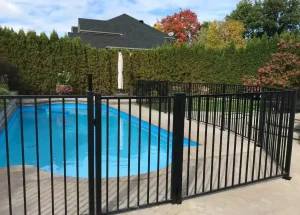
Mesh opening sets both visibility and climb resistance. A 2 in mesh is common where small openings are required for pools, schools, and equipment screens. A 2-1/4 in mesh is typical for residential boundaries. Smaller openings increase steel content and weight per roll, which pushes wholesale pricing upward. I recommend specifying both gauge and mesh on the purchase order rather than writing only the generic product name. That step prevents substitution of thinner fabric or a larger opening after price comparison.
| Gauge | Nominal Wire Diameter | Common Mesh Opening | Typical Wholesale Use | Relative Material Cost |
| 6 | 0.192 in | 2 in | industrial and high security | highest |
| 9 | 0.148 in | 2 in | commercial perimeter | high |
| 11 | 0.120 in | 2 in to 2-1/4 in | residential and light commercial | medium |
| 11.5 | 0.113 in | 2-1/4 in | residential | medium low |
| 12.5 | 0.099 in | 2 in | light use and temporary enclosures | lower |
Which Heights, Posts, and Coating Options Deliver the Right Service Life?
Chain link fence height follows the use case more than any single standard. Residential boundaries often run 4 ft to 5 ft. Commercial and municipal perimeters commonly run 6 ft. High security installations may require 8 ft to 10 ft with barbed arms or angled extensions. Height also drives the post schedule. A 6 ft fence with 2 in mesh requires heavier terminal posts and larger footings than a 4 ft fence, especially where gates interrupt the line.
Post selection receives less attention than it should. Line posts, terminal posts, and gate posts carry different loads. A 2-1/2 in outer diameter line post can serve standard runs, but terminal posts at corners and gate openings should be heavier or set in larger footings. Top rail and tension wire are not optional for a wind-stable installation, even when the quote lists them as separate line items. Ask for the wall thickness on line posts instead of accepting a blank standard schedule note.
Coating choice follows exposure. Hot-dip galvanized chain link fabric is the baseline for outdoor durability, and we confirm zinc coating against ASTM A392 or the equivalent specified standard. PVC-coated fabric adds a second protective layer over a galvanized steel core and is often specified where color consistency, acid resistance, or controlled visibility matters. The core still matters under the PVC. We inspect both zinc coating thickness and PVC adhesion before shipment. Wholesale pricing should name the coating standard, not say galvanized alone.
What Should a Factory Direct Chain Link Fence Quote Include?
Most quote sheets I review are incomplete. A usable factory direct chain link fence quote separates fabric, posts, top rail, tension wire, ties, fittings, gates, and packaging. It states the wire diameter, mesh size, coating type, post schedule, and roll lengths. Without those lines, two prices cannot be compared.
The same applies to gates. A quote should show gate frame dimensions, post outer diameter, wall thickness, hinge type, latch hardware, and whether the gate arrives assembled, knocked down, or welded in sections. Gate hardware is where some suppliers reduce cost. Light hinges and latches can undermine a fence even when the fabric is thick.
Freight and packaging should not appear as a surprise at the end. Chain link rolls are dense and awkward, so export cartons and palletizing add real cost. Request that the quote list packaging type, approximate container utilization, and whether the price is FOB, CIF, or EXW. We issue a part-numbered bill of materials for each roll and bundle so the receiving team can audit the shipment against the purchase order line by line.
If your project involves custom double gates or high wind exposure, it is worth confirming the gate post schedule and hinge grade before finalizing the BOM. Send the drawing and site conditions to sales01@yulongkeji-ch.com and we will return a component-level check against your specification.
How Do You Compare Chain Link Wholesale Suppliers Before Committing?
I ask for three documents before approving a new source: material certificates for the steel coil, coating thickness reports from the galvanizing line, and a production sample or pre-shipment inspection report. A factory that cannot produce these documents usually buys rolled fabric on the market and cannot control what arrives in the container. That arrangement is acceptable if the price reflects trading risk. It is not acceptable if the contract names the factory as manufacturer.
Check packaging and bundle marking as part of the same review. Rolls should be wrapped to avoid edge damage, posts bundled by outer diameter and wall thickness, and fittings packed separately. This sounds minor, but it changes how fast a site crew can unload and install. For large wholesale orders, ask whether the factory reserves the right to adjust wire diameter tolerances or mix partial coating lots. Chain link fabric is produced within accepted dimensional tolerances, and we hold the buyer’s agreed gauge rather than mixing lots.
Delivery time and payment terms should appear with the technical quote. A factory direct program works when the production schedule, coating line capacity, and inspection hold are visible. If a supplier quotes a lead time without asking about mesh size, coating, and roll length, the number is likely a guess.
Why Do Chain Link Fence Wholesale Orders Work Better With a Factory Team?
Many procurement teams lose time because quotes arrive with incomplete specifications, post sizes that shift after the purchase order, or packaging that fails after trans shipment. A factory partner that cuts the steel, weaves the fabric, galvanizes the rolls, and packs the container under one roof is easier to hold accountable when those failures appear.
Hubei Yulong produces zinc steel and aluminum fencing systems on automated lines and controls the surface treatment in house. For chain link fence wholesale orders, we confirm wire gauge, mesh size, post schedule, coating standard, roll dimensions, and packaging before the quotation is finalized.
Send your part number, required height, mesh size, and target quantity to sales01@yulongkeji-ch.com or reach us at +8619086315193. We will return a line-item proposal with the production lead time and export packaging plan.
What Do Procurement Teams Ask About Chain Link Fence Wholesale Orders?
What is the minimum order quantity for chain link fence wholesale?
Most factory programs start at a mixed container, typically around 3,000 to 8,000 square meters depending on roll width and coating. Smaller trial orders can often be arranged as LCL or mixed SKU shipments, though unit freight cost increases. The better approach is to load a 40 ft high cube container with rolls, posts, and fittings in one shipment and keep gate hardware packed separately. We quote MOQ by SKU and container rather than by one fixed catalogue line, which lets distributors combine heights and gauges in a single order.
How do I know whether to choose hot-dip galvanized or PVC-coated chain link?
A common mistake is to treat PVC coating as a replacement for galvanizing. It is not. PVC-coated chain link still uses a galvanized steel core, and the core should be specified before the color. Choose hot-dip galvanized fabric for standard industrial and utility perimeters where zinc protection and lower cost drive the decision. Choose PVC-coated fabric where color consistency, chemical exposure, or a softer visual profile justifies the added material cost. In both cases, ask for the zinc coating weight and PVC thickness in writing because those values determine actual service life.
Which chain link fence height is correct for pool and school applications?
It depends on the local code and the access point. Pool codes in many regions require a 48 in minimum barrier with mesh openings below the code limit, and gates must swing outward, self-close, and self-latch. School and sports enclosures often run 6 ft to reduce casual access and may require 2 in mesh rather than 2-1/4 in. I have seen buyers order 4 ft fabric for a pool and then fail inspection because the gate hardware did not meet the latch height rule. Specify the code version in the RFQ and let the factory confirm the matching post and gate package.
How should I prepare a site plan or bill of materials for a wholesale quote?
In programs we have supported, the fastest quotes came from a simple sketch or Excel take-off that listed each straight run in meters, corner counts, gate locations, and finished height. That information lets the factory calculate posts, terminal post types, top rail lengths, and roll counts without guessing. If the site has slopes, mark them on the drawing because stepped or raked ground changes post and tensioning details. Share your take-off and gate schedule with sales01@yulongkeji-ch.com and we will confirm the components against your drawing before pricing.
If you’re interested, check out these related articles:
Order Custom Aluminum Fencing from China: A Strategic Guide
Aluminum Perimeter Fencing for Solar Farms: Key Specifications and Global Sourcing
Ornamental Steel Fence: Design, Quality, & Direct Pricing
Wrought Iron vs Ornamental Steel Fence: Cost & Alternatives
Commercial Steel Fencing: Top Options for Retail Parks and Offices