
Aluminum post cable railing gives modern homes a clean sightline without giving up structural performance. In more than twelve years of working with aluminum railing systems, I have learned that design decisions matter as much as installation sequence. Post spacing, cable tension, and attachment details determine whether the system stays taut in service or loosens after the first season. For homeowners and contractors specifying this system, the first step is a clear layout. The second is the right hardware set. The third is a subframe that resists pull-through at every end post. The sections below move from material selection through tension verification.
How Does Aluminum Post Cable Railing Shape Modern Home Design?
This system earns its place in modern homes because it reduces the handrail to a thin horizontal line. Solid panel and picket railings read as a wall from inside a deck, but cable railing keeps the sightline open. Aluminum posts keep the weight down and resist corrosion in humid or coastal air better than zinc steel. The pairing of aluminum posts with stainless steel cables also separates structural load from tensile load. The posts carry bending and moment at the base. The cables carry tension between posts. That division makes the design predictable.
When I review a railing elevation, I look first at post placement and infill alignment. A straight deck with evenly spaced posts will look right long before the cables are tensioned. A misaligned post shows up immediately, because the cable line becomes wavy. That visual discipline is part of why this railing type works so well in contemporary architecture.
What Components Make Up an Aluminum Post Cable Railing System?
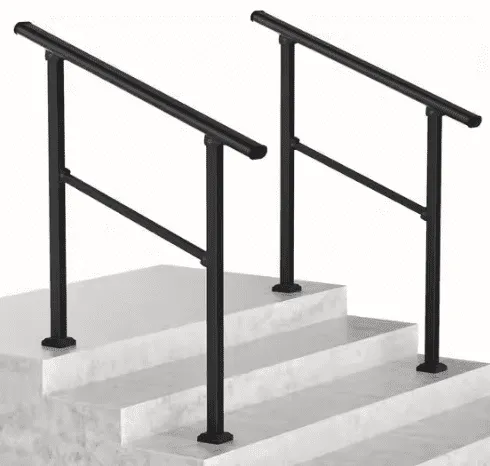
A complete aluminum post cable railing system has five main components. Each part occupies a different position in the load path. The post is the vertical structural element, usually square or rectangular aluminum tube. The top rail connects the posts and meets the handrail requirement in most residential codes. The cable is almost always T316 stainless steel in a 1×19 or 7×7 construction, with 1/8 inch and 3/16 inch diameters common. Tensioners thread into or swage onto the cable ends. Intermediate hardware such as through posts, washers, and end fittings carries the cable through direction changes.
| Component | Typical Specification | Role in Load Path |
|---|---|---|
| Posts | 2 x 2 inch or 2.5 x 2.5 inch aluminum tube, 0.08 to 0.12 inch wall | Carries bending and base moment |
| Top rail | Rectangular aluminum or stainless profile | Meets handrail and transfers load |
| Cables | T316 stainless steel, 1×19 construction, 1/8 or 3/16 inch diameter | Carries tension between posts |
| Tensioners | Swage or compression fittings | Sets and holds cable tension |
| End fittings | Threaded studs, washers, and through post fittings | Distribute cable load at termination |
Powder coated aluminum posts hold color longer on exposed decks than liquid paint. For coastal projects, I specify a marine grade stainless cable and either anodized or powder coated posts. The finish decision matters less than the hardware decision. A cheap tensioner will seize long before the post fails.
How Should You Plan Aluminum Cable Railing Post Spacing?
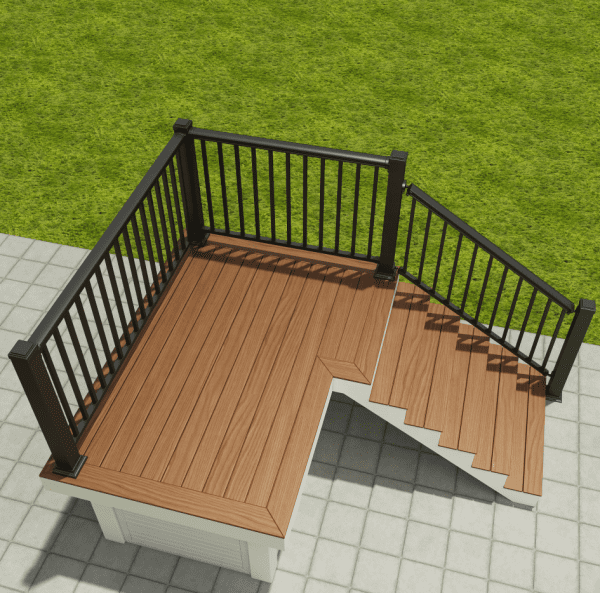
Post spacing drives both cost and deflection. The cable alone is not stiff enough to hold a wall of tension without posts at regular intervals. I normally space aluminum posts at 4 to 6 feet on center for straight runs. Corners, end conditions, and stair transitions get posts of their own. Do not treat a cable change point as an optional post.
I have seen layouts where a long run turned a corner through one post, and the post twisted within the first year because the tension vectors did not cancel. When a cable changes direction, the resultant load usually exceeds what a single intermediate post can carry. If you are working around an offset wall or a stair, make the turn on a dedicated corner post and keep the angle change above 90 degrees where possible.
What Is the Right Cable Spacing for Code Compliance?
Code compliance is measured at the widest opening in the railing. Most residential codes require that a 4 inch sphere cannot pass through the infill. That means cable centers should stay slightly under 4 inches over the full run, including at mid span. I prefer 3 inch vertical spacing on high visibility decks because cable sag increases slightly between posts. The exact requirement in your area may be 3 inches or 3.5 inches depending on local amendment. Check with the authority having jurisdiction before drilling posts.
How Far Apart Can Aluminum Posts Be Without Added Stiffening?
Without an intermediate stiffener, aluminum posts at 6 feet on center are practical for 36 inch and 42 inch guard heights if the post wall thickness is at least 0.09 inch and the base connection is rigid. Beyond 6 feet, the top rail may deflect enough to loosen cables, especially with horizontal cable runs. For a 7 foot span, I either move up to a thicker post section or add a mid rail. The choice depends on whether the deck edge is straight and whether wind exposure is high. A narrow balcony in a sheltered courtyard tolerates more than a rooftop deck in an open exposure.
If your project involves runs over 6 feet, corner posts, or stair transitions, confirm the post wall thickness and tensioner type before you finalize the hardware list. Send your post centers and cable run length to sales01@yulongkeji-ch.com and we will check the layout against deflection and code limits.
What Does Aluminum Post Cable Railing Demand From the Building Structure?
Aluminum post cable railing is only as strong as the connection beneath it. End posts carry the full tension load of every cable plus overturning from someone leaning on the top rail. A surface mounted post on a thin deck board is not acceptable for an end post. The post must engage the rim joist, a structural block, or a steel bracket tied to the frame.
I look for three things at every post base. First, the rim joist size and species must match the load. Second, through bolts or structural screws must be staged so they do not split the joist. Third, the post must be shimmed level so the cable passes through without binding. When the deck frame is older, I recommend adding blocking under the post locations before railing installation.
How Do You Anchor Aluminum Posts to a Deck Frame?
Set the post plumb on the rim joist and mark all four fastener locations. For a face mounted post, use through bolts with structural washers. For a surface mounted post, use a heavy gauge aluminum base plate with four or six fasteners into the deck framing, not just the deck boards. I drill pilot holes to prevent splitting in dense framing. After all posts are set, pull a string line across the cable holes to check alignment before installing cables. A post that is off by 1/4 inch will show up as a wavy cable line. Correct the post while the fasteners are still snug.
How Do You Tension Cables Without Distorting the Posts?
Cable tension is what makes the railing feel solid. Too little tension makes the cables sag under load and look unfinished. Too much tension can bow an undersized post inward. I tighten stainless cables in the same sequence every time. Start from the middle cable and work toward top and bottom. That keeps the post from being pulled progressively to one side.
Set tension to a uniform pitch, then let the system rest for an hour and retension. Stainless cable seats into the fittings and elongates slightly on the first cycle. After the second pass, the cables should feel firm without sounding like a guitar string. For a 1/8 inch T316 cable, I typically specify a working tension well below the minimum breaking strength and leave fine adjustment to the threaded tensioner.
What Is the Right Tension for T316 Stainless Steel Cable?
There is no universal number because post spacing and diameter change the result. Most residential cable railing systems run 1/8 inch T316 cable at a fraction of the break strength, with a taut feel rather than a rigid lock. I judge tension in two ways. The cable should not deflect more than a visible amount under a firm hand push at mid span, and the end post should not show measurable inward lean. If either occurs, adjust the tensioner in half turn increments and recheck both ends. A deck canopy or direct sun can change tension slightly through thermal movement, so avoid setting the cable to maximum on a hot afternoon.
What Should You Confirm Before You Order Cable Railing Hardware?
Ordering cable hardware before the layout is fixed creates two risks: extra swage fittings or posts in the wrong position. Most of the rework I have seen comes from changing post centers after tensioners were purchased. If your project has a deck over 8 feet wide, a corner transition, or coastal exposure, send your plan view with post centers and cable run lengths to sales01@yulongkeji-ch.com or call +8619086315193. We will confirm the post schedule, tensioner type, and cable lengths before you commit.
What Questions Should Homeowners Ask About Aluminum Post Cable Railing?
Does Aluminum Post Cable Railing Need More Maintenance Than Glass?
No. In most environments an aluminum post cable railing needs less regular maintenance than a glass panel system because it does not show mineral spotting or fingerprints across a large transparent surface. The stainless steel cables and aluminum posts should be washed with mild soap and water when salt or road film accumulates. I inspect tensioners yearly on exposed decks and retighten any cable that has developed visible sag. Coastal sites may need more frequent washing, but the structural components do not require repainting. The main service item is tension, not the metal itself.
How Tight Should the Cables Be?
It depends on cable length, post spacing, and exposure. On a straight run with posts at 4 to 6 feet, the cable should feel taut with very little mid span deflection under a firm hand push. On a long run, thermal movement leaves slightly more slack in hot weather. I set tension from the middle cable outward and retension after the first seating cycle. If the end post shows inward lean, back off the tensioner a half turn at a time until the post stands plumb. A guitar string pitch is usually too high for residential aluminum posts and can distort the frame.
Can Cable Railing Be Installed on a Stair Balcony?
A common assumption is that cable railing will not follow a stair angle, but stainless cable makes the transition cleanly when the posts are detailed for the slope. Stair applications use the same post and tensioner set, with a raked top rail and cables that run parallel to the stair pitch. I usually keep an intermediate post at the top and bottom transitions. The critical detail is drilling the cable holes on the rake line, not level, so the cables do not bind at the post face. A short sample section settles hole positions before full production.
What Happens at Corner or End Posts?
The answer changes at the corner versus the end because the load paths are different. At a 90 degree corner, the tension from two perpendicular runs combines into a resultant load that can twist an undersized post. I use a larger corner post or a corner assembly with a thicker wall, and I keep tensioners accessible from the outside of the turn. At an end post, every cable terminates into the post face, so the post and its mounting must resist the full tension of the entire run. If a corner is wider than 90 degrees, the resultant load drops and a standard post often works. The deciding factor is the base connection, not just the post section.
How Do I Get a Complete Hardware Set for a Custom Deck Layout?
In projects we quote, the fastest path is to send a plan view with post centers, cable run lengths, and the region where the project will be built. We then confirm the post schedule, through post fittings, corner treatments, and cable lengths before pricing. This avoids buying too many tensioners or missing transition hardware. Share your elevation drawing or site photos and your contact details. We will return a hardware list and lead time at sales01@yulongkeji-ch.com or +8619086315193.
If you’re interested, check out these related articles:
Source Steel Fencing from China: An Expert Import Guide
Aluminum vs Wood Fence: Cost, Care, and Lifespan Compared
Decorative Aluminum Gate Panels: Modern Home Design Solutions
Round Aluminum & Galvanized Steel Fence Posts: Ultimate Guide
Frameless Glass Balustrade: Designs for Stairs, Pools & Balconies