
Aluminum frame glass railing and frameless glass railing decisions usually turn on two questions: how much the project costs and how clean the sightline should be. In our engineering work, buyers often set the choice up as a simple tradeoff between structural convenience and visual openness. That framing misses the more practical issue. The better question is which system will still look right and remain safe after three years of weather, thermal movement, and daily handling. This comparison breaks the decision down by structure, real cost drivers, aesthetic behavior, and maintenance so you can specify with confidence instead of by render image.
What Is the Real Structural Difference Between the Two Systems?
Aluminum frame glass railing captures the glass panel within extruded top and bottom rails and vertical posts. The frame forms a continuous load path, so wind pressure and guard loads transfer through the rail sections into the posts and anchors. Frameless glass railing removes most of that visible metal. The panel is fixed by point clamps, standoff pins, or a base channel, and it must carry the same loads through a smaller number of concentrated connections.
This distinction drives almost every other difference in the project. A framed panel can use thinner glass because the load is distributed along its edges. We usually see 8 mm to 12 mm tempered glass in framed systems. Frameless panels typically require 12 mm to 19 mm tempered or laminated glass, because each fixing point concentrates stress. The glass is doing more work, and the hardware is doing less. We spec framed systems for high-traffic commercial decks where a handrail is already required, because the frame gives us a predictable way to resolve point loads. Frameless works better when the view is the primary requirement and the base detail can be designed from the start.
How Much Do Aluminum Frame and Frameless Glass Railings Cost?
The cost comparison is not a simple square-metre price between two products. It moves with glass thickness, post spacing, substrate condition, and whether the installer has handled glass railings before. Frameless systems often have fewer parts, but the parts that remain carry more structural responsibility.
| Cost driver | Aluminum frame glass railing | Frameless glass railing |
|---|---|---|
| Glass panel | 8 to 12 mm tempered glass | 12 to 19 mm tempered or laminated glass |
| Hardware | Extruded posts, rails, and gaskets | 316 stainless clamps, spigots, or base channel |
| Structure | Standard post anchoring with continuous load path | Rigid base channel or deeper core-drilled anchors |
| Installation | More parts, faster alignment, more forgiving tolerances | Fewer parts, more precise drilling, longer adjustment |
| Maintenance | Occasional gasket replacement | Sealant and clamp inspection at concentrated points |
In our quotations, the aluminum framed system is easier to standardise because extrusions, gaskets, and glass panels can be combined from the same production line. Frameless tends to become project-specific once site measurements come in. A balcony with weak existing concrete may need a new aluminum base rail or steel subframe to give the glass a rigid anchoring plane. That hidden work is often the difference between a clean estimate and a surprise after site survey. Buyers who compare only the visible hardware cost usually miss the structural preparation line.
Which Choice Delivers the Cleaner Sightline on a Deck or Balcony?
Frameless glass railing still wins on pure view. There is no top rail to cross the sightline at hand height, and the posts are either omitted or reduced to small stainless clamps. For a penthouse balcony or a pool deck, that openness is the point of the specification.
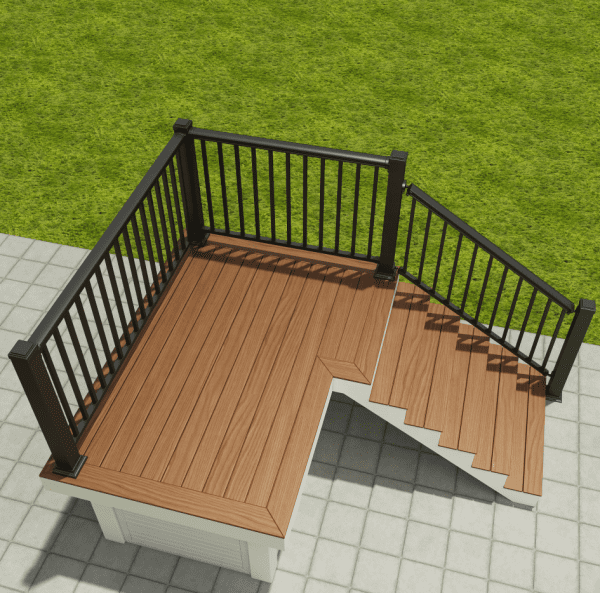
Aluminum frame glass railing does not have to look heavy. A narrow top rail, thin side posts, and a dark powder coat can reduce the visual mass while keeping the frame. We often recommend a dark bronze or matte black aluminum profile for clients who want the glass to read as the main surface. The framed option also matches other aluminum elements on the building, including gates, screens, and handrails, which matters when the developer wants the whole site to read as one system.
The aesthetic question becomes practical when you look at panel alignment. Frameless glass shows every millimetre of unevenness between adjacent panels. Framed glass hides edge tolerance behind the rail. If the building is older or the contractor is not specialised in glass, a framed system is more forgiving to install cleanly. That does not make it inferior. It makes the final appearance more repeatable across a long elevation.
If your balcony is curved or the parapet has uneven concrete, the post spacing and fixing detail should be checked before the bill of materials is locked. Send the deck layout and glass height to yloongfence@gmail.com and we will review the load path at the transition points.
How Do Thermal Movement and Code Requirements Affect These Railings?
Glass and aluminum expand at different rates. Framed systems absorb some of the movement in rubber and PVC gaskets, so the panel never bears directly on hard aluminum edges. Frameless systems transfer movement into the base channel and point fixings. If the holes are drilled tight and the fixings have no elastomeric pad, thermal cycling can crack glass around the clamp. We have seen this failure mode on dark-framed installations where the glass heated fast but the base stayed cool. The fix is simple, but it must be designed in, not found on site.
Code compliance moves in the same direction. Guard height, opening size, and glass safety rules are similar for both systems. The real difference is how the panel proves it can resist the required guard load. A framed guardrail distributes load across the rail and posts. A frameless guardrail demands a stronger base channel, deeper embedment, and more careful core-drilling. Where glass is near stairs or public circulation, we prefer laminated glass rather than monolithic tempered glass. If a panel breaks, the interlayer keeps the sheet from falling. That single decision costs more at the material stage and avoids a much larger liability problem later.
How Should a Buyer Choose Between Aluminum Frame and Frameless Glass Railing?
Choose aluminum frame glass railing when the budget is fixed, the site has many corners, or the substrate is wood or a thin parapet. The frame gives a continuous load path and accepts standard post anchoring. It also works well when the railing must connect to aluminum gates or screens. Choose frameless glass railing when the view is the top requirement, the substrate is concrete, and the project can carry the extra glass and stainless hardware cost. That system should only go to an installer who has completed glass balustrades before, because anchor placement errors are expensive to correct.
A more useful sequence is to lock the mounting surface first, the glass panel schedule second, and the hardware style third. If the base condition cannot absorb the concentrated post loads from frameless fixing, the question is already answered. We usually ask clients to send the structural edge detail before they select glass thickness. Without that, the visual comparison is just a rendering exercise.
Budget pressure is real, and the wrong choice is usually the one made from a rendering alone. The glass railings that underperform are the ones whose fixing method was copied from another site without checking the actual substrate. If your project includes glass on a deck, balcony, or stair, send the layout, required height, and panel schedule to yloongfence@gmail.com or call +8619072006155. We will review the load path and hardware selection against your mounting surface and confirm what can be standardised before your quotation is final.
What Should Buyers Ask About Aluminum Frame vs Frameless Glass Railing?
Does frameless glass railing cost more than aluminum frame glass railing?
Frameless glass railing usually costs more than aluminum frame glass railing once glass thickness and stainless hardware are included, but the gap is not spread evenly across every line item. The premium sits in the panel schedule and the structural base. If the deck is concrete and straight, frameless may be closer in cost than buyers expect. If the parapet needs reinforcement, the frame option becomes the less expensive route quickly.
Can an aluminum frame glass railing still look modern?
Many buyers assume an aluminum frame always looks traditional. That assumption falls apart when the frame is narrow and the finish is matte black or dark bronze. A slim top rail and minimal posts keep the glass prominent while carrying the load. The visual difference between a thin framed system and a base-channel frameless system can be small from across a room, and the framed version remains easier to keep aligned.
Which system is safer for a second-story deck?
It depends on the substrate and the anchor detail more than the glass style. If the deck is concrete and the base channel can be core-drilled deep enough, frameless is workable. If the rim joist is wood or the parapet is hollow, a continuous aluminum frame gives a more predictable load path. Safety comes from the glass specification and the mounting detail working together, not from choosing one product category over the other.
How do we keep glass railing posts from moving in high wind?
In projects we have reviewed, movement problems usually begin at the base fixing, not in the glass itself. The base channel or post needs enough edge distance in the substrate, and the holes need slotted or oversized connections so thermal movement does not rack the panel. When a guardrail is stiff enough at grade, the glass can flex within its design range and return to position. Share your site condition and required height with yloongfence@gmail.com and we will confirm which anchoring detail fits before the order is placed.
If you’re interested, check out these related articles:
Aluminum Fencing for Coastal & Humid Environments
Aluminum Fence Post Installation: Depth, Spacing & Anchoring
Commercial Steel Fencing: Top Options for Retail Parks and Offices
Hubei Yulong Shines at 2026 Indiana Fence Show, Securing 8 New Partnerships