
Aluminum railing load testing is often reduced to a pass/fail certificate, but a passing report only matters if the test setup matches the installed condition. In twelve years of working with railing systems, I have learned to ask what was restrained, where the load was applied, and which ASTM method governed the procedure. A railing can pass a laboratory test and still fail a site inspection when the tested span, baluster section, or anchorage differs from the approved installation. This article explains the load cases, ASTM references, and factory verification steps that make a load test meaningful.
What Does Aluminum Railing Load Testing Actually Verify?
Load testing verifies three things: whether the assembled railing resists the specified load without rupture or excessive deflection, whether it returns close to its original position after the load is removed, and whether the connection between rail, baluster, and post holds through the full load path. The result is not a material property. It is a system property. A 6063-T5 aluminum profile with sufficient wall thickness may pass in one geometry and fail in another because the span, post spacing, and bracket type all change how load travels through the assembly.
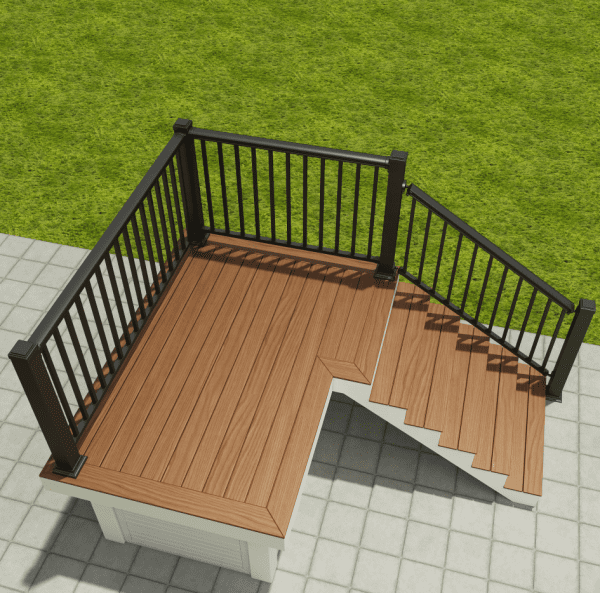
In my review work, I treat the test report as a description of one specific configuration. When a supplier sends a passing report for a 4 ft guard panel and the project uses a 6 ft span, the report still confirms material and coating quality but it does not confirm structural performance for the longer span. That distinction is easy to miss when the certificate heading says passed.
How Do ASTM Standards Set the Bar for Railing Performance?
For aluminum railing load testing, the two documents that matter are ASTM E985 and ASTM E935. ASTM E985 sets the specification for permanent metal railing systems and rails for buildings. ASTM E935 sets the test methods. The two references work together: E985 states what the railing must do, and E935 describes how to prove it. In practice, a supplier may reference only one of them, and that is a red flag. A material certificate for the aluminum extrusion says nothing about assembled railing performance, and an E935 test report without an E985 reference may not state the acceptance criteria.
The load cases commonly cited are a uniform load of 50 pounds per linear foot at the top rail and a concentrated load of 200 pounds at any point along the rail (International Code Council, International Building Code, 2021 edition; ASTM International, ASTM E985, current edition). These values are not marketing numbers; they represent a body leaning on the guard and a point impact at the weakest likely location. The direction of application matters because a railing that holds a downward load can still rotate under horizontal pressure at the top rail.
Which Load Cases Matter Most for Aluminum Railing Systems?
| Load case | Direction | What it simulates in service | Failure mode I watch |
| Top rail uniform load | Horizontal and vertical | Body pressure or crowd loading | Rail deflection and bracket rotation |
| Concentrated point load | Any direction at midspan | Hand grip or impact | Local bending and permanent set |
| Infill load | Perpendicular to balusters | Child or object pressure | Baluster end fitting slip |
| Post anchorage reaction | Base moment and shear | Wind and impact transfer | Anchor pullout or substrate failure |
Aluminum railing systems usually pass top rail load cases when the rail profile and wall thickness match the span. The failures I see more often occur at the post connection and the baluster end fitting, not at the rail itself. A concentrated load of 200 pounds at midspan creates a large bending moment, and if the baluster is hollow with a thin wall, the load can deform the socket before the post moves. The lab report should separate rail deflection from connection slip; a combined measurement hides the weak link.
If your project uses a nonstandard baluster section or a long span, it is worth confirming the test fixture matched that exact profile before you approve the submittal. Send your baluster section and span layout to sales01@yulongkeji-ch.com and we can check whether the current test data covers your configuration.
How Does YLOONG Test Aluminum Railing Before Shipment?
Before a railing series moves to production, YLOONG runs load tests on assembled sections rather than on raw extrusions. A test on a mill finish tube gives you material data, not system performance. We test the complete assembly with the same bracket, baluster, and post sections that go into the shipment. For stair railing systems, we also check the angle connection because the load direction changes at the bottom and top of each run. The acceptance criteria follow ASTM E985 performance requirements. The test method follows ASTM E935, and each report states the span, load direction, measured deflection, and permanent set after unloading.
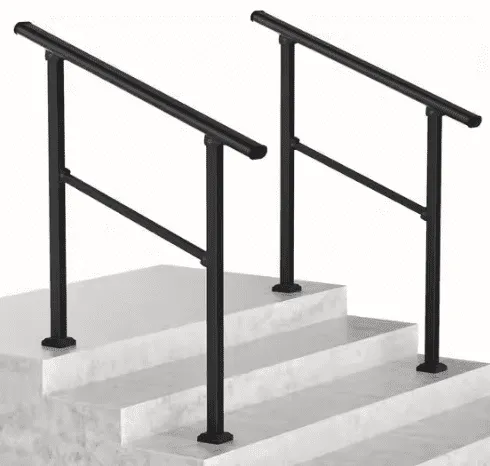
In one review of a stair project, the straight guard section passed at a 48 inch span, but the angled connection showed permanent set under a concentrated load of 200 pounds. The fix was a thicker internal connector at the swivel mount, not a new rail profile. That distinction between component failure and assembly failure is why I insist on assembled sample testing.
What Should You Confirm Before Placing an Aluminum Railing Order?
A load test report is only as useful as the configuration it describes. If you have a custom opening height, a wind load condition, or a railing that carries glass infill, a generic certificate may not satisfy the building official. Before you finalize the bill of materials, confirm three items with your supplier: the tested span, the tested baluster section, and the documented permanent set after unloading.
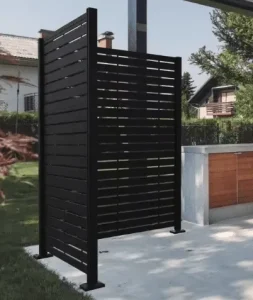
YLOONG supplies assembled aluminum railing systems with test reports that state these parameters. Send your railing drawings, required load case, and order quantity to sales01@yulongkeji-ch.com. You can also call +8619086315193 with a specification sheet and we will confirm whether the standard system or a modified profile meets your submittal requirements.
What Questions Buyers Ask About Aluminum Railing Load Testing?
Does a mill test certificate cover railing load performance?
No. A mill test certificate reports the chemical composition and mechanical properties of the aluminum extrusion before fabrication. It does not tell you how an assembled railing system will behave under a top rail load or a post anchorage load. The weakest point in a railing is usually a connection, not the raw profile. For that reason, ask for a system level ASTM E935 test report that identifies the assembled rail, baluster, post, and bracket configuration. A material certificate works for traceability. It does not replace structural verification.
Is a 200 pound concentrated load enough for aluminum railing?
Many buyers assume the 200 pound concentrated load is the only requirement. It is not. A railing also has to resist the 50 pounds per linear foot uniform load and the infill load, and the most severe condition depends on span and post spacing. For residential guard applications, the concentrated load at midspan usually controls. For taller guards or long spans with glass infill, wind pressure or a horizontal uniform load can govern. A single load value without the span and direction is incomplete. Test reports should state all applied load cases, not just the headline number.
Does powder coating affect load test results?
Not in a way that changes the structural section to any significant degree, but it matters if the coating process masks a defect or if coating thickness moves a mating dimension. Powder coating adds a thin polyester layer over the extruded aluminum. The coating itself carries no structural load, so a properly controlled powder coat does not reduce the capacity of a tested railing. The more important check is dimensional: coated baluster ends must still fit the bracket and socket. If a part is coated and then tested, the report should say so. That keeps the tested condition aligned with the shipped condition.
Can YLOONG test a custom aluminum railing configuration before bulk production?
In railing programs I have reviewed, the fastest way to close a compliance question is to test the exact assembly the buyer will receive. Custom aluminum railing configurations can be load tested as a first article sample before bulk production begins. That sample includes the specified rail profile, baluster section, post bracket, and fixing method. The test method follows ASTM E935, and the acceptance criteria follow ASTM E985. If your project requires a submittal package for the building official, send your drawings and the required load cases to sales01@yulongkeji-ch.com and we can confirm the testing scope for your configuration.
If you’re interested, check out these related articles:
Decorative Iron & Ornamental Steel Fence: Residential & Commercial Solutions
Best Aluminum Fence Styles for Residential Gardens in 2025
Aluminum Fence Grades: Understanding T5 and T6 Strength
Frameless Glass Balustrade: Designs for Stairs, Pools & Balconies
Commercial Steel Fencing: Top Options for Retail Parks and Offices