
Post-mounted vs side-mounted railing decisions get made too late in the design process, and the result is often an installation crew fighting misaligned anchors or a contractor paying for rework. In most projects we review, the correct choice follows the edge condition, the load path, and the substrate material, not the railing style. The mounting method determines how lateral load travels into the structure, how much clear width remains on the deck, and whether the detail passes inspection without field modifications. This article compares both systems so you can specify the right hardware before fabrication starts.
What Is the Difference Between Post-Mounted and Side-Mounted Railing?
Post-mounted railings place the post on top of the walking surface and anchor it downward into the deck frame or concrete through a base plate. The post carries the guard load into the floor system at the base, and the top rail acts as the upper load collector. Side-mounted railings secure the post or a face-mounted bracket to the rim joist, fascia beam, concrete edge, or steel stringer. The walking surface stays clear, and the load path shifts to the edge member.
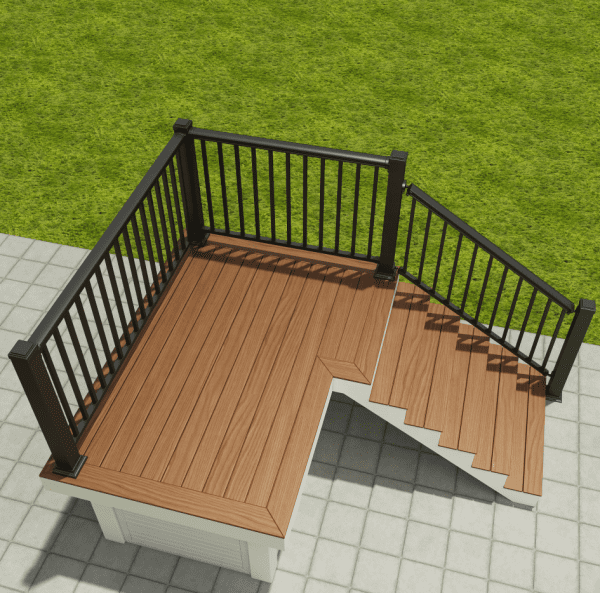
| Factor | Post-Mounted Railing | Side-Mounted Railing |
|---|---|---|
| Deck surface | Posts occupy floor area and must sit over blocking or solid framing | Surface stays clear because hardware lives on the fascia or edge member |
| Anchoring | Vertical anchors through base plates into framing or concrete | Face anchors in shear and tension into the rim board, slab edge, or stringer |
| Best substrate | Wood joists, concrete decks with sound edge thickness, steel deck plate | Solid lumber rim joists, concrete slab edges, steel stringers or beams |
| Field adjustment | Easier to adjust vertical post height during installation | Requires precise bracket positioning to keep guard height and reveal line |
| Load path | Bending at the base connection | Shear and pull-out at the side connection |
Aluminum post-mounted systems typically use a base plate with paired fasteners or structural screws; side-mounted systems use through-bolts, lag screws into verified framing, or wedge anchors depending on the substrate. The two details look different, but the real difference is where the load enters the building structure.
Where Do Post-Mounted Railings Perform Best?
Post-mounted details work best where the deck surface creates a reliable horizontal anchor field and where a small loss of open deck area is acceptable. New wood decks with continuous joists are straightforward because the contractor can back-block the rim and install the posts along the framed edge before the final board is set. Concrete decks are also viable when the slab is thick enough for expansion anchors or adhesive anchors with proper edge distance.
In aluminum railing packages we have quoted, post-mounted panels are easier to assemble in the factory because the post spacing repeats independently of the rim condition. That repeatability reduces field drilling and keeps the rail line straight across long runs. The tradeoff is that post bases can interrupt the flat surface and hold water if they are not sealed against the deck membrane, so the detail has to include a proper base plate weather break.
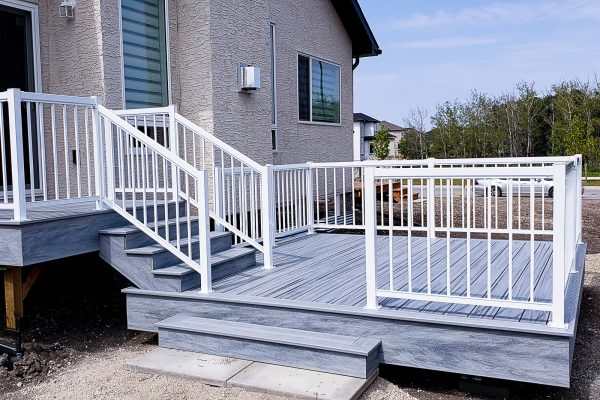
I would still specify post-mounted railings for a standard residential deck with solid wood framing. The reason is not appearance; it is the shorter load path from the post base into the joist system. When a concentrated guard load hits the top rail, the post base transfers the moment directly into the deck structure. A side-mounted bracket first puts that same load into the rim board through fasteners in shear and pull-out, and that edge may not have the blocking the engineer would want.
Where Does Side-Mounted Railing Make More Sense?
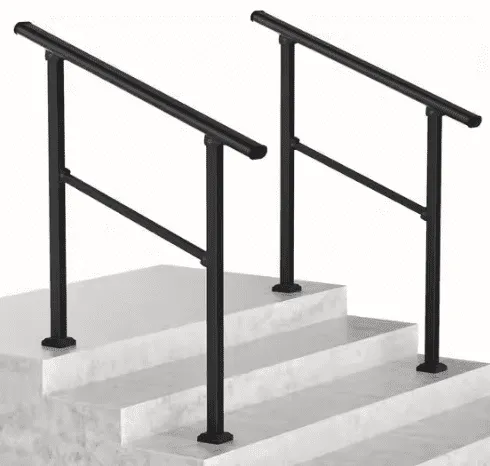
Side-mounted railings earn their cost on narrow decks, stairs, and any edge where the walking surface is close to the code minimum. Moving the posts to the fascia plane saves the full post footprint and can preserve four to six inches of clear deck width. That difference often decides whether a stairway or balcony stays above the minimum egress width.
The system works well on steel stair stringers and concrete balcony edges, where there is no practical way to core-drill a post base without interrupting the surface or waterproofing layer. We have used side-mounted aluminum brackets on steel stringers where the stair width would otherwise fall below the acceptable clear walking path under the applicable code. In that case, the bracket detail was indexed to the rail height and bracket spacing was set before fabrication, which kept the panel reveal line consistent.
The condition that matters is the edge member. Side-mounted hardware depends on the rim board, slab edge, or stringer being structurally capable of carrying the bracket. Decorative fascia is not a substitute. When the edge is only a cosmetic board, the connection needs a hidden backer or the system should be re-detailed as post-mounted.
If your project includes an exposed concrete edge or a steel stair stringer, confirm the anchor spacing, edge distance, and bracket rating before finalizing the rail package. Send the edge detail to sales01@yulongkeji-ch.com and we will return the mounting recommendation.
Which Railing Mounting System Meets Building Codes More Easily?
Code compliance rarely hinges on the name of the mounting style. It hinges on whether the installed guard height and baluster spacing remain correct at the most difficult intersection. The 2018 IRC sets minimum guard heights at 36 inches for residential guards, while the 2018 IBC generally requires 42 inches for commercial guards. The four inch sphere opening rule in IRC R312.1.3 further controls openings at the guard and stair intersection.
What Does the Four Inch Sphere Rule Mean for Mounting Choice?
Neither system invites a sphere pass at the bracket, but side-mounted designs can create an angled opening where the rail intersects a stair stringer. We check that intersection with a four inch test sphere in the shop before packaging. Post-mounted details usually keep the panel plane vertical above the deck surface, so the guard pattern stays more consistent.
Which Guard Height Applies to My Project?
Residential decks under the 2018 IRC call for 36 inches minimum; commercial guards under the 2018 IBC call for 42 inches. Post-mounted posts can be cut to exact height after the deck surface is set. Side-mounted posts need the bracket offset accounted for before cutting. If the bracket is indexed to the rail height and the edge thickness is verified, side-mounted passes the same guard height requirement. Missing that check leads to a rail that sits too low or too high after the reveal line is committed.
Need a Clear Mounting Recommendation for Your Railing Project?
The wrong mounting detail usually shows up during installation, after the panels are already fabricated and the edge condition is exposed. At that stage, a change means recutting posts, replacing brackets, or re-coating the rail. The least expensive time to confirm the detail is before the BOM is released.
At YLOONG, we review edge conditions early and return a marked-up section within the quote so the mounting style is settled before production. Send us a dimensioned deck or stair edge condition, the framing material, and the applicable code year. We will mark up the recommended post base or bracket detail, fastener schedule, and guard height before you order. Email sales01@yulongkeji-ch.com or call +8619086315193.
What Else Should Buyers Ask About Post-Mounted and Side-Mounted Railing?
Do Side-Mounted Railings Work on Concrete Balconies?
Yes, when the concrete slab edge has enough thickness and reinforcing. Side-mounted aluminum or stainless brackets are secured with through-bolts, heavy-duty anchors, or cast-in channels. For cantilevered concrete slabs, we ask for a structural review rather than assume the edge can carry the pull-out load. The relevant checks are edge distance, anchor embedment depth, and whether the slab is cracked. If the concrete is thin or spalled, a post-mounted detail with a base plate pinned into the top surface may be the safer route.
Can You Convert a Post-Mounted Railing to Side-Mounted Later?
A common assumption is that the same posts can simply be redrilled for side brackets. In practice, that rarely works without weakening the post section or creating a new hole pattern too close to the original anchors. Post-mounted posts are cut and drilled for vertical base plates; side-mounted posts have different bracket engagement and fastener positions. We quote a new post and bracket package for retrofit work rather than redrill existing aluminum sections. Reusing the rail infill may work only if the top and bottom rail dimensions still match the new post spacing.
Which Mounting System Leaves More Usable Deck Space?
It depends on deck width, but side-mounted railings generally free up more walking surface because the post footprint moves to the fascia plane. On a narrow deck or stair run, post bases can consume four to six inches of clear width that matters for egress and furniture. If the deck is wide and the post base can sit inside the guard rail line without pinching the path, post-mounted works without a meaningful loss. The condition to check is the total clear width after the rain or edge board is in place, not the framed width on the drawing.
How Do I Confirm the Right Mounting Detail Before Importing?
The more useful question is not which style looks better but whether the edge condition can carry the railing load. We ask for a section drawing of the deck edge, the framing material, and the applicable code year before quoting. This lets us confirm bracket type, fastener schedule, edge distance, and guard height before production. If your program includes mixed edge conditions, share the structural drawings at sales01@yulongkeji-ch.com and we will mark up which sections should shift to side-mount or post-mount before your order is released.
If you’re interested, check out these related articles:
Commercial Aluminum Fencing: 5 Key Business Applications
DIY Patio Privacy Screens: Aluminum & WPC Installation Guide
Source Steel Fencing from China: An Expert Import Guide
YLOONG Factory Tour: Aluminum Fence Manufacturing Excellence