
Welded aluminum railing holds up better than mechanically fastened systems in high traffic commercial spaces because the joints work as continuous structural connections rather than threaded assemblies. I make that judgment from years of reviewing sidewalk plazas, transit entries, and stadium access points where railings get struck by bags, carts, and crowds every day. The failure mode is rarely the aluminum itself. It is loosening at the connection. This article explains what to specify in welded aluminum railing for long service life under continuous pedestrian load, including alloy choice, welding procedure, finish selection, and code compliance.
Why Welded Aluminum Railing Suits High Traffic Commercial Spaces
Commercial railing is not a static guard. In a busy transit corridor, a person grabs the top rail to stop themselves, a cleaning cart strikes the balusters, and a delivery dolly rests against the bottom rail. Mechanically fastened systems transfer these shock loads through screws and brackets, which loosen as the aluminum expands and contracts with daily temperature swings. Welded aluminum railing removes that failure path. The balusters, top rail, and bottom rail become a single assembly, and there is no threaded junction to work free.
One thing I look for is whether the welded panel uses interior gussets at the top and bottom rail connections. Without them, the weld can act as a hinge point under concentrated crowd loading. With a reinforced gusset, the load path spreads from the top rail into the baluster and then into the rail below. That makes a measurable difference in buildings where occupants lean on the railing for extended periods.
| Condition | Welded Aluminum Railing | Assembled Aluminum Railing |
|---|---|---|
| Baluster connection | Continuous weld with gusset | Screwed bracket |
| Long term torque behavior | No fastener to loosen | Needs periodic retorquing |
| Field adjustment | Limited; panels are pre-sized | Easier to trim on site |
| Repair method | Cut and weld replacement section | Replace bracket or screw |
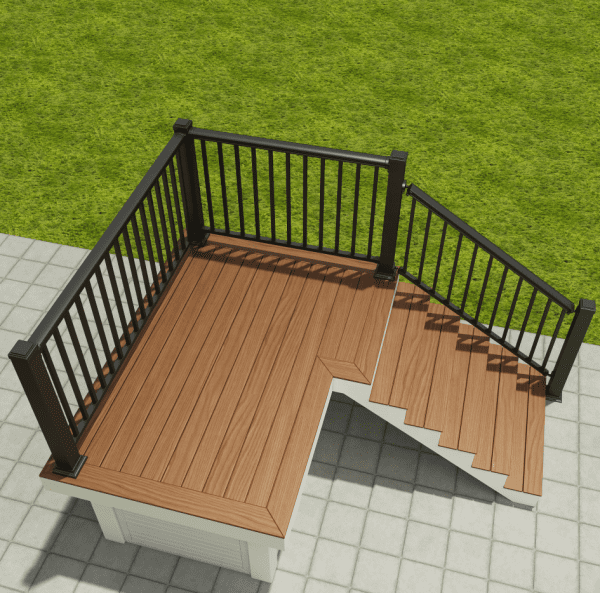
Welded Aluminum Railing Requires a Different Design Approach Than Mechanical Systems
Aluminum does not weld like steel. The heat input reduces material strength in the heat affected zone unless the fabricator plans for it. For commercial railing, I prefer 6061-T6 extrusions when the railing is welded structurally. 6063-T6 has good extrudability for decorative profiles, but its as-welded strength drops more than I want to accept in high abuse locations. When 6061 is used, the welding procedure should account for post-weld heat treatment or an engineered strength reduction in the affected sections.
Filler metal selection matters more than buyers expect. 5356 filler works well for 6061 and 6063 base metal, but it can create a slight color mismatch on clear anodized railings. 4043 filler flows better and matches anodized aluminum more closely, but it delivers lower mechanical properties. For powder coated welded aluminum railing, color mismatch is less relevant, so I usually call for 5356 for the higher joint strength. If the railing is anodized, the fabricator should use 4043 and derate the weld capacity accordingly.
Fit-up is the other issue. Because aluminum expands and distorts under weld heat, the fabricator needs a clamping fixture that holds baluster spacing and top rail alignment during fabrication. Without controlled fit-up, the finished panel can arrive with a slight sweep that becomes obvious on a long straight run.
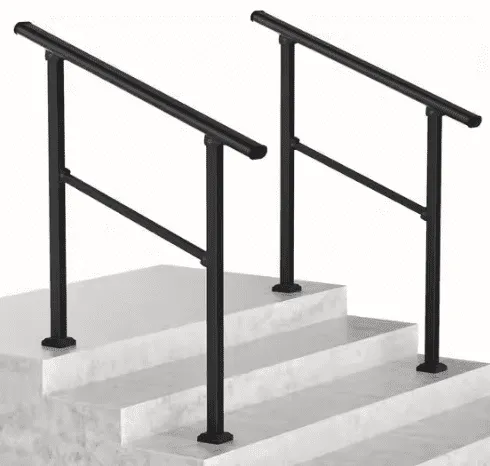
How to Specify Coatings and Alloys for Welded Aluminum Railings
Most of the welded aluminum railing failures I see in commercial spaces are finish failures, not structural ones. The right coating system starts with a chromate conversion or chrome-free pretreatment, followed by a powder coat that meets AAMA 2604 for high traffic exterior locations. AAMA 2603 is acceptable for interior or low exposure conditions, but it does not hold up as well under repeated abrasion from hands and equipment. For transit platforms, parkades, and stadium concourses, I specify AAMA 2604 minimum.
Aluminum alloy and coating interact. The weld zone may have a slightly different surface profile than the extruded stock. A high quality powder coat levels most of that, but only if the fabricator cleans and pre-treats the weld area correctly. I have seen powder adhesion failures that looked like corrosion, but the real issue was insufficient cleaning of the weld line before coating.
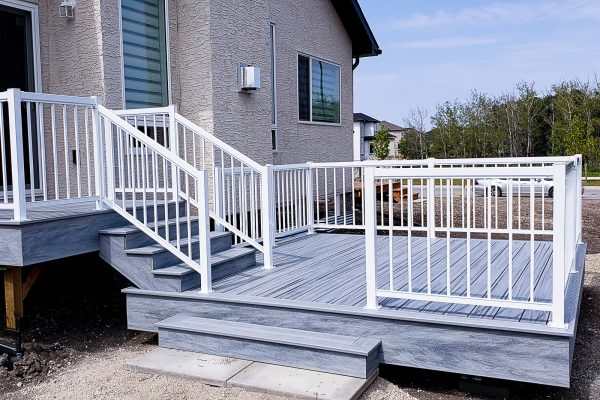
If your project includes welded aluminum railing in a coastal or deicing chemical exposure, it is worth confirming the exact pretreatment and powder specification before finalizing your bill of materials. Share your project location and finish requirement with us at sales01@yulongkeji-ch.com.
Code Compliance and Load Testing for Welded Aluminum Railings
Commercial guardrails in most U.S. jurisdictions follow the IBC. The top rail height for a commercial guard is typically 42 inches above the walking surface, and the baluster spacing must reject a 4 inch sphere. These are minimums, not design targets. In high traffic spaces, I often recommend a 42 inch guard with a continuous top rail sized for a 200 pound concentrated load at any point in any direction, plus the uniform load required by the local code. Welded aluminum railing is well suited to both because the continuous rail distributes point loads into multiple balusters.
Ask the fabricator for an ASTM E935 test report, not just a material certificate. ASTM E935 is the standard test method for performance of permanent metal railing systems, and it covers the type of racking and point load testing that matters in public spaces. A mill certificate tells you the extrusion chemistry. A full railing assembly test tells you how the welded joints and posts behave together.
Post anchoring is where code compliance can be lost, even when the panel is strong. A welded panel that is rigidly mounted to an undersized post will pull the anchor out of the concrete before the panel fails. The post embedment, base plate, and anchor bolt pattern need to be specified for the same load as the panel, not independently.
Specifying Welded Aluminum Railings for Your Commercial Project
High traffic commercial spaces punish ordinary railing in ways that spec sheets do not show. Loosened balusters, scratched finishes, and anchor movement are not product defects as much as specification gaps. The remedy is a welded aluminum railing system specified from alloy through installation, with the same attention to weld procedure and finish adhesion as to the visible profile.
Hubei Yulong manufactures welded aluminum railing systems with 6061-T6 extrusions, controlled weld fixtures, and powder coated finishes tested for exterior performance. Before you finalize your bill of materials, send us the railing height, post spacing, end conditions, and any project specific load requirements. We will confirm the correct alloy, weld detail, finish specification, and anchoring method for your location.
Send your drawings, takeoff, and required finish to sales01@yulongkeji-ch.com or call +8619086315193 to confirm the welded aluminum railing specification and current lead time for your project.
Common Questions About Welded Aluminum Railings in Commercial Use
Is welded aluminum railing more expensive than assembled railing?
Welded aluminum railing usually costs more at purchase because the fabrication labor is higher, but the difference narrows when you account for field retightening and replacement labor over the service life. The higher initial cost buys a single-piece structure with no threaded baluster connections to work loose. In high traffic commercial environments, we see fewer callbacks on welded panels than on assembled systems because there is less hardware to change. That does not mean assembled systems are wrong. If the railing is in a low load interior location, assembled kits can work. The decision should follow the expected abuse and maintenance access.
Can welded aluminum railing be field modified during installation?
A common assumption is that welded railing cannot be adjusted on site, but that is only partly true. Length adjustments are more difficult than trimming an assembled rail, so panel dimensions should be verified before fabrication. Mounting conditions can be handled with shims and adjustable base plates if the post anchors allow them. Major dimensional errors require cutting and reweld, so accurate field measurements matter more. If a site has irregular existing concrete, we usually request as-built dimensions rather than relying on the drawing.
Does welding weaken aluminum railing?
It depends on the alloy and the fabrication plan. The heat affected zone of an as-welded 6061-T6 railing has lower measured strength than the surrounding extrusion. That reduction can be recovered with post-weld heat treatment for 6061, or the engineer can size the section with the reduced strength already accounted for. With 6063 extrusions, the as-welded strength drop is more significant, which is why structural railing projects move toward 6061-T6. The point is not to hide the reduction, but to specify it.
What maintenance does welded aluminum railing need in high traffic spaces?
In the commercial railing projects I have reviewed, the main maintenance item is cleaning rather than tightening. Powder coated surfaces hold up well when dirt and deicing residue are washed off regularly, especially near entrances where salt collects. Because there are no baluster screws to retorque, the mechanical maintenance is lower than an assembled system. I recommend an annual inspection of the post anchors and a check for any cracks at the weld toe, though cracks are rare when the welds are made and inspected correctly. If your facility uses deicing chemicals or sits near saltwater, share your location and cleaning schedule and we will confirm the right coating specification.
If you’re interested, check out these related articles:
Aluminum Fencing for Coastal & Humid Environments
Importing Aluminum Fence from China: 5 Questions to Ask
Assembled vs Welded Aluminum Gates: Performance, Cost, & Use Cases
Ornamental Steel Fence: Design, Quality, & Direct Pricing
Aluminum Fence Post Installation: Depth, Spacing & Anchoring