When a project demands outdoor privacy, aluminum screen panels offer a durable, low-maintenance solution. Standard-sized panels in 4-foot by 8-foot or 5-foot by 8-foot dimensions cover many residential and commercial installations. Yet the moment a site has uneven spacing, an existing post layout, or architectural lines that must align, those off the shelf sizes show their limits. From my experience engineering fencing systems for international projects, the difference between a clean installation and a compromised one often comes down to whether the panel dimensions were ordered to the millimeter or pulled from a catalog. This article walks through the engineering and procurement considerations for both standard and custom aluminum privacy screen panels, so you can specify exactly what your project needs.
Standard Sizes for Outdoor Aluminum Privacy Screens
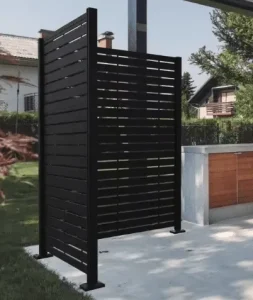
Standard aluminum privacy screen panels come in common dimensions that align with extruded aluminum stock. The most frequently supplied sizes are 4 feet high by 8 feet wide (1220 mm x 2440 mm) and 5 feet high by 8 feet wide (1525 mm x 2440 mm). Some manufacturers also stock 6-foot by 8-foot and 4-foot by 6-foot panels for smaller applications. These sizes work efficiently because they match standard extrusion billet lengths and reduce cutting waste. In our production runs, we keep dies set for these dimensions, which keeps lead times short for projects that can adapt to standard sizes. Standard panels also come with pre-engineered frame details, so post spacing and bracket fitment are already resolved. For a straightforward run of fencing around a flat, evenly spaced layout, standard panels are often the most economical route.
Situations That Require Custom Panel Dimensions
Custom panel dimensions become necessary when the site imposes constraints that standard sizes cannot accommodate. I have reviewed project plans where the architect specified a rhythmic panel arrangement between structural columns spaced at 7-foot-6-inch centers, and a standard 8-foot panel would throw off the entire visual order. Other common drivers include retrofit installations where existing posts are already concreted in at non-standard spacing, or when the privacy screen must match an irregular property boundary. Projects with terraced elevations also benefit, because the bottom rail often needs to step with the grade, and a continuous fence line works better when panels are cut to exact lengths at the factory or on site. In these situations, custom fabrication avoids the cost and corrosion risk of cutting and re-welding standard panels, which often compromises the powder coat and leads to rust at the cut edges.
Engineering Specifications for Custom Panels
When ordering custom-sized panels, the structural behavior changes with dimensions, so a few engineering parameters must be checked.
Panel Thickness and Span Limits
The wall thickness of the aluminum frame extrusions directly controls how far a panel can span without sagging or excessive deflection. For a panel 5 feet tall, a frame wall thickness of 1.4 mm is common for spans up to 8 feet. When the span exceeds 8 feet, we increase the thickness to 1.8 mm or add a mid-rail to break the unsupported length. These decisions tie back to the material’s elastic modulus, aluminum 6063-T5 has a modulus around 69 GPa, but the section moment of inertia changes with wall thickness. In our engineering checks, we verify that deflection under a 0.5 kN/m² service load, typical for privacy screens, stays within L/180 of the span.
Post and Frame Integration
The frame must transfer wind loads to the posts. We design the top and bottom rails with channels that accept self-tapping screws or through-bolts, and the post spacing determines the rail depth. For a 6-foot panel with posts at 6-foot spacing, a 40 mm by 25 mm rectangular rail is adequate; widening the spacing to 10 feet could require a 60 mm by 30 mm rail, depending on the wind zone.
Wind Load Considerations
Wind load is the dominant lateral force on outdoor privacy screens. We ask clients for the project location so we can match the design wind speed per ASCE 7 or the equivalent regional standard. A panel in a 110 mph wind zone must handle about 0.8 kN/m², which drives the fastener count and frame section. Failing to size for wind can cause rattling over time or, in worst cases, pull-out at the post connections.
If your project involves non-standard post spacing or high wind exposure, it is worth confirming the frame and fastener design before finalizing your panel dimensions, reach out at sales01@yulongkeji-ch.com.
Choosing the Right Alloy, Temper, and Powder Coating
Two main aluminum alloy series are used for extruded privacy screen panels: 6063 and 6061. The following table compares their key properties.
| Property | 6063-T5 | 6061-T6 |
|---|---|---|
| Tensile Yield Strength | 145 MPa (21 ksi) | 240 MPa (35 ksi) |
| Corrosion Resistance | Excellent | Very Good |
| Extrudability | High | Moderate |
| Typical Use | Architectural profiles | Structural components |
We recommend 6063-T5 for most privacy screens because it extrudes well and holds powder coating with strong adhesion. 6061-T6 is reserved for heavy-duty structural frames where extra strength matters. The temper designation, T5 or T6, indicates the heat treatment. T5 is cooled from an elevated temperature shaping process and artificially aged; T6 undergoes a more extensive solution heat treatment, which gives higher strength.
Powder Coating Standards and Color Options
For outdoor durability, polyester or super-durable polyester powder coatings meeting AAMA 2604 or 2605 standards are the norm. A coating thickness of 60 to 80 microns provides a good balance between coverage and resistance to scratching. For coastal or high-humidity environments, we recommend a marine-grade powder coat with a minimum 80-micron thickness and a chromate pre-treatment layer for added corrosion protection. We have supplied screens in standard RAL colors such as 7016 (anthracite grey) and 9005 (jet black), as well as custom-matched shades for architectural consistency.
The Custom Panel Ordering and Procurement Process
Once you have the specifications nailed down, ordering a custom panel is straightforward if you provide the fabricator with a complete dimension package.
Information to Provide for an Accurate Quote
We need the finished panel size (width by height), post spacing if posts are existing, the mounting method (surface-mounted, fascia-mounted, or embedded), and the preferred infill style, whether slat, laser-cut pattern, or perforated sheet. For special shapes, a CAD file or hand sketch with dimensions is enough to generate a shop drawing. The more detail upfront, the fewer surprises in the quote.
Understanding Lead Times and MOQs
Custom panels typically add two to three weeks to the production schedule because the extrusion cutting list changes and tooling adjustments may be needed. Our standard lead time for custom orders is four to five weeks from drawing approval, depending on the production queue. Minimum order quantities for custom colors can be as low as one pallet load because we batch powder coat runs. We recommend ordering a few spare panels for future damage replacement, since matching a custom color on a single post-installation panel is difficult.
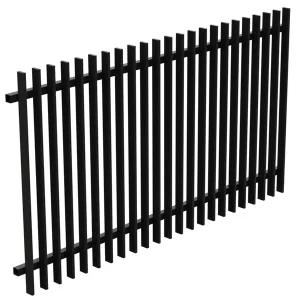
A panel that fits precisely reduces on-site cutting, preserves the factory finish, and shortens installation time. If your project requires outdoor aluminum privacy screen panels in custom sizes, send your panel layout and dimensions to sales01@yulongkeji-ch.com or call +8619086315193. Our engineering team will review your specs and return a quotation with a shop drawing for approval.
Common Questions About Aluminum Privacy Screen Panels
What is the typical lead time for custom aluminum privacy screens?
Standard panel orders ship within two to three weeks. Custom-sized panels require additional fabrication time, so lead time extends to four to five weeks from drawing approval. The extra time accounts for cutting aluminum extrusions to non-standard lengths, assembling frames, and scheduling the powder coat line for your specific color. If your project is on a tight schedule, communicate the required delivery date at the quote stage so the production team can slot the order accordingly.
Can aluminum privacy screen panels be powder-coated in any color?
Nearly any RAL color can be matched with powder coating. The most durable finishes use polyester or super-durable polyester powders that meet AAMA 2604 or 2605 standards. For architectural projects, we have matched custom colors from brand palettes and provided sample panels for approval. Keep in mind that custom colors may require a minimum batch quantity because the powder coat booth must be cleaned and switched between colors.
Do I need special posts for aluminum privacy screens?
Standard aluminum posts with a built-in channel or bracket system work for most installations. The post size depends on the panel height and wind load. A 60 mm square post is common for panels up to 5 feet; taller or wider panels may need an 80 mm or 100 mm post. We provide post-hole layouts and mounting templates with the order to ensure correct alignment.
Are aluminum privacy screens suitable for coastal areas?
Yes, 6063 aluminum with a high-quality powder coat offers good resistance to salt-laden air. For directly waterfront installations, we specify a marine-grade powder coat with a minimum 80-micron thickness and a chromate pre-treatment layer for added protection. The screws and brackets should be stainless steel to avoid galvanic corrosion. Share your site’s distance from the coast and we can confirm the right coating specification and hardware for your project.
If you’re interested, check out these related articles:
Aluminum Fences: School & Playground Safety Compliance
High-Security Steel Fencing: Protecting Government & Military Assets
Aluminum Fencing for Coastal & Humid Environments
Aluminum Perimeter Fencing for Solar Farms: Key Specifications and Global Sourcing
DIY Patio Privacy Screens: Aluminum & WPC Installation Guide