
Decorative aluminum screen fence panels define spaces, add privacy, and sharpen a property’s architectural character without sacrificing long-term performance. Most online content stops at visual inspiration, but very little explains how to specify and source these panels at true factory pricing. Our experience as an engineering team producing aluminum fencing systems for projects from residential communities to commercial developments has taught us that buyers who understand material specifications and factory-direct cost structures can secure better value than those who treat all panels as interchangeable. This article walks through what goes into a quality decorative screen panel, how factory pricing is structured, and what to ask before you place an order.
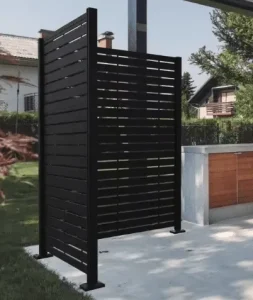
What Are Decorative Aluminum Screen Fence Panels?
Decorative aluminum screen fence panels are precision-fabricated barriers made from aluminum sheet or extrusions, cut and assembled into patterns that range from geometric repeats to custom floral motifs. The panels block direct sight lines while still letting air and light through, which makes them effective for perimeter privacy, garden screening, and utility area concealment.
We manufacture standard panels in 4ft, 5ft, and 6ft heights with widths of 6ft or 8ft, and custom sizes are routine. Aluminum alloy 6063-T5 is the most common base material because it balances strength with the workability needed for intricate laser cutting. The pattern density controls both privacy and visual texture: tighter patterns with smaller cutouts deliver more privacy, while more open designs keep the space light and airy.
What Material and Coating Specifications Make Aluminum Screen Fence Panels Last?
Outdoor durability depends on two factors: alloy quality and surface treatment. Alloy 6063-T5 holds its shape well, but the real protection comes from the coating. A standard polyester or polyester-epoxy powder coating, electrostatically applied and cured at high temperature, forms a film that resists UV degradation, moisture, and minor impact. For coastal environments, we apply a fluoropolymer topcoat that adds salt-spray resistance.
During our manufacturing, we measure coating thickness at multiple points on every batch using a digital gauge. We target a minimum of 60 microns on flat surfaces and verify edge coverage under magnification. A consistent 60-micron layer will outlast a 40-micron layer by several years in full weather exposure. When you compare factory quotes, request coating test reports and ask about pretreatment steps. Skipping a proper chrome-free conversion coating can leave even a thick powder coat vulnerable to undercut corrosion.
| Coating Type | Typical Thickness | Best For | Expected Service Life |
|---|---|---|---|
| Polyester Powder | 60–80 microns | General outdoor, inland | 15–20 years |
| Polyester-Epoxy Powder | 60–80 microns | Enhanced chemical resistance | 15–20 years |
| Fluoropolymer (PVDF) | 30–40 microns over primer | Coastal, high-UV | 20–25 years |
If your site is within five miles of saltwater or experiences heavy industrial fallout, it is worth confirming the coating specification directly with the factory. Our engineering team can assess your environmental conditions and recommend the correct system; reach out at sales01@yulongkeji-ch.com.
How Does Factory Pricing Work for Bulk Orders?
Factory pricing for decorative screen panels is built from material cost, processing time, and order volume. The aluminum sheet or extrusion represents the largest share, and its price fluctuates with ingot market rates. Processing cost scales with pattern complexity: laser-cut panels are priced by cut length and density; a design with 20 percent open area may require nearly twice the machine time of a 50 percent open design.
Volume thresholds typically start delivering discounts around 500 panels of a single design, with further breaks at 1,000 and 5,000. The minimum order quantity for a new design is usually 50 to 100 panels because laser cutting involves programming and test runs that are the same regardless of order size.
A factory-direct quote should include the panel, powder coating, and standard export packaging. Freight, customs duties, and any third-party inspection fees are usually separate. We have seen cases where a supplier’s quote omits coating or packaging to appear lower; always confirm what is covered. At Yulong, we present a line-item cost breakdown so you can see exactly where your budget is allocated.
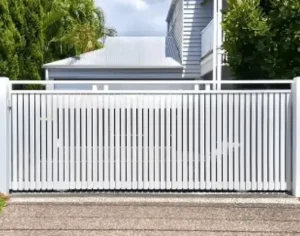
How Are Custom Aluminum Screen Fence Panels Designed and Manufactured?
Custom projects start with a design file, typically in DXF or DWG format. Our engineering team reviews the file for manufacturability, checking for features like slots that are too narrow for the laser beam or bridges that could break during handling. Once the design passes review, we nest it onto aluminum sheet and begin cutting.
After cutting, all edges are deburred to remove sharpness, and the panels go through a multi-stage pretreatment of degreasing, alkaline etching, and chemical conversion coating. The conversion coating creates an ideal surface for powder adhesion. Lead times for standard screen panels usually run 4 to 6 weeks from deposit. Projects that need custom pattern approval add 2 to 3 weeks for sampling and client feedback. For larger orders, we produce a pre-production sample for sign-off before mass cutting begins.
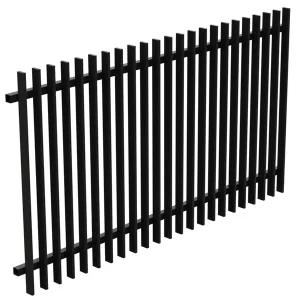
What Installation and Structural Details Matter for These Panels?
Installation is similar to other aluminum fence systems but demands attention to wind loading. The cutouts reduce solid area, but the remaining metal still catches wind, especially on taller panels. We recommend post spacing no more than 6 feet on center for 4ft high panels, with posts anchored in concrete footers that extend below the frost line. Engineers should verify that spacing and anchor depth for panels above 6ft or in high-wind zones, as code requirements vary.
When integrating gates, the hinge and latch system must handle the full weight of a decorative screen panel, which can be heavier than a simple picket gate. Use heavy-duty stainless steel hinges and a rigid frame. Plan for gate posts to be set deeper and consider adding an anti-sag brace for widths over 4ft.
Questions Buyers Ask About Decorative Aluminum Screen Panels
What is the typical lead time for custom decorative aluminum screen panels?
Standard production runs ship within 4 to 6 weeks after deposit. Custom patterns require a sampling round that adds 2 to 3 weeks. Large orders over 1,000 panels may extend lead time depending on the factory queue, but we schedule production once the pre-production sample is approved.
Is there a minimum order quantity?
Yes. Most manufacturers set a minimum of 50 to 100 panels per design because laser cutting requires programming. Smaller quantities may be possible if the design is already in the factory’s library.
Can these panels be used in coastal areas?
Yes, with the correct coating. A fluoropolymer topcoat over a chromate-free pretreatment provides excellent salt-spray resistance. In our testing, panels with a PVDF topcoat showed no significant corrosion after 2,000 hours of neutral salt spray. If your project is near the coast, specify the coating in your inquiry.
How do I maintain aluminum screen fence panels?
Maintenance is minimal. Rinse with water and a mild detergent once or twice a year to remove salt or pollutants. Do not use abrasive cleaners. Inspect the coating annually for any scratches that expose the metal, and touch up with matching paint if needed.
What file format do you need for a custom design?
DXF or DWG files work best. If you have a sketch or photo, our team can convert it into a laser-ready file, but this may add to the lead time. Sending a vector file up front speeds the process. If you are unsure about the format, share what you have and we can advise on the next step.
For any project that involves decorative aluminum screen panels, we are available to review your specifications and issue a factory-direct quote. Email your requirements or design files to sales01@yulongkeji-ch.com or call +8619086315193.
If you’re interested, check out these related articles:
YLOONG Factory Tour: Aluminum Fence Manufacturing Excellence
Round Aluminum & Galvanized Steel Fence Posts: Ultimate Guide
Steel Pool Fence Codes: Essential Safety & Supplier Selection Guide
Aluminum Fencing for Coastal & Humid Environments