A screen fence and a privacy fence serve two distinct roles on any project, and the difference is not simply about how much you can see. From an engineering standpoint, the core distinction lies in the openness ratio of the panel — the proportion of the total panel area that is open to air and light. Privacy fences use solid or near-solid infill that blocks sight lines and most wind, while screen fences maintain an intentional partial openness for airflow, decorative effect, or equipment screening. This single variable changes everything about structural loading, post anchoring, and even how you choose your aluminum alloy. We have designed and supplied both types for commercial developments, residential communities, and industrial perimeters, and the projects that perform best over time are those where the fence type matches not just the aesthetic goal but the local wind and installation conditions.
What Defines a Screen Fence from a Privacy Fence
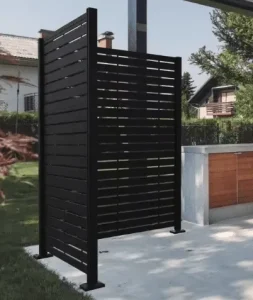
A screen fence uses panels with cutouts, perforations, louvers, or spaced slats that intentionally allow light and air to pass through. The openness ratio typically falls between 20% and 60%, depending on the pattern. This makes it a go-to choice for enclosing mechanical equipment, defining restaurant patios, or adding visual interest to a boundary without creating a solid wall. Visibility is partially obscured but not eliminated — someone standing close can see shapes and movement through the panel.
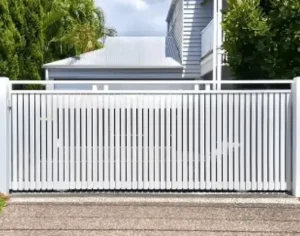
A privacy fence uses solid infill — vertical slats with tight seams, sheet panels, or densely packed blades — that blocks visibility almost entirely. The openness ratio is at or near zero, and the panel functions as a windbreak as much as a sight barrier. In project specifications, a privacy fence is usually called for around residential backyards, pool areas, and commercial properties where visual screening is non-negotiable.
The visual effect differs, but what matters more for the structure is the aerodynamic consequence. A solid privacy panel catches the full force of the wind like a small wall. A screen panel bleeds wind through, reducing the lateral load transferred to the post. This is not a marginal difference — we have seen projects where a privacy fence specified with posts adequate for a screen fence required post replacement within two years because the wind load was four times higher than what the original engineering assumed.
How Openness Ratio Changes Wind Load and Structural Demands
Wind load calculations for architectural metalwork are governed by the panel’s solidity ratio — the inverse of openness. A privacy fence with near-zero openness has a solidity ratio approaching 1.0, meaning it experiences wind pressure across its entire face. A screen fence with 40% openness has a solidity ratio of 0.6 and will experience roughly 40% less lateral force for the same wind speed and height. This directly affects post size, embedment depth, and footing design.
When we engineer a 1.8-meter-high fence in an area with a basic wind speed of 45 meters per second, a solid privacy panel requires posts spaced no more than 2 meters apart, often with 100×100 mm aluminum profiles and a concrete footing at least 600 mm deep. The same post and spacing can safely carry a screen panel with 40% openness at full height with margin to spare. The difference becomes larger at greater heights or in coastal zones where wind speeds are higher. We have adjusted post specifications mid-project more than once because the client switched from a slatted screen to a solid privacy panel without notifying us. The loading is that sensitive.
If your project involves extended fence runs in an exposed location, it is worth confirming the panel solidity ratio with your manufacturer and having them provide a site-specific wind load calculation before finalizing post sizes and footing details. Reach out at sales01@yulongkeji-ch.com.
Material Grades and Surface Treatment for Each Fence Type
Both screen and privacy fences are commonly fabricated from aluminum alloy 6063-T5 or T6 for its extrudability and good corrosion resistance. The alloy choice is rarely the source of problems. The real difference appears in the surface treatment and panel gauge.
A privacy fence panel with solid infill experiences higher bending moments under wind load, so the frame and infill profiles need a thicker wall — typically 1.8 mm to 2.5 mm depending on panel height and post spacing. A screen panel with a laser-cut or louvered pattern can often use 1.5 mm to 2.0 mm wall thickness because the load is lower and the perforations distribute stress differently. The coating system must match the environment. Both types should receive a minimum 60-micron polyester powder coat as a baseline, but for coastal or high-humidity sites, a 80-micron fluoropolymer or marine-grade polyester system is justified. We run a chromate-free pretreatment and multi-stage rinse line to ensure adhesion, and the coating thickness is checked on every batch before packing. For a screen fence, the cut edges of laser-cut openings are particularly vulnerable to corrosion if the pretreatment and powder application do not fully coat the interior of the cutouts. That extra step is necessary if the fence is within 5 kilometers of a saltwater coast.
Installation Considerations for Screen and Privacy Panels
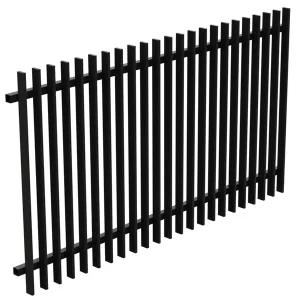
Post spacing, bracket selection, and footing design are not interchangeable between the two fence types. A screen fence can often use wider post spacing — 2.5 to 3 meters — because the lower wind load allows more span. A privacy fence should stay closer to 1.8 to 2.2 meters to keep deflection within acceptable limits. The bracket system must also allow for thermal expansion of the aluminum panel, which is more critical for solid privacy panels that heat up to higher surface temperatures under direct sun. We specify slotted brackets and leave at least 3 mm of clearance at each end for a 2-meter panel to accommodate thermal movement without buckling.
Post anchoring methods follow the same logic. A screen fence on flat terrain with normal soil can often use ground spike systems or shallow concrete pads. A privacy fence in the same location usually needs a concrete footing at least 500 mm deep. When we design for sloped sites or poor soil, we specify deeper embedment and sometimes a continuous concrete beam for privacy fences to prevent differential settlement from pulling panels out of line.
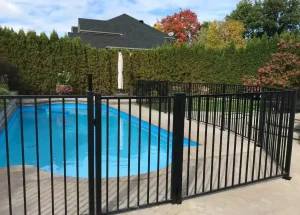
Gate integration is another area where the fence type drives hardware selection. A screen fence gate can be relatively lightweight and use standard hinges. A privacy fence gate, particularly a solid aluminum panel gate, carries more dead load and catches more wind. We upsize the frame section, use stainless steel heavy-duty hinges, and often install a mid-rail stiffener to prevent the gate from sagging over time.
Sourcing Custom Screen and Privacy Fence Panels
When you order custom perforation patterns or slat spacing, the manufacturing process changes from semi-standardized to fully engineered. A screen fence with a custom laser-cut pattern requires CAM programming time and higher-grade aluminum sheet stock with consistent grain to avoid warping during cutting. A privacy fence with non-standard slat spacing requires custom extrusion dies or tooling adjustments. Both increase lead time and minimum order quantity.
At Hubei Yulong, we handle both standard and custom orders. We confirm the panel solidity ratio, material thickness, and post dimensions at the quoting stage so there are no surprises during installation. If you are importing, ask your supplier for a structural calculation package — not just a product drawing. That package should include wind load analysis, post embedment recommendations, and coating thickness specifications. We provide all of this as standard for commercial project orders. If you want to discuss a specific project layout before committing to a bulk order, send your site dimensions and wind zone to sales01@yulongkeji-ch.com or call +8619086315193.
Common Questions About Screen Fence and Privacy Fence Selection
Can I get partial privacy with a screen fence?
It depends on the pattern and viewing angle. A louvered screen with blades angled at 45 degrees can block direct sight lines from a distance while still allowing airflow. From up close, visibility increases. If your main concern is screening from a neighboring building or street, specify the blade angle and spacing at the design stage. A laser-cut panel with small perforations offers better privacy than large decorative cutouts but still lets light through. No screen fence will provide the same privacy as a solid panel fence; if visual screening is the top priority, choose a privacy fence.
What post spacing should I use for a tall privacy fence?
For a 2.1-meter-tall solid aluminum privacy fence, we recommend post spacing of 1.8 to 2.0 meters and post sections at least 100×100 mm with a wall thickness of 3.0 mm or more. Wind zone and soil type should be confirmed before installation. A site-specific calculation is always safer than a generic table value.
Which fence type costs more to manufacture and ship?
A privacy fence panel uses more aluminum by weight — typically 30% to 50% more material than a screen panel of the same height and width. Shipping cost follows weight and volume, so privacy fence panels cost more to freight. However, installation cost can be lower for a screen fence because lighter panels require less handling equipment and smaller footings. Over a full perimeter, the total project cost between the two can be closer than the per-panel price suggests. Get a full landed-cost comparison including freight, footings, and hardware before making a decision.
How does powder coating hold up on a screen fence in a coastal area?
Powder coating performs well on screen fences if the pretreatment is thorough and the cut edges are fully coated. The repeated salt spray in coastal areas attacks any exposed aluminum oxide layer, and the cut edges of perforations are the first place corrosion starts. A 80-micron marine-grade polyester powder applied over a chromate conversion coating gives excellent service life. We routinely supply screen fences for projects within a few hundred meters of the ocean, and the coating system we use has held up without edge corrosion for over five years. Share your site location and we can confirm the correct coating specification for your conditions.
If you’re interested, check out these related articles:
DIY Patio Privacy Screens: Aluminum & WPC Installation Guide
Order Custom Aluminum Fencing from China: A Strategic Guide