
Placing a bulk order for WPC composite fencing panels is rarely just about finding the lowest per-panel price. The reality is that minimum order quantities, factory pricing structures, and raw material choices directly determine whether your shipment arrives as a durable, uniform product or a batch of panels that fade and warp within the first year. As an engineer who has processed international fence orders for over a decade, I have learned that procurement managers who understand what actually drives MOQ and how to verify production quality secure the best value far more reliably than those who only compare quotes. This guide explains the procurement specifics every buyer should know before committing to a container-load order.
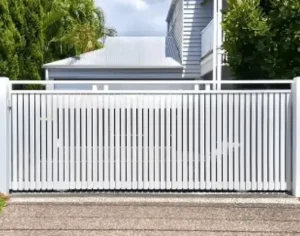
How Does MOQ Work for WPC Composite Fence Bulk Orders?
Minimum order quantity for WPC fence panels is not a fixed number set arbitrarily. It reflects the production batch size that makes extrusion runs cost-effective and the material purchasing efficiency of the manufacturer. In our factory, a typical MOQ for a single size and color profile starts at around 200 to 300 linear meters per design. However, if you are ordering a mixed container with multiple heights or colors, the per-item MOQ can often be negotiated lower because the overall volume still fills a container.
The product itself influences the number. A basic solid WPC fence panel without an aluminum post system has a lower MOQ threshold than a panel with integrated aluminum posts and specialized hardware, because the latter involves coordinating two separate production lines. For buyers, the practical question is whether your project can absorb the standard batch size, and if not, what combination of products will bring you to the container minimum without leaving dead inventory. Sharing your project’s total linear meter requirement and preferred panel configurations at the inquiry stage lets the factory propose a realistic MOQ that avoids tying up capital in unwanted stock.
What Does Factory Direct Pricing Include for WPC Fencing?
Factory direct pricing is often misunderstood as simply a discount from retail. In practice, the price you receive from a manufacturer like Hubei Yulong breaks down into several technical cost layers: raw material composition, co-extrusion complexity, surface treatment, and packaging method. The blank panel profile itself accounts for roughly 60 to 70 percent of the unit cost, and that number shifts significantly depending on whether the factory uses virgin HDPE with high-quality wood flour versus recycled plastic filler.
We run co-extruded WPC panels because the outer layer, which contains concentrated UV stabilizers and colorants, determines the panel’s long-term appearance and weather resistance. This layer thickness typically runs 0.5 to 1.5 millimeters. Thicker co-extrusion costs more but dramatically reduces chalking and fading after three to five years of sun exposure. That cost is part of the per-panel price, not an add-on. Similarly, a factory that provides aluminum posts with a matching powder-coated finish includes die casting, cutting, and coating steps in the post line item. When you compare quotes, ask the supplier to itemize which inclusions are captured and which might appear as separate line items, such as post caps, fasteners, or steel brackets for ground mounting.
If your project timeline is tight, check whether the quoted price already covers expedited production scheduling or whether it assumes the standard lead time, because shifting production priority can alter the per-unit cost by 5 to 8 percent. We always recommend locking lead time expectations in the proforma invoice to avoid last-minute surcharges.
How to Verify WPC Fence Quality Before a Bulk Purchase
Surface-level appearance photos do not tell you enough to commit to a container shipment. Every bulk buyer should verify at least three technical checkpoints before releasing payment. First, ask the factory for the material composition ratio of the panel. A quality outdoor-grade WPC will typically use around 60 percent wood fiber and 30 to 35 percent HDPE, with the remainder being coupling agents and UV stabilizers. If the factory cannot provide a breakdown, treat that as a red flag on raw material consistency.
Second, request a small sample panel cut from actual production stock, not a demonstration piece. We routinely advise our customers to slice the sample open and inspect the cross-section. The inner core should show uniform color distribution without visible clumps of undispersed wood powder or glossy plastic pockets. Uneven mixing indicates inconsistent extrusion temperature control, which translates to weak zones where the fence panel will crack under repeated thermal expansion.
Third, ask for third-party test reports covering water absorption rate, bending strength, and formaldehyde emission. Our WPC fence panels typically achieve water absorption below 0.5 percent after 24-hour immersion testing per ISO 62, and formaldehyde content is certified as non-detectable by SGS. These numbers matter because any panel that absorbs moisture above 2 percent in a humid climate will gradually swell around the post bracket points and lose structural grip. For a bulk order that represents a multi-year project, these three checks cost you at most a day of communication and a small sample shipping fee, but they prevent a far larger loss from installing substandard material across dozens of properties.
What Steps Are Needed to Order WPC Fence from a Factory?
Starting a bulk order without a clear sequence costs time. We recommend structuring the inquiry in four stages so that both sides align on expectations before production begins.
First, send the factory a concise request that includes your target panel height, width, and color code (RAL or powder coat reference), plus the total linear meter requirement and your preferred container loading method. A responsible manufacturer will respond with a provisional quotation and a list of questions about post style, ground-fixing method, and local wind load requirements if applicable.
Second, negotiate the order details around MOQ, payment terms, and production lead time. At this stage, we typically ask whether the buyer plans to use their own freight forwarder or needs us to recommend one. If the destination port has special packaging requirements, such as fumigation certificates for timber pallets, this is the time to declare them.
Third, authorize a pre-production sample or, for repeat orders, a first-off inspection sample. The sample gives you a physical reference for color, surface texture, and post bracket fit. We keep the approved sample in our QC office and use it as the master reference during final random inspection.
Fourth, once you confirm the sample and deposit, production is scheduled. Most bulk WPC fence orders run through extrusion, cooling, cutting, surface finishing, and assembly of hardware kits within 15 to 25 working days, depending on volume. We communicate weekly with our clients during this phase and send photos of panels on the production line and before loading. After container stuffing, we share the packing list, commercial invoice, and bill of lading within 48 hours. Following these steps prevents the most common procurement mistake: discovering a mismatch between order specification and finished goods only after the container arrives at your warehouse.
What Hidden Costs Catch First-Time Importers?
First-time WPC fence importers often underestimate four cost items that do not appear on the per-panel price list. The first is freight consolidation and container utilization. A 40-foot high-cube container can typically hold between 600 and 800 standard fence panels depending on stacking configuration and packaging material. If your order mix leaves gaps in the container, you pay for unused space. We help our clients optimize loading plans so that accessory kits and post bundles fill the void, but this requires accurate drawings and pallet dimensions upfront.
The second is port handling and customs brokerage. Destination port charges, including terminal handling, documentation fees, and customs examination if triggered, can run several hundred dollars per container. These charges vary by country, but they should be confirmed with your freight forwarder before the bill of lading is issued.
The third is import duty classification. Wood-plastic composite fence panels often fall under a different HS code than pure plastic or pure wood products, and the duty rate may differ. Getting the correct code from the supplier, backed by a material breakdown, helps your broker clear the goods without delays and at the correct tariff rate.
The fourth is local offloading and storage. A full container of fence panels can weigh upwards of 2,000 kilograms packaged. If your receiving site lacks a forklift, you will pay extra for manual unloading or crane rental. We recommend including these logistics costs in your total landed cost calculation from the start, rather than treating them as an afterthought. Knowing your full landed cost allows you to set realistic project budgets and avoid margin erosion that wipes out the savings you gained from factory direct pricing.
Secure Your WPC Fence Bulk Order with Verified Value
Sourcing WPC composite fencing in bulk makes sense when the per-unit savings are real and the quality is predictable, but that equation only holds if you verify the manufacturing details upfront. The factories worth working with will share material composition data, offer pre-production samples from stock, and explain exactly where your money goes in the unit price. If you have a project specification ready, including linear meter count, panel dimensions, and your target color, send it to sales01@yulongkeji-ch.com or reach us at +8619086315193. We will return a detailed quotation with MOQ options, a production sample plan, and container loading suggestions so you can evaluate the full picture before committing.
Common Questions About WPC Fence Bulk Orders
What is the typical MOQ for a full container of WPC fence panels?
For a 20-foot container, the typical MOQ ranges from 250 to 350 panels depending on panel width and packaging density. A 40-foot container usually requires 500 to 700 panels. However, mixing fence panels with matching gates or aluminum post systems allows the factory to consolidate products and lower the per-item minimum because the total container value remains sufficient for a production run.
Does factory direct pricing include the aluminum posts?
Not always, and this is a point buyers should clarify in the quotation stage. Some manufacturers quote the WPC panel alone, with posts priced separately as an accessory line. Others provide a complete system price that includes posts, post caps, brackets, and fasteners. When requesting pricing, specify whether you need a kit quote or panel-only pricing to ensure fair comparisons.
How can I tell if a WPC panel uses recycled filler versus virgin plastic?
The most reliable indicators are the material data sheet from the manufacturer and a lab test for flexural modulus and density. In our experience, panels using a high percentage of recycled mixed plastics tend to exhibit lower stiffness and more thermal expansion than panels made with virgin HDPE and consistent wood fiber content. A small sample can be tested for ash content and plastic type identification at an external lab for under US$200, which is a reasonable insurance policy for a bulk order.
What shipping method is more practical: sea freight or rail-express?
For bulk orders over one pallet, sea freight is almost always more cost-effective per unit. A full container shipment via ocean freight from major Chinese ports to most destination ports in Europe or North America takes around 25 to 40 days, while rail express across Eurasia can shorten transit to 15 to 20 days but at a higher per-kilogram rate. We help buyers choose based on total order volume: orders under 10 cubic meters often work better as LCL sea freight or consolidated rail, while orders above that threshold should aim for a full container load.
Can I get a single sample before committing to a bulk order?
Yes, we regularly provide production-run samples for buyer approval. The sample is cut from the same extrusion batch that will be used for the main order, so color, surface texture, and cross-section match the final product exactly. We recommend requesting a sample that includes the aluminum post bracket as well, so you can test the fit. Share your delivery address with us at sales01@yulongkeji-ch.com and we will arrange the sample shipment and testing documentation.
If you’re interested, check out these related articles:
Aluminum vs Wood Fence: Cost, Care, and Lifespan Compared
Freestanding Outdoor Privacy Screens: Patio & Balcony Solutions
Aluminum Pool Fence Safety: Standards, Heights, & Supplier Guide