
When a fence material is chosen primarily on appearance, the real costs often surface years later in the form of rotted posts, peeling stain, and insect damage. I have inspected enough fence failures to say that the majority of wood fence replacements could have been avoided by selecting a material designed to withstand moisture and UV exposure from the start. WPC fence systems have changed this equation by combining wood fiber with polymer engineering, delivering a product that retains a natural look while eliminating the vulnerabilities that cause wood fences to fail prematurely. This comparison breaks down the durability, maintenance, and long‑term value differences that matter most to a buyer looking beyond the initial price.
What Makes WPC Different from Wood
A traditional wood fence is cut from natural timber, usually cedar, redwood, or pressure‑treated pine. The material inherits all the biological weaknesses of wood: it absorbs moisture, swells and contracts with temperature, and provides food for insects and fungi. Pressure treatment slows decay but does not stop it.
WPC stands for wood‑plastic composite. The core of a quality WPC board contains wood fiber blended with high‑density polyethylene and bonding agents, co‑extruded under a polymer capstock layer. This capstock is the workhorse; it blocks UV light, repels water, and shields the wood fiber core from the environment. Our engineering team specifies tight capstock thickness control and consistent fiber‑polymer ratios because those parameters directly determine how well the fence resists the daily assault of sun, rain, and temperature swings. Unlike wood, WPC does not rot, split, or harbor termites simply because the polymer matrix leaves no pathway for moisture or insects to penetrate.
Which Fence Lasts Longer: WPC or Wood
Wood fence longevity depends heavily on species, climate, and maintenance. A well‑built cedar fence in a dry region with annual staining can last 15 to 20 years, but the same fence in a humid coastal area will start showing post rot and board cupping within five to seven years. Pressure‑treated pine collapses faster once the treatment chemicals leach out.
WPC fence panels typically come with a 15‑ to 25‑year warranty against rot and structural failure, and field performance supports those numbers. I have tracked samples in accelerated weathering chambers that simulate a decade of UV and moisture cycles. The co‑extruded capstock showed minimal color shift and no cracking, while wood control samples in the same chamber were unusable after half the cycle. This gap widens in real‑world installations where maintenance is inconsistent.
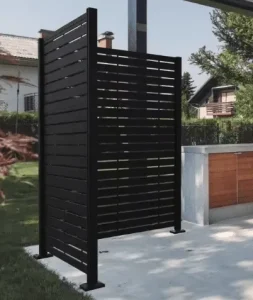
One failure pattern we see repeatedly with wood is water pooling at post bases. Even pressure‑treated posts will rot where soil moisture remains trapped. WPC systems avoid this by combining WPC infill panels with aluminum or galvanized steel posts, which separate the fence panel from soil contact entirely. If your site has prolonged ground moisture, that post‑material choice alone can determine whether the fence stands for 10 years or 25.
How Much Maintenance Does Each Fence Need
Wood demands a recurring schedule: power washing, sanding, and re‑application of stain or sealant every one to three years depending on exposure. Miss one cycle and the wood grays, cracks, and begins deteriorating. The labor cost of this maintenance eventually exceeds the fence’s original purchase price, especially for properties with several hundred linear feet.
WPC requires cleaning only when dirty. A garden hose with mild soap restores the surface, and there is no painting, staining, or sealing cycle. Because the color is integral to the capstock rather than applied on top, the fence does not show the wear patterns that make wood look neglected after two seasons. For a procurement manager responsible for multiple properties, that shift from annual wood maintenance to near‑zero WPC upkeep translates to a measurable reduction in facility management overhead.
Breaking Down the True Cost of Wood vs WPC Fencing
A side‑by‑side cost comparison must account for initial material, installation labor, and recurring maintenance over at least a 20‑year window. The table below uses typical North American contractor pricing for a 6‑foot‑tall fence, but actual numbers will depend on your region and specifications.
| Cost Factor | Wood Fence (Cedar) | WPC Fence System |
|---|---|---|
| Initial material per linear foot | $12 – $22 | $22 – $35 |
| Annual maintenance (staining/repairs) | $3 – $5 per foot | $0.50 – $1 per foot |
| Expected service life with proper care | 15 – 18 years | 20 – 25 years |
| Total 20‑year ownership cost per foot | $75 – $120 | $35 – $55 |
The crossover point where WPC becomes cheaper usually occurs between year eight and year ten, assuming the wood fence receives consistent professional maintenance. Many buyers miss this because they compare only the upfront material price. When we supply WPC fence for volume projects, the factory‑direct pricing often narrows that initial gap enough to make WPC the lower total‑cost choice from day one. Reach out at sales01@yulongkeji-ch.com or +8619086315193 if you need a line‑item cost comparison for your specific bill of materials.
Where WPC Outperforms Wood in Real‑World Conditions
North‑facing fences in damp climates stay wet for months; wood never fully dries. Coastal salt spray accelerates corrosion of hardware and degradation of wood fiber. In these environments, WPC’s polymer capstock acts as a waterproof barrier that wood cannot provide. Our WPC panels have passed SGS moisture absorption and UV aging tests under conditions that commercial timber products consistently fail, confirming that the material holds up where wood suffers quick decline.
Equally important is termite resistance. In regions with heavy subterranean termite pressure, we specify WPC with fully encapsulated wood fiber. Even if the outer capstock were breached, the polymer binding the fiber offers no nutritional value to insects, so an infestation that would destroy a wood fence within two years leaves the WPC panel structurally intact.
Common Questions About WPC and Wood Fencing
Does WPC look like real wood?
Modern co‑extrusion technology allows surface embossing that replicates wood grain texture closely. From a distance of 10 feet, a quality WPC fence with a matte capstock finish is often mistaken for stained cedar. The visual difference shrinks every year as manufacturers improve their embossing rollers, while the tactile difference is minimal.
Can WPC fence panels be painted or stained?
We generally advise against it. The capstock is designed to hold its color without a coating, and painting can disrupt the material’s UV resistance layer. If a specific color is required, the better path is to order panels in that color from the factory, where the pigment is integrated into the capstock during extrusion.
Will WPC fade over time?
Some lightening occurs in the first three to six months as the surface stabilizes, similar to how wood grays. After this initial period, color retention is strong. We have measured Delta‑E color shifts of less than 3 after 2,000 hours of accelerated UV testing, which is well within the range considered visually stable, while wood in the same test showed obvious bleaching and surface fiber separation.
Is WPC fence more difficult to install than wood?
Installation is actually faster. WPC panels are pre‑assembled and dimensionally stable, so the crew does not need to trim warped boards or pre‑drill to prevent splitting. Our WPC‑aluminum post kits also eliminate the concrete‑curing wait time for wooden posts, cutting labor hours by roughly 25% on a typical residential perimeter.
Which fence is better for a sloped yard?
Graded wood installations require cutting each picket to follow the slope, a painstaking job that produces uneven tops. WPC fence systems can be racked using our sloped‑terrain bracket set that allows the panel to step uniformly along the grade without cutting. If you have a yard with more than a 10‑inch slope per 50‑foot run, send your site plan and dimensions to sales01@yulongkeji-ch.com and we will confirm the right racking hardware for your panel layout.
If you’re interested, check out these related articles:
Industrial Steel Security Fences: Anti-Climb & Anti-Cut Protection
Order Custom Aluminum Fencing from China: A Strategic Guide
Steel Fence Quality Control: Essential Pre-Shipment Checks
Round Aluminum & Galvanized Steel Fence Posts: Ultimate Guide