
Importers and project buyers frequently ask whether a 6ft‑tall aluminum fence panel sold in North America will meet the requirements of an Australian site quote. The short answer: a panel of the same nominal height can serve both markets, but the standard panel width, post configuration, and even the preferred infill spacing often differ in ways that affect landed cost and compliance. In our experience supporting housing developments in Texas and Queensland alike, the most common ordering miscues come from assuming that a “standard 6ft fence panel” means the same thing on both continents.
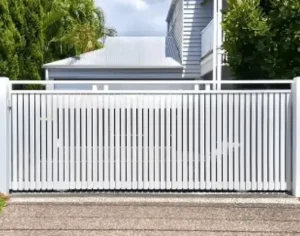
Why Are 6ft and 8ft the Default Panel Heights for Aluminum Fencing
Aluminum fence panels are not produced in random heights. Most extrusion and fabrication lines are tooled for full‑length 6063‑T5 aluminum profiles that yield cut lengths optimized to 1829 mm (just under 6 ft) and 2438 mm (8 ft). From a manufacturing standpoint, nesting six‑ and eight‑foot panel heights reduces scrap rates and keeps unit pricing predictable for volume buyers. Equally important, these two heights correspond to the privacy and security thresholds most municipal codes and homeowners’ associations call for. A 6 ft panel typically serves as a visual screen and a reasonable barrier at property lines, while an 8 ft panel is used where additional security, wind deflection, or compliance with commercial setback requirements applies. For distributors, carrying SKUs at both heights covers the majority of residential and light commercial tenders without creating excessive inventory complexity.
What Are the Standard Aluminum Fence Panel Widths and Post Centers in the US Market
In the United States, the supply chain has largely converged on a 6 ft (72‑inch) panel width for aluminum fence systems, measured from post center to post center. An 8 ft (96‑inch) panel is also common, particularly for larger commercial or perimeter applications where fewer posts reduce installation labor. Posts are typically 2 in × 2 in or 2.5 in × 2.5 in square extrusions with wall thicknesses from 0.062 in to 0.125 in, set in concrete footings spaced to match the panel bay. The table below summarizes the most frequently ordered combinations for US projects.
| Dimension | Common US Specification |
|---|---|
| Panel Height | 4 ft, 5 ft, 6 ft, 8 ft |
| Panel Width (post center) | 6 ft or 8 ft |
| Post Size | 2 in × 2 in or 2.5 in × 2.5 in |
| Post Wall Thickness | 0.062 in – 0.125 in |
| Infill Spacing (pickets) | 3‑⅞ in to 4 in on center |
These configurations have proven themselves across thousands of subdivisions. The 6 ft × 6 ft panel remains the most cost‑effective single unit for US residential distributors, while the 8 ft × 6 ft or 8 ft × 8 ft combinations are preferred when the buyer wants fewer posts per linear foot and a slightly more open appearance.
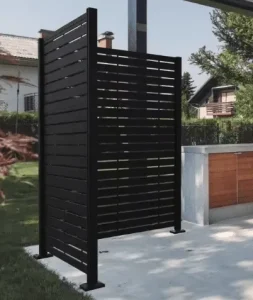
How Do Australian Market Requirements Change Aluminum Fence Panel Specifications
Australian buyers frequently request panels in metric units, with heights of 1800 mm (approximately 5.9 ft) and 2400 mm (approximately 7.9 ft) being the closest analogues to the US 6 ft and 8 ft standards. However, a key difference lies in panel width expectations. Many Australian projects prefer a 2400 mm panel span, which is roughly 7.9 ft; a 1800 mm (5.9 ft) span is also common but is narrower than the US 6 ft module. This means a Chinese factory fulfilling orders for both markets needs to maintain separate jigs and punching programs for post brackets unless the project specifically accepts the US 8 ft panel as an alternative. Material‑wise, the same 6063‑T5 aluminum alloy and polyester powder coating systems work well in Australia’s coastal zones, but we typically recommend a thicker post wall, such as 2 mm, when the fence will be installed in high‑wind regions like Perth or along the Queensland coast. While the aluminum itself resists salt corrosion, the post‑to‑footing connection becomes the weak point in cyclonic conditions, and that connection is sized by engineering, not by the panel height.
When Should You Order Custom Aluminum Fence Panel Sizes Instead of Standard 6ft or 8ft
Custom panel sizes make economic sense in two situations. The first is when the project’s existing hardscape or gate openings are laid out on a module that does not divide evenly into 6 ft or 8 ft bays. Forcing a standard panel width into an 8 ft 3 in opening, for instance, creates an awkward infill or requires field cutting that erodes the factory powder‑coat edge. The second is when a height between 6 ft and 8 ft is specified for code reasons, such as a 2100 mm pool fence requirement under AS 1926.1, which does not map cleanly to either US height. Custom heights and widths do increase lead time, usually adding 10 to 15 working days, and they raise the per‑panel cost because extrusion runs must be scheduled outside the standard nesting plan. However, if the alternative is paying a local installer to modify dozens of panels on site, the factory‑cut custom option usually results in a lower total installed cost. If your project involves a mixed site with both 6 ft boundary fencing and 8 ft security fence sections, sharing your site plan early lets us batch the custom panels together and reduce the unit price impact.
What Should Importers Verify Before Ordering Standard‑Sized Aluminum Fence Panels
Before releasing a purchase order for container‑load quantities of 6 ft or 8 ft aluminum panels, we advise checking five things that often go unnoticed until the shipment arrives. First, confirm whether the panel width is measured as an inside‑post dimension or a center‑to‑center dimension; a 6 ft panel sold as “width 72 in” can mean different post placements depending on the factory’s convention. Second, request a sample or at least a section drawing showing the rail‑to‑post bracket detail, because US‑style brackets frequently use a different screw pattern than the bracket systems common in Australian channel posts. Third, verify the powder coat specification against AS 3715 or AAMA 2604, especially if the fence will be installed within 5 km of a marine coast. Fourth, check whether the gate frame aluminum profiles are the same wall thickness as the fence posts; under‑specced gate posts result in sagging complaints that damage a distributor’s reputation. Fifth, align the packing list with your container plan; 8 ft panels are typically packed in crates that cannot be double‑stacked in a 40‑ft HQ as densely as 6 ft panels, affecting total landed cost per unit. For a realistic shipping estimate, you can send the panel quantity and a brief description of your destination port to sales01@yulongkeji-ch.com, and we will return a provisional load plan.
Common Questions About Aluminum Fence Panel Standards
Are 6 ft and 8 ft aluminum fence panels available in different infill styles
Yes, both press‑fit picket, vertical slat, and louvered blade infills are produced at 6 ft and 8 ft heights. The infill style does not change the panel height; it affects weight and post spacing. Louvered panels, for example, catch more wind and often require a post spacing of no more than 6 ft. In contrast, open‑picket panels rated for 110 mph wind zones can still function at 8 ft post centers. When ordering containers mixing styles, we recommend grouping infill types by row so that the packing team can brace heavier louvered panels at the bottom of the crate.
Does powder coating thickness need to differ between the two markets
Generally no. A high‑quality polyester powder coat applied at 60 to 80 microns meets the performance expectations of both US and Australian buyers. The variable that matters more is pretreatment. For Australian coastal projects we specify a chrome‑free conversion coating with a minimum coating weight of 600 mg/m², which extends salt‑spray resistance beyond 1,500 hours. US inland projects can use a standard chromate conversion coating and still achieve 1,000‑hour performance. If your site is within 1 km of breaking surf, sharing the GPS coordinates with us helps confirm whether a marine‑grade pretreatment upgrade is warranted.
Can a US‑designed 6 ft fence be installed with Australian‑style post footings
It can, but the post wall thickness may need adjustment. US‑style direct‑burial posts are commonly 0.125 in thick, while Australian contractors often prefer a base plate and dynabolt connection to a concrete slab. A post engineered for embedment in soil can be converted to a base‑plate mount if the plate is welded or bolted with a reinforced gusset, but the post wall must be confirmed for the new load path. We have supplied dual‑purpose posts with both plain‑end and base‑plate options on the same extrusion profile for projects that need installation flexibility.
What is the lead time for a mixed container of 6 ft and 8 ft standard panels
For standard‑sized residential aluminum fence panels without custom height or color changes, a 20‑ft or 40‑ft container order can typically be produced in 25 to 30 working days. If the order requires both US and Australian post brackets in the same container, we add a few days for bracket changeover. The main variable is the powder coat color; a RAL 9005 black or RAL 7016 anthracite moves through the line quickly, while less common colors scheduled at the end of a coating week may extend the lead time. Send your preliminary spec to sales01@yulongkeji-ch.com, and we will confirm a production window specific to your order before you commit.
If you’re interested, check out these related articles:
Powder Coating: Shielding Aluminum Fences from Corrosion
Stainless Steel vs Aluminum Railing: Outdoor Project Comparison
Aluminum Fences: School & Playground Safety Compliance
Selecting the Right Aluminum Driveway Gate for Durability
Chain Link Pool Fence: Codes, Heights, Gates & Pricing Guide