
Aluminum fencing sits in a strange spot. People assume it won’t rust because it’s not steel, and that’s technically true—aluminum doesn’t rust in the traditional sense. But corrosion? That’s a different story. I’ve seen aluminum fences in coastal installations start showing pitting within a few years when the surface treatment wasn’t up to the task. The material itself is only part of the equation. What really determines whether an aluminum fence holds up for five years or twenty-five comes down to how well that surface is protected from the environment it lives in.
Why Aluminum Corrodes Even Though It Doesn’t Rust
The confusion around aluminum and corrosion makes sense when you understand what’s actually happening at the surface. Aluminum reacts with oxygen almost immediately after exposure, forming a thin oxide layer that acts as a natural barrier. This passive film is why aluminum gets its reputation for being corrosion-resistant. But that reputation has limits.
In coastal environments, chloride ions from saltwater attack the oxide layer at specific points, creating pitting corrosion—small but deep holes that compromise the metal’s integrity over time. Industrial areas present a different challenge. Acid rain dissolves the protective oxide gradually, leaving fresh aluminum exposed to continued attack. The degradation compounds.
Galvanic corrosion adds another layer of complexity. When aluminum contacts a dissimilar metal—stainless steel fasteners are a common culprit—and moisture is present, an electrochemical reaction accelerates the aluminum’s deterioration. The aluminum becomes the sacrificial anode in this pairing, corroding preferentially to protect the more noble metal.
These mechanisms explain why untreated or poorly coated aluminum fences can fail prematurely in demanding environments. The oxide layer alone isn’t enough when environmental factors actively work to break it down.
How Powder Coating Creates a Protective Barrier
Powder coating works fundamentally differently from liquid paint, and that difference matters for long-term performance. The process starts with a dry powder—typically a thermoset polymer formulation—applied to the aluminum surface using electrostatic charging. The powder particles carry a positive charge while the aluminum substrate is grounded, creating an attraction that pulls the powder uniformly across the entire surface.
This electrostatic application solves a problem that plagues liquid coatings: inconsistent coverage on complex geometries. Fence components with corners, edges, and decorative details receive the same coating thickness as flat surfaces because the charged particles follow the electric field lines to reach every exposed area.
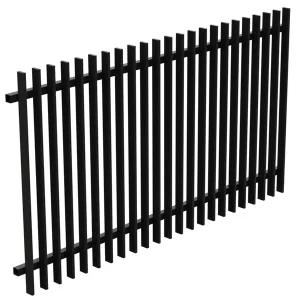
The real transformation happens in the curing oven. Heat triggers a chemical reaction within the polymer particles—they melt, flow together, and then cross-link into a continuous molecular network. This polymerization creates something fundamentally different from dried paint. The resulting film is chemically bonded at the molecular level, producing a coating that’s harder, more flexible, and more resistant to impact than anything achievable with liquid application.
Coating thickness comes out uniform, typically between 60-80 microns for fence applications. This consistency creates an effective moisture barrier with no thin spots where corrosion could initiate. The process also produces zero volatile organic compounds, which matters both for environmental compliance and for the practical reason that VOC-free coatings tend to have better long-term stability.
What makes powder coating superior to traditional paint for aluminum fences?
The performance gap between powder coating and traditional liquid paint comes down to how each forms its protective film. Liquid paint dries through solvent evaporation, leaving behind a coating that’s essentially the same material that went into the can, just without the carrier. Powder coating undergoes a chemical transformation during curing—the cross-linked polymer matrix that results is fundamentally tougher and more resilient.
Chip resistance illustrates this difference clearly. The thermoset polymer network can absorb impact energy and flex without fracturing, while dried liquid paint tends to crack and flake under the same stress. Adhesion to the aluminum substrate is also stronger because the curing process creates chemical bonds at the interface rather than relying solely on mechanical adhesion.
UV resistance matters for any outdoor application. Powder coatings maintain their color and gloss for years under direct sun exposure because the polymer chemistry resists photodegradation. Traditional paints often chalk and fade within a few seasons.
The environmental profile favors powder coating as well. Zero VOC emissions during application means no contribution to air quality problems and no health concerns for workers or nearby residents. From a lifecycle cost perspective, the higher initial durability translates to lower maintenance and replacement costs over the fence’s service life.
Environmental Protection Through Advanced Surface Treatment
The protective performance of powder-coated aluminum fencing comes from multiple mechanisms working together. The continuous polymer film creates a physical barrier that prevents moisture, oxygen, and corrosive agents from reaching the aluminum substrate. This moisture barrier function is the first line of defense against all forms of corrosion.
Corrosion inhibitors incorporated into the powder formulation provide a second layer of protection. These additives migrate to the coating-metal interface and chemically passivate the aluminum surface, making it less reactive even if small amounts of moisture penetrate the coating over time.
UV resistance prevents the coating itself from degrading under prolonged sun exposure. Polymer chains that break down under ultraviolet radiation lose their protective properties—the coating becomes chalky, loses adhesion, and eventually fails. UV stabilizers in the powder formulation absorb or reflect harmful wavelengths before they can damage the polymer structure.
Physical durability matters in real-world installations. Abrasion resistance protects against scratches from landscaping equipment, wind-blown debris, and general contact. Impact resistance prevents cracking when the fence takes a hit from a stray ball or a careless driver.
Salt spray testing provides objective verification of these protective properties. Standard test protocols expose coated samples to continuous salt fog for hundreds or thousands of hours, then evaluate the coating for blistering, corrosion creep, and adhesion loss. These accelerated weathering tests predict how the coating will perform over decades of real-world exposure.
How does the powder coating process enhance the durability of aluminum fencing?
The durability enhancement comes from the fundamental nature of the cured coating. During the curing process, thermoset polymers form a dense, three-dimensional network of cross-linked molecular chains. This structure provides mechanical strength that resists scratching and abrasion while maintaining enough flexibility to accommodate thermal expansion and minor impacts without cracking.
The coating adheres to the aluminum substrate through both mechanical interlocking and chemical bonding. Proper surface preparation creates microscopic texture that the molten powder flows into during curing, while the chemistry of the polymer-metal interface creates additional adhesion. This combination prevents the delamination and peeling that plague poorly adhered coatings.
Uniform coating thickness across the entire surface eliminates weak points where corrosion could initiate. Every edge, corner, and crevice receives the same protection as the main surfaces. This comprehensive coverage, combined with the coating’s inherent chemical resistance, creates a barrier that maintains its protective function for the full service life of the fence.
Design Flexibility and Environmental Responsibility
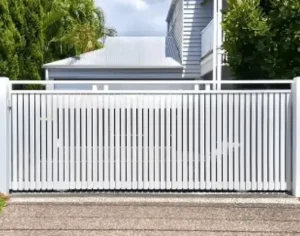
Powder coating opens up aesthetic possibilities that go well beyond basic protection. The process accommodates virtually any color, from standard architectural tones to custom matches for specific design requirements. Texture options range from smooth gloss finishes to matte, textured, or metallic effects. This versatility allows aluminum fencing to complement diverse architectural styles without compromising on protective performance.
Color retention over time sets powder coating apart from alternatives. The same UV stabilizers that protect the polymer structure also prevent color fading and chalking. A fence that looks good on installation day will look substantially the same a decade later—an important consideration for projects where aesthetic consistency matters.
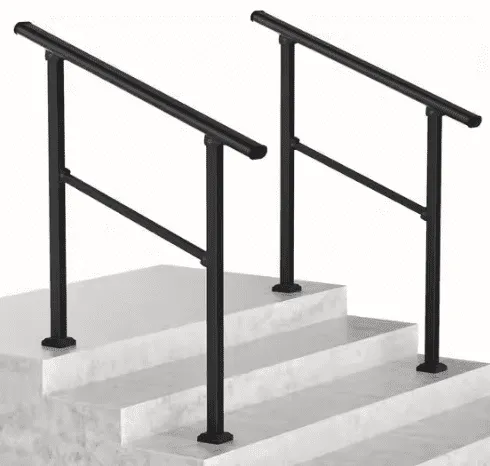
The smooth, dense surface of cured powder coating resists dirt adhesion, which translates to easier cleaning and better appearance between maintenance cycles. This self-cleaning characteristic reduces the ongoing effort required to keep the fence looking presentable.
Environmental considerations favor powder coating on multiple fronts. The zero-VOC application process eliminates air quality impacts during manufacturing. Overspray collection and recycling systems capture unused powder for reuse, minimizing material waste. The extended service life of properly coated fences reduces the frequency of replacement, which has its own environmental benefits in terms of reduced material consumption and manufacturing energy.
Maintaining Performance Over the Long Term
The durability of powder-coated aluminum fencing doesn’t eliminate the value of basic maintenance—it just makes that maintenance simple and infrequent. Periodic cleaning with mild soap and water removes accumulated dirt, pollen, and environmental deposits that can trap moisture against the coating surface. A soft brush or cloth works well; abrasive scrubbers or harsh chemical cleaners can damage the finish and should be avoided.
Inspection during cleaning provides an opportunity to catch any issues early. Look for scratches that penetrate to bare metal, chips from impact damage, or any signs of coating deterioration. Small areas of damage can be addressed with touch-up products before corrosion has a chance to spread.
Quality assurance during manufacturing determines how much maintenance will be needed over the fence’s service life. Proper surface preparation before coating, consistent powder application, and controlled curing conditions all affect the final product’s durability. Salt spray testing, UV exposure testing, and adhesion testing verify that each production run meets performance standards.
ASTM standards provide the benchmarks for these quality control processes. Compliance with relevant specifications ensures consistent performance across different production batches and gives buyers confidence in the product they’re receiving.
Can powder-coated aluminum fences withstand harsh weather conditions and saltwater environments?
Powder-coated aluminum fences are specifically engineered for demanding outdoor environments, including coastal installations where saltwater exposure is a constant factor. The coating system provides multiple layers of protection: a physical moisture barrier, chemical corrosion inhibitors, and UV stabilizers that maintain the coating’s integrity under intense sun exposure.
Salt spray testing validates performance in corrosive environments by simulating years of coastal exposure in accelerated timeframes. Coatings that pass these tests demonstrate the humidity resistance and chemical stability needed for long-term performance where salt-laden air and occasional direct saltwater contact are unavoidable.
Temperature extremes, whether hot or cold, don’t compromise the coating’s protective function. The polymer chemistry is formulated to maintain flexibility across the temperature ranges encountered in outdoor installations, preventing the cracking that can occur when rigid coatings expand and contract with thermal cycling.
Frequently Asked Questions About Powder-Coated Aluminum Fences
How long can I expect a powder-coated aluminum fence to last?
With proper application and reasonable maintenance, powder-coated aluminum fencing typically delivers 15-20 years of service or more before significant coating degradation occurs. The aluminum substrate itself can last much longer—the coating’s job is to protect that substrate from the environmental factors that would otherwise shorten its useful life. Actual longevity depends on the specific environment, coating quality, and maintenance practices, but properly specified and installed systems routinely exceed minimum expectations.
Is powder coating an environmentally friendly option for fence protection?
Powder coating ranks among the more environmentally responsible coating technologies available. The absence of volatile organic compounds means no contribution to air pollution or ozone formation during application. Overspray recovery systems capture unused powder for recycling rather than disposal. The extended service life of powder-coated products reduces the environmental impact associated with manufacturing and installing replacement fencing. These factors combine to make powder coating a defensible choice from an environmental perspective.
What kind of maintenance do powder-coated aluminum fences require?
Maintenance requirements are minimal compared to most other fencing materials. Periodic washing with mild soap and water—once or twice a year for most installations, more frequently in high-pollution or coastal areas—keeps the surface clean and allows for visual inspection. Avoid pressure washers at close range, abrasive cleaning tools, and harsh chemical cleaners that could damage the coating. Promptly address any scratches or chips that expose bare metal to prevent corrosion from gaining a foothold.
Partner with Hubei Yulong for Superior Fencing Solutions
Hubei Yulong Building Materials Co., Ltd. combines automated precision with advanced surface treatments to deliver aluminum and zinc steel fences engineered for demanding applications. Our powder coating processes are designed to maximize corrosion protection, aesthetic durability, and environmental responsibility. Contact us to discuss your specific requirements and discover reliable solutions for projects where long-term performance matters. +8619086315193 | sales01@yulongkeji-ch.com