
The aluminum panel fence vs chain link fence decision often comes down to balancing upfront cost with long-term appearance. In our experience, the initial price difference is only part of the story: installation conditions, material thickness, and coating quality can shift total project cost significantly. Aluminum panel fence brings a clean, modern look and privacy that can raise property value, while chain link remains practical for temporary enclosures or security-only applications. Understanding the full picture helps avoid budget surprises and ensures the fence meets your property’s functional and visual goals. We will break down real cost components, aesthetic trade-offs, and durability factors to help you make a project-specific decision.
How Much Does Aluminum Panel Fence vs Chain Link Fence Really Cost?
At first glance, chain link fence appears to be the clear winner on price. Material costs for a standard 9-gauge galvanized chain link system typically range from $8 to $12 per linear foot, while a basic aluminum panel fence system starts at around $22 per foot and can exceed $35 for premium styles. But focusing on those numbers alone can be misleading. The following table shows a typical cost breakdown for a 200-linear-foot residential perimeter:
| Cost Item | Aluminum Panel Fence (per linear ft) | Chain Link Fence (per linear ft) |
|---|---|---|
| Fence panels and posts | $22-$35 | $8-$12 (mesh) + $5 (post) |
| Concrete footings | $3-$5 | $2-$4 |
| Installation labor | $10-$15 | $8-$12 |
| Gate (single walk) | $300-$600 (total) | $150-$300 (total) |
| Total for 200 ft | $8,000-$13,000 | $3,500-$5,500 |
These numbers reflect average contractor prices in mid-range regions. What the table does not show is that chain link fence often requires additional tension wire, brace bands, and more frequent line posts for durable performance. When you factor in those components, the installed cost can creep up by 15–20%. For a taller chain link fence (6 ft or higher), you may also need thicker posts and heavier mesh, which narrows the price gap further.
Aluminum panel fence, on the other hand, is a complete system; once you specify the height and style, all components are engineered to work together. There is less need for on-site adjustments. Over a 10-year period, chain link may require tightening, repainting galvanized portions, or replacing rusted sections, while aluminum panel fence typically needs only occasional cleaning. When we work with property developers, we find that the lifecycle cost advantage of aluminum becomes clear around year five to seven.
Which Fence Gives You Better Privacy and a Nicer Look?
Aesthetics and privacy are where aluminum panel fence really separates itself. Standard chain link is transparent. That is its purpose in many cases, but that very openness means no visual screening and no noise reduction. Adding plastic slats or fabric can improve privacy, but these additions often look temporary and can degrade under UV exposure.
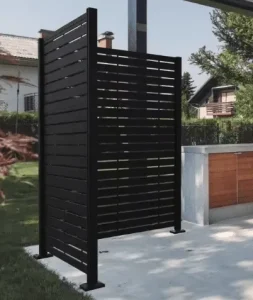
Aluminum panel fence, by contrast, can be manufactured with solid slats, louvers, or perforated patterns. A vertical slat design blocks sightlines completely while creating a modern, architectural appearance. Black powder-coated aluminum panel fence is especially popular for commercial office parks and upscale residential developments because it projects a clean, professional image.
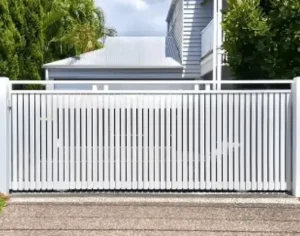
In our project work, we have seen that the choice of fence can influence perceived property value. A well-designed aluminum slat fence around a restaurant patio or a residential community creates an inviting atmosphere, while chain link tends to signal either a budget constraint or a temporary boundary. For owners who care about curb appeal, aluminum panel fence is the better investment.
If your project has both privacy demands and cost limits, our team can help you compare slat styles and coating choices that fit your budget. Contact sales01@yulongkeji-ch.com.
How Durable Are These Fences, and What Kind of Maintenance Do They Need?
Durability depends heavily on material specification and coating quality. Chain link fence is most often made from galvanized steel wire, with options for additional PVC coating. The galvanization thickness (e.g., 1.5 oz/sq ft versus 2.0 oz/sq ft) determines how long the steel resists rust. In mild inland environments, a well-galvanized chain link fence can last 15–20 years, but near the coast or in industrial areas, corrosion can begin within 5–8 years if the zinc layer is inadequate.
Aluminum does not rust. The alloy we use, typically 6063-T5, combined with a polyester or polyvinylidene fluoride (PVDF) powder coating, creates a barrier that withstands salt spray, humidity, and temperature swings. In ASTM B117 salt fog testing, proper powder-coated aluminum can survive over 1,000 hours without significant blistering. Maintenance for aluminum is simple: wash with mild detergent once or twice a year.
We recall a project in a Southeast Asian coastal city where chain link fences installed around a warehouse showed heavy rust at weld points after only four years. Aluminum panel fences on the same property, installed at the same time, remained in excellent condition with no surface corrosion. That difference directly affects long-term ownership satisfaction and replacement costs.
What Installation Factors Should You Consider for Your Project?
Installation complexity can tip the cost balance. Chain link fence is relatively straightforward to install. Setting posts in concrete, unrolling mesh, and attaching tension wire are standard steps, but achieving proper tension across a long run requires experience; loose mesh can sag and look unprofessional.
Aluminum panel fence installation demands more precision. Panels are prefabricated to exact dimensions, so post spacing must be accurate. A mistake of even an inch can result in panels not fitting. On the plus side, once posts are set correctly, panel installation is fast. There is no need to tension wire or weave mesh. The heavy-gauge aluminum posts and pre-assembled gate frames also resist warping over time, which reduces gate sag issues common with lighter chain link gates.
For projects on uneven terrain, chain link can follow the contour easily, while aluminum panel fence may require stepping or custom-cut panels. If your site has significant slopes, discuss panel adapt options with your supplier early.
Which Fence Is Right for Your Project? Get a Custom Quote
If your project demands a permanent fence that delivers privacy, a modern appearance, and low long-term maintenance, aluminum panel fence is the better choice. It works well for residential communities, commercial property perimeters, pool enclosures, and any application where the fence becomes part of the architectural design.
Chain link fence still has its place, primarily in sports fields, utility enclosures, temporary security, and high-security applications where visibility is an asset. It is also a reasonable option when budget is the only concern and you accept a shorter service life. We advise buyers to look beyond the initial price tag and consider the full 10-year cost. When you do that, aluminum panel fence often comes out ahead for permanent visible boundaries.
When you are ready to compare specific costs, share your project dimensions, post spacing, and gate requirements with us. Our engineering team will provide a competitive quotation. Contact us at sales01@yulongkeji-ch.com or call +8619086315193.
What Questions Do Buyers Ask About Aluminum Panel Fence vs Chain Link Fence?
Is chain link fence significantly cheaper than aluminum panel fence?
Yes, chain link fence has lower upfront material costs, often half the price per foot. But when you account for additional components, installation labor for taller fences, and periodic maintenance, the total cost over 10 years can be close for many projects. The real question is whether the savings are worth giving up privacy and long-term appearance.
Can aluminum panel fence withstand high winds?
Aluminum panel fences are designed with wind load in mind. A solid slat fence does catch more wind than an open chain link, so deeper post embedment and larger concrete footings are required in windy regions. Most systems are engineered to handle wind speeds up to 90 mph when installed per the manufacturer’s guidelines.
Does aluminum panel fence require professional installation?
While DIY installation is possible for simple layouts, we recommend professional installation for best results. Accurate post placement and alignment are critical, especially for large projects or sloped sites. A professional installer will also handle gate adjustments to prevent sagging.
How does chain link fence hold up in coastal environments?
Chain link fence near saltwater is susceptible to corrosion. Hot-dip galvanizing with a zinc coating of at least 2.0 oz/sq ft provides some protection, but the fence will still age faster than in inland areas. Aluminum panel fence, with its natural corrosion resistance, is a stronger performer in marine environments.
Can I add privacy to a chain link fence?
Yes, plastic slats, reed inserts, or fabric screens can be woven into the mesh. These improve privacy to some degree, but they rarely match the clean, integrated look of a solid aluminum panel. They also require periodic replacement as they weather. If privacy is essential for the long term, aluminum panel fence is a more durable solution. Share your requirements and we can help you compare the actual installed cost of each option for your site.
If you’re interested, check out these related articles:
Order Custom Aluminum Fencing from China: A Strategic Guide
Steel Fence Quality Control: Essential Pre-Shipment Checks
Aluminum Pool Fence Safety: Standards, Heights, & Supplier Guide