
Aluminum slat fence panels have become the default choice for modern perimeter design, but the range in quality among wholesale suppliers is wider than most buyers expect. What separates a long-term architectural asset from a panel that fades, rattles, or corrodes in three years is rarely visible in a product photo. At Hubei Yulong, we watch distributors and contractors navigate this gap every day, and the ones who succeed are the ones who move past price-per-panel and into the structural and coating details that determine installed lifespan. This article covers the design engineering, alloy selection, and manufacturing quality signals those buyers rely on when sourcing vertical slat aluminum fencing at scale.
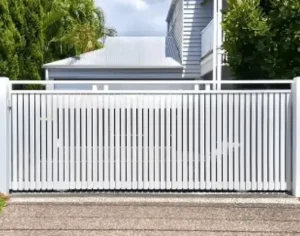
Why Vertical Slat Aluminum Panels Lead Modern Fence Design
Vertical slat fencing dominates contemporary residential and commercial projects for reasons that go well beyond appearance. The orientation of the slats controls sight lines at varying angles while leaving open channels for air movement. That combination gives landscape architects a way to meet privacy requirements without creating the wind-load problems or visual heaviness of a solid panel. The clean vertical lines also integrate more naturally into the architectural language of modern facades than horizontal rail systems, which is why we see slat panel fences specified repeatedly for apartment complex perimeters, hotel grounds, and high-end residential communities.
From a procurement standpoint, aluminum as the base material eliminates the recurring maintenance cost that makes coated steel or timber a budget risk over a 15-year ownership cycle. The oxide layer that forms on aluminum surfaces is inherently protective, and when combined with a quality polyester powder coat, it gives resistance to coastal salt spray and UV exposure that field-installed touch-up products cannot replicate. That shift from a maintenance-dependent material to a material with inherent corrosion resistance is the structural reason aluminum slat panels have taken the lead in the fence category.
The Engineering Choices Behind Long-Lasting Slat Fence Panels
A slat fence panel is an assembly of extruded profiles, and the engineering decisions made before extrusion determine whether the finished fence stays straight, sheds water, and holds its fasteners through seasonal thermal cycling. The three variables we look at first on a specification sheet are alloy grade, profile wall thickness, and the internal drainage geometry of the slat itself.
Most aluminum slat fence panels are extruded from 6063 alloy, which balances sufficient strength with the flow characteristics needed to get clean surface finishes on complex hollow profiles. When a project requires taller panels or will face sustained high-wind exposure, we move to 6061-T6 for the load-bearing rails. The common failure we see when buyers skip this check is a panel that sags in its mid-section after two summer seasons, not because the alloy was wrong but because the wall thickness was specified at 1.2mm where the span and wind zone required 1.8mm minimum.
| Feature | 6063-T5 (Standard) | 6061-T6 (Heavy-Service) |
|---|---|---|
| Typical use | Privacy screen fences, residential perimeters | High-wind coastlines, tall panel spans over 2m, gate frames |
| Wall thickness needed for 1.8m panel span | 1.4–1.8 mm depending on slat count and spacing | 1.6–2.0 mm for equivalent rigidity |
| Surface finish quality | Excellent for visible architectural surfaces | Slightly less smooth, acceptable for structural elements |
Drainage matters more than many engineers admit. Vertical slats that rely on end caps with drilled holes will retain water in the internal hollow chamber where the cap meets the profile edge. Over freeze-thaw cycles, that trapped moisture expands and eventually cracks the cap or separates the joint. The better solution is an open-bottom geometry that allows condensate to drain continuously without relying on a single weep hole. That single design choice adds years to the panel’s life in northern climates, and it costs almost nothing in manufacturing.
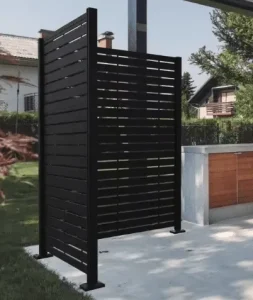
What Sets Wholesale Slat Fence Pricing
Wholesale pricing for aluminum slat fence panels follows a logic that is straightforward once you separate raw material cost from the labor-intensive steps that vary by factory. The aluminum extrusion billet price sets the floor, but the powder coating process, the number of slats per panel, and the post-and-bracket system included in the kit are where one supplier’s quotation diverges from another’s by 15 to 25 percent.
A vertical slat panel with sixteen 100mm-wide slats and 15mm gaps uses roughly 1.8 linear meters of extrusion per panel width. That material cost is predictable. What changes is the surface treatment. A single-layer polyester powder coating applied to a panel that has not been properly pre-treated with a chromium-free conversion coating will pass visual inspection at delivery but will chalk and lose adhesion within two to three years of UV exposure. A high-build architectural polyester or a PVDF coating adds roughly 10 to 18 percent to the panel cost, and for projects within 5 kilometers of salt water it is not optional. When you see two factory quotations that look similar on paper, the coating specification is usually where the difference hides.
If your project program exceeds 500 linear meters or involves mixed panel heights, it is worth confirming the powder coat batch consistency plan with your supplier before placing a prepayment. Reach out at sales01@yulongkeji-ch.com with your project scope and we will walk through the coating spec and batch testing documentation that applies to your volume.
Standard panel heights at 1.2m, 1.5m, and 1.8m carry the lowest per-meter cost because they use standardized slat lengths and minimize extrusion waste. Custom heights between 1.9m and 2.4m add a surcharge of approximately 5 to 8 percent, driven mainly by the need to run a separate production batch. Post type also affects the total system price: aluminum posts with integrated slotted channels cost more per unit than a steel post with aluminum face brackets, but the all-aluminum system eliminates the galvanic corrosion risk at the post-to-rail junction that maintenance crews later find.
Key Specifications to Confirm When Ordering Slat Fencing
Before issuing a purchase order, we recommend buyers lock in five specification points that directly affect installation cost and regulatory compliance.
First, confirm the slat-to-post attachment method. Panels that use concealed stainless steel clips allow linear thermal expansion without rattling, while riveted connections can loosen over years. Second, confirm the post footing detail required for your soil conditions. A 60mm by 60mm aluminum post installed in loose sandy soil will need a larger concrete footing than the same post in compacted clay, and the post wall thickness must be 2.0mm or greater to act as a structural member. Third, specify the gate frame construction if the perimeter includes pedestrian or vehicle gates. An assembled aluminum gate frame with welded corners and internal reinforcement bars will resist diagonal racking better than a frame assembled only with mechanical fasteners.
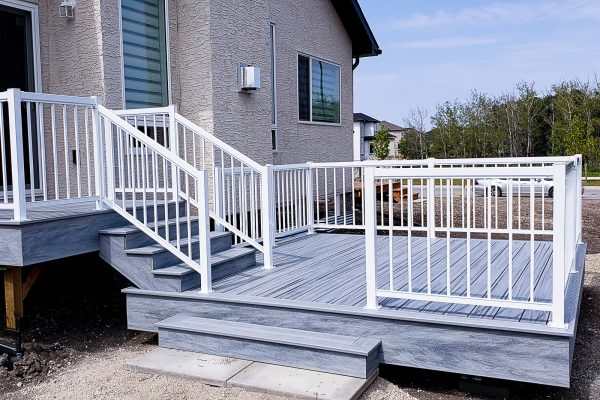
Fourth, confirm the surface treatment standard your project requires. AAMA 2604 is the minimum specification for visible architectural aluminum in North America; AAMA 2605 applies to coastal or industrial exposures. Fifth, verify the packaging specification for ocean freight. Panels shipped without interleaving or with thin plastic wrap that does not protect edges will arrive with scratches that require field touch-up, and the cost of that rework on a 200-panel job quickly exceeds the packaging savings.
How to Assess Factory Quality Before Placing an Order
The quotation tells you the price. It does not tell you whether the powder coating line runs a seven-stage pretreatment or a shortened three-stage wash, or whether the extrusion tolerances are held within the 0.3mm range that prevents slat binding during assembly. Those differences show up after installation, and by then the shipment has cleared customs.
One method we use when auditing a new extrusion and coating partner is to request a cut sample from a production run, not a display sample, and examine the coating thickness and adhesion with a simple cross-hatch test. For high-volume tenders, we also ask for salt spray test reports per ISO 9227 with the specific coating system named, not a generic certificate. A factory that cannot produce batch-specific test data is a factory that has not been asked for it before, and that is a procurement risk.
Another reality in this product category is that the on-ground factory price is not the delivered cost. A reliable partner will quote the Incoterms clearly, include the packaging that actually protects the product, and be able to provide photos of the packed container before sealing. When you combine a verified coating system, consistent extrusion tolerances, and transparent logistics documentation, the per-panel price difference between a supply partner who manages these three elements and one who does not is recovered in the first project cycle that does not require reorder of damaged or rejected panels.
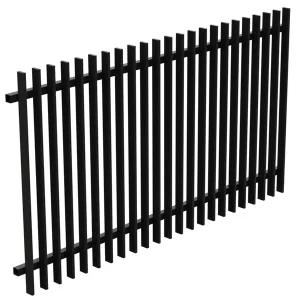
Common Questions About Wholesale Aluminum Slat Fence Panels
What is the minimum order quantity for custom slat fence panels?
The MOQ for a custom extrusion profile varies by factory. For standard vertical slat geometries using existing dies, we typically start at 200 linear meters of panel length. When a new die is required because the slat profile, width, or internal ribbing is unique to your project, the MOQ rises to 500 to 800 meters to amortize the die cost. Sharing your drawing early allows the engineering team to check whether an existing die can be adapted, which often cuts lead time by two weeks and eliminates the new-die charge.
How long does production and shipping take for a bulk order?
Standard production time for 500 meters of aluminum slat fencing with a polyester powder coat runs four to six weeks from confirmed order to release. Ocean freight to the US West Coast adds roughly 15 to 18 days, and East Coast or Gulf ports add another 7 to 10 days of transit. The variable is always the curing schedule in the coating line. A PVDF coating adds an extra week because the two-coat system requires separate bake cycles. We recommend building a 10-week total timeline into your project schedule for first-time orders.
Can the panel color match our architectural RAL specification?
Yes, powder coat colors are mixed to RAL standards, and the more common architectural colors like RAL 7016 Anthracite Grey, RAL 9005 Jet Black, and RAL 9016 Traffic White are typically available without a color-matching surcharge. Custom RAL colors or textures beyond these require a minimum batch run and a color-matching trial that adds three to five days to sample approval. The coating adhesion and UV stability are not affected by the pigment choice as long as the base polyester chemistry is the same; the risk is only in the batch-to-batch visual consistency when reordering six months later, so we archive the coating sample from the approved batch for future matching.
What warranty does the manufacturer provide on aluminum slat fence panels?
Our standard warranty covers 10 years against structural failure of the aluminum extrusion and 7 years against coating adhesion failure under normal atmospheric exposure. The exclusion is mechanical damage during installation or impact from landscaping equipment. For projects within 500 meters of a breaking surf coastline, we recommend a PVDF topcoat system and will provide a 12-year coating warranty because the chemistry is proven in that environment. A supplier that offers a blanket 15-year warranty without asking about the installation environment has not thought through the exposure conditions.
Does the fence come with installation instructions?
Every container shipment includes an installation guide with panel assembly diagrams, post footing dimensions, and torque values for the concealed clip fasteners. The instructions are visual and dimensioned in metric and imperial units. For contractors handling their first aluminum slat installation, we include a QR code on the packing list that links to a step-by-step assembly video. If your team is managing a multi-building development, ask for a pre-production sample panel so the site crew can practice the clip attachment and post alignment before the full shipment arrives. Send your project timeline and we will arrange a sample panel from the production line that matches your order specification.
If you’re interested, check out these related articles:
Stainless Steel Vertical Cable Railing: Design, Specs, & Factory Pricing Guide
Aluminum vs Vinyl Fence: Maximizing Longevity and Value
Source Steel Fencing from China: An Expert Import Guide