
Aluminum vs wood privacy fence: which one actually holds its value? Over twelve years in fencing systems, I have seen too many wood privacy fences develop visible gaps within five years; boards shrink, posts warp, and once-tight seams open to let in noise and curious eyes. Aluminum slat fencing, by contrast, keeps its shape because the material does not absorb moisture or expand with seasonal changes. This article examines the structural reasons behind that difference, so you can decide whether paying a little more upfront saves years of regretting a fence that stops being private.
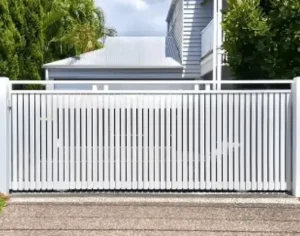
Aluminum vs Wood Weather Resistance and Material Durability
A wood privacy fence lives or dies by how well it handles water. Pressure-treated pine resists decay longer than untreated cedar, but both absorb moisture. Repeated wet-dry cycles cause boards to cup and split. Within a few seasons, surface cracks collect dirt and hold water, accelerating rot at the post base and along the bottom rails. Termites and carpenter ants find those softened fibers an easy meal. I have pulled apart ten-year-old wood fences where the posts looked solid from the outside but crumbled inside the concrete footing.
Aluminum fence profiles do not rot, absorb water, or feed insects. The alloy we use most often for privacy screens is 6063 T5, extruded into hollow slats or channels, then coated with a polyester powder layer 60 to 80 microns thick. That coating isolates the metal from direct UV exposure and airborne salts. In coastal project specifications we consistently recommend a marine-grade pretreatment before the powder topcoat. Wood in the same conditions needs constant resealing just to reach half the service life.
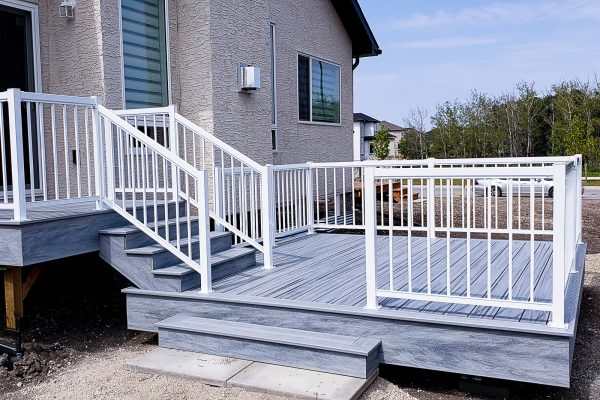
Aluminum vs Wood Privacy Fence Longevity and Warping Prevention
Privacy comes down to one thing: can you see through the fence? Wood boards shrink across their width as they dry. A freshly installed fence with zero gaps often shows 3 to 5 mm openings between boards after one full summer. In high-wind areas, warped boards can leave gaps large enough to break the privacy entirely.
Aluminum slat systems use interlocking vertical or horizontal profiles that are fastened to rails with consistent spacing set by the prefabricated slots. There is no seasonal width change to account for because the thermal expansion of aluminum in a residential fence length is under 2 mm. The slats cannot cup like a timber board. For properties where sightline control matters year after year—backyard pools, patios, terraces—that geometric stability means the fence remains opaque a decade after installation. Wood cannot make the same promise without ongoing board replacement and tightening.
Aluminum vs Wood Fence Total Cost Ownership Over 20 Years
Upfront material cost favors wood, but that snapshot misses the full picture. The table below shows a rough cost comparison for a typical 50-linear-foot privacy fence, 6 feet tall, with posts included.
| Cost Element | Aluminum Privacy Fence (50 ft) | Wood Privacy Fence (50 ft) |
|---|---|---|
| Material (panels, posts, hardware) | $2,500 – $3,800 | $1,500 – $2,500 |
| Professional installation | $1,200 – $2,000 | $1,200 – $2,000 |
| Annual maintenance (stain/seal/repairs) | $0 – $50 (occasional cleaning) | $200 – $400 |
| Replacement after 15–20 years | Not required in most cases | Full board/post replacement likely |
| 20-year total estimated cost | $3,700 – $5,800 | $5,500 – $10,500 |
The wood fence cost jumps because staining, sealing, and board replacement repeat every two to four years. In humid or coastal regions, the maintenance interval shortens further. When a client asks me to compare long-term numbers, I point them to the 15-year mark—by then, the total spend on wood has usually matched or exceeded an aluminum installation, and the aluminum fence still looks uniform.
If your project sits in a severe climate zone or requires a specific finish consistency, we can run a lifetime cost model for your location. Contact our engineering team at sales01@yulongkeji-ch.com to discuss your project parameters.
Aluminum vs Wood Fence Installation Requirements and Labor
A wood privacy fence demands on-site cutting, nailing, and aligning of every picket and rail. If the lumber is freshly pressure treated, it may be wet and heavy, and it will shrink after installation, often pulling boards apart. Getting a perfectly straight top line takes skill and time.
Aluminum privacy fence panels arrive pre-assembled or with pre-punched rails that accept slats in a single orientation. A crew can set posts, then slide panels into place with a fraction of the field cutting. The lighter weight—roughly 4 to 6 kg per linear meter for a 6-foot high aluminum panel—reduces labor fatigue and the need for heavy lifting equipment. For a homeowner handling a weekend installation, aluminum saves half a day of cutting and aligning compared to wood, and the result stays straight without waiting for the material to settle.
Aluminum vs Wood Fence Design Flexibility and Aesthetic Choices
Wood offers a warm, traditional look, and you can paint or stain it almost any color. However, paint on exterior wood peels within a few years, and dark stains fade unevenly. Maintaining a uniform appearance requires repainting every three to five years, which adds labor and material cost.
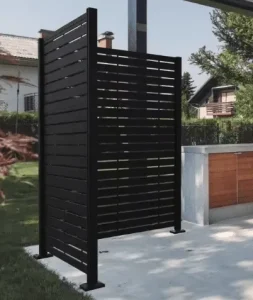
Aluminum privacy fencing comes in a wide range of RAL and custom powder colors—matte black, dark bronze, satin silver, and wood-grain textured finishes that mimic cedar or oak without the upkeep. Slat orientation can be vertical, horizontal, or a combination of both, and some systems integrate decorative laser-cut screen panels for accent sections. Because the color is baked into the powder layer, it resists fading and chalking far longer than painted wood. A black aluminum slat fence we supplied to a resort in Queensland still measured less than 5% gloss reduction after six years of strong sun.
Sourcing Quality Aluminum Privacy Fence from a Reliable Manufacturer
Not all aluminum fence panels are made the same. When buying from a factory, especially overseas, you need to confirm three things: the alloy grade, the coating specification, and the profile wall thickness. A privacy slat should have a wall thickness of at least 1.2 mm to resist denting. The powder coating should meet Qualicoat or AAMA 2604 standards for exterior durability.
At Hubei Yulong, we run automated extrusion and powder coating lines that let us control profile consistency and coating thickness panel by panel. For customers importing containers, we supply pre-production samples and on-line inspection reports before shipment. The key is to ask for those documents before paying for full production. If a supplier cannot show batch-specific coating adhesion tests or profile dimensional reports, the savings may not be worth the risk.
Common Questions About Aluminum vs Wood Privacy Fence Performance
Is aluminum fence hotter to the touch than wood in direct sun?
Aluminum does absorb and radiate more heat than wood, but a polyester powder coating in a light color reduces surface temperature measurably. In projects where a backyard faces west and gets afternoon sun, I often recommend satin silver or light bronze rather than black, unless the fence is shaded part of the day. Even a black aluminum slat fence, though, will not warp or twist from heat the way a wood fence can.
Can I paint an aluminum privacy fence to match my house trim?
You can, but factory powder coating already offers hundreds of standard colors and holds up far better than field-applied liquid paint. If you must repaint later, you need to scuff the surface and use a two-part polyurethane or acrylic system designed for metal. In most cases, ordering the right color from the start costs less and lasts longer.
Does aluminum fence provide any sound blocking?
Solid aluminum slat fences reflect some sound, but they are not acoustic barriers. A fully closed vertical slat system will reduce traffic noise by a few decibels more than a wood fence with gaps, simply because there are no seams for sound to leak through. For serious noise reduction, you would need a heavier composite panel system, but for general backyard quiet, a well-built aluminum privacy screen with zero sightline gaps offers noticeably more seclusion than a typical wooden picket fence.
How do I get a custom quote for an aluminum privacy fence project?
The fastest way is to send your project details—approximate length, preferred height, slat direction, and color—to our email address. I can then calculate the panel count, post specifications, and shipping estimate. For larger commercial or multi-unit developments, we also provide technical submittal packages with material certifications and installation drawings. Reach our team at sales01@yulongkeji-ch.com or call +8619086315193.
If you’re interested, check out these related articles:
Steel Fence Quality Control: Essential Pre-Shipment Checks
High-Security Steel Fencing: Protecting Government & Military Assets
Best Aluminum Fence Styles for Residential Gardens in 2025