
Aluminum screen fence offers a durable, low-maintenance way to create privacy in gardens and patios without sacrificing light or airflow. While many articles focus on the aesthetic variety of screen patterns, what matters in practice is how the fence performs against wind, uneven ground, and years of weather exposure. As a fencing engineer with over a decade of experience, I have seen projects succeed or fail based on mounting details and material selection rather than just the design. This article covers the most effective applications for aluminum screen fences in garden and patio settings, with a focus on structural reliability and practical installation choices.
Why Choose Aluminum Screen Fence for Outdoor Privacy
Aluminum screen fences give outdoor spaces a balance of privacy, openness, and long-term durability that wood, vinyl, and solid metal panels often cannot match. The material is inherently corrosion-resistant, so it handles rain, humidity, and garden irrigation without rusting or warping. A quality powder-coated finish, typically 60–80 microns thick, protects the aluminum substrate and keeps the color stable for years even under direct sun.
From a design standpoint, the perforated or laser-cut patterns break up sightlines without creating a solid wall. That means a patio or garden feels enclosed but not boxed in. Air still moves through the panels, which helps reduce heat buildup on hot afternoons and lowers wind pressure on the fence — an often-overlooked structural advantage. Compared to a wood privacy fence that blocks everything, a screen fence lets filtered light reach plants while still giving you a sense of separation from neighbors or the street.
The weight advantage matters during installation. Aluminum screen panels are light enough that two people can position them without heavy equipment, yet the 6063-T5 alloy we specify in most residential projects provides enough stiffness to hold its shape across a 1.8–2.1 m span. That combination of strength and lightness makes aluminum the practical choice for gardens where access is tight and ground conditions vary.
Garden Privacy: Enclosing Borders Without Blocking Light
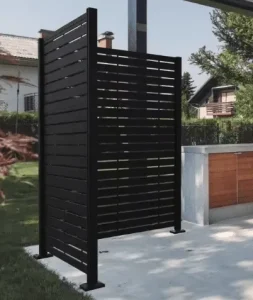
Gardens present a specific privacy challenge. You want to define the boundary and screen out unwanted views, but you also need sunlight for plants and a sense of openness for the landscape. Aluminum screen fence solves this by offering variable openness ratios, typically from 30% to 70% solid area depending on the panel pattern.
When the fence is used as a perimeter, post spacing and footing depth become the deciding factors for long-term stability. In garden soil, we usually set posts at 1.8 m centers and embed them at least 600 mm deep with a concrete footing. Loose or sandy soil requires a larger diameter footing — often 300 mm — to resist the turning moment from wind. For a 1.5 m high screen fence, the wind load on each panel is low enough that this standard footing works well, but any height above 1.8 m should be reviewed by an engineer.
One use I have found particularly effective is setting a row of screen panels partway into the garden to create a semi-enclosed seating area. The panels act as a backdrop for planting beds while still allowing glimpses of the garden beyond. This works well with climbing plants because the aluminum structure provides a durable trellis without rotting. If you plan to train plants on the panels, specify a powder coating suitable for constant moisture contact — a polyester-based topcoat holds up better in that scenario than a standard epoxy primer-only finish.
Patio Privacy: Creating a Secluded Outdoor Room
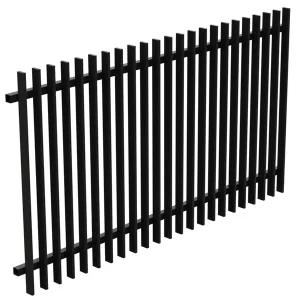
A patio is essentially an outdoor room, and aluminum screen fence gives it walls that breathe. Unlike a garden, where the fence often follows a property line, a patio enclosure usually requires panels that can be anchored to a concrete slab or pavers. That changes the installation approach completely.
For a slab-on-grade patio, surface-mounted base plates bolted to the concrete are the most reliable method. The base plate distributes the post’s bending moment across a wider area, and chemical anchors or expansion bolts provide pull-out resistance. I recommend a minimum base plate size of 150×150 mm for a 50×50 mm post, with four M10 stainless steel anchors per plate. The bolt spacing matters — anchors placed too close to the edge of the plate can crack the concrete if over-torqued.
On paver patios, the challenge is that the paver base does not provide a continuous structural slab. In those cases, we have used isolated concrete footings poured below the paver level, with the post brought up through a cut paver. The footing should extend below the frost line if you are in a region with freeze-thaw cycles, otherwise the post will heave over time and the panel alignment will shift.
Height selection also changes when you move from a garden to a patio. Because you are usually sitting down, a 1.5 m panel often provides enough privacy for seated occupants, while a taller 1.8 m panel works better when the patio is adjacent to a walkway or a neighbor’s window. The design can also include a gate panel integrated into the screen fence, using the same aluminum frame and pattern for a consistent look.
Installation Considerations for Long-Lasting Screen Fences
Getting the post installation right determines whether an aluminum screen fence looks good after five years or starts leaning. There are three main anchoring methods, and the choice depends on the surface you are working with.
| Method | Best For | Footing Depth | Notes |
|---|---|---|---|
| Driven post with concrete surround | Soil, garden beds | 600–900 mm | Soil type dictates footing diameter; use 250–300 mm for sandy soils. |
| Surface-mounted base plate | Concrete slabs, patios | N/A | Requires minimum slab thickness of 100 mm and edge distance of 60 mm for anchors. |
| Isolated footing on pavers | Paver patios, terraces | Below frost line | Footing cast below paver base, post extends through a cut paver. |
Posts are typically 50×50 mm or 60×60 mm aluminum extrusions with a wall thickness of 1.5–2.0 mm. For a 1.8 m high screen fence, the post should be at least 2.4 m long to allow for the embedded portion. We specify a minimum embedment of 25% of the above-ground height. If local wind speeds exceed 120 km/h, increase the embedment to 30% and consider adding intermediate posts. The aluminum posts we supply use 6063-T6 temper, which provides higher yield strength than T5 and is worth the small cost increase for coastal or exposed sites.
Panel-to-post connection uses stainless steel brackets and screws. Do not use galvanized steel fasteners in contact with aluminum — the galvanic reaction will accelerate corrosion. All hardware in contact with aluminum should be 304 or 316 stainless. This is a detail that gets overlooked in orders but makes a big difference near the coast.
Long-Term Care and Upkeep
One reason aluminum screen fences are popular for gardens and patios is that they require almost no routine maintenance. Powder-coated panels do not need painting or staining. An occasional rinse with a garden hose removes dust and pollen. For heavier grime, a soft brush with mild soap and water restores the finish without scratching the coating.
Inspecting the post connections annually is a good practice. Check that bracket screws are tight and that no stainless steel hardware has worked loose from wind vibration. Base plate bolts on patios should be checked for corrosion after the first winter, especially if de-icing salts are used nearby. If you see white rust forming on the bolt heads, replace them with 316 stainless.
The powder coating itself has a service life of 15–20 years in normal outdoor conditions. In coastal or high-UV environments, the color may fade slightly after 8–10 years, but the protective barrier remains intact. If a panel gets scratched down to bare metal, a touch-up kit matching the original RAL color can prevent any oxidation. The scratch should be cleaned with isopropyl alcohol and the touch-up paint applied in thin layers to rebuild the film thickness.
Planning Your Project and Getting the Details Right
Most screen fence projects start with a rough idea of where privacy is needed and how tall the fence should be. Turning that into an order requires precise measurements and a clear understanding of the surface conditions at each post location. The panel width, the post size, and the anchoring method all need to match the specific site.
We often see inquiries where the panel design has already been chosen but the post details have not been thought through. That creates delays because the post specification must be reviewed against the wind load and ground type before production can begin. If your project involves a mix of soil and concrete surfaces, you will likely need two different anchoring kits for the same fence line. Sending a site plan with ground conditions noted for each post location helps us confirm the right combination of hardware and post lengths before you place a bulk order.
Give us your measurements and ground conditions, and we will quote the complete kit with matching posts, brackets, and panels. Contact Zhang Wei at sales01@yulongkeji-ch.com or +8619086315193.
Common Questions About Aluminum Screen Fences for Gardens and Patios
How much privacy does an aluminum screen fence actually give?
It depends on the open area ratio of the panel pattern. A pattern with 30% open area obscures the view enough that someone 5 m away cannot make out clear details, making it suitable for most garden privacy needs. A 50% open pattern provides a sense of enclosure but still allows silhouette recognition, which works well for patio boundaries where you want some separation without a total barrier. If full visual privacy is the goal, consider a louvered blade fence design instead. For most garden and patio applications, a 40–50% solid area gives a good balance.
Can aluminum screen fences hold up in coastal salt air?
Yes, provided the powder coating is applied correctly and the hardware is stainless steel. The aluminum itself does not rust, but salt spray can pit an uncoated surface. A polyester powder coat applied at 60–80 microns creates an impermeable barrier. We specify 316 stainless steel for all brackets and fasteners in projects within 5 km of the coast. The combination of coated aluminum and marine-grade hardware gives a service life comparable to inland installations. Inspect the coating annually for any chips and touch them up promptly.
What post spacing do I need for a screen fence in a windy garden?
Standard post spacing is 1.8 m center-to-center for most residential screen fence panels. In open, exposed gardens where wind regularly exceeds 80 km/h, reduce the spacing to 1.5 m and increase the post embedment to 30% of the above-ground height. The panel itself acts like a partial sail, so the wind load calculation should use a solidity ratio of 0.4 to 0.6 depending on the pattern. If your garden is on a hilltop or near the coast, share the site conditions with your supplier so the post specification can be adjusted. Sending your location and typical wind data helps us confirm the right post and footing design for your order.
If you’re interested, check out these related articles:
Hubei Yulong Shines at 2026 Indiana Fence Show, Securing 8 New Partnerships
Steel Fence Quality Control: Essential Pre-Shipment Checks