
Most residential fencing decisions begin with the wrong first question: price per linear foot. The more useful starting point is the architectural language of the house itself. A fence that repeats the home’s spacing, proportion, and finish reads as part of the property; one that only answers cost reads as an afterthought. After more than twelve years specifying aluminum and steel fence systems, I have learned to pair fence profiles with the house before comparing bids or coatings. The material then follows the match: aluminum where weight and corrosion matter, zinc steel where strength and formality lead.
Residential Fence Profiles That Match Distinct Architectural Styles
Every fence belongs to a visual system. The house supplies the dominant lines: window spacing, roof pitch, cornice height, and the proportion of the front elevation. A fence that repeats those lines appears settled. A fence that ignores them creates an unnecessary second composition on the same piece of land.
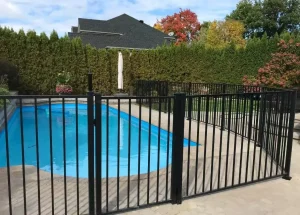
| Home Style | Fence Profile | Preferred Material | Finish Direction |
|---|---|---|---|
| Modern or contemporary | Horizontal slat or blade | Aluminum | Matte black or bronze |
| Traditional or colonial | Spear-top ornamental rail | Zinc steel | Satin black |
| Transitional | Vertical slat with clean posts | Aluminum | Textured gray |
| Mediterranean | Ornamental spear with scroll details | Zinc steel or aluminum | Iron-look black |
| Ranch or cottage | Three-rail smooth panel | Aluminum | Powder coated neutral |
Modern and Contemporary Homes
Modern and contemporary houses use flat or low-pitched roofs, large glazing, and broad horizontal planes. The fence should continue that datum line. A horizontal slat panel with concealed posts works because the eye reads the repeated horizontal gaps as an extension of the facade. We have seen the opposite fail: a developer puts a dense spear-top steel fence around a minimalist white box, and the yard loses the calm that made the house worth specifying in the first place. Aluminum is practical here because the long horizontal profiles can be extruded consistently and powder coated in a matte finish that avoids glare.
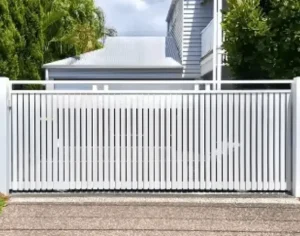
Traditional and Colonial Homes
Symmetrical facades call for symmetrical fence rhythm. Two-rail or three-rail ornamental steel with spear points and evenly spaced pickets matches the formal entry, the sidelights, and the window grid. Satin or lightly textured black powder coat sits closer to painted iron than a high-gloss industrial finish does. Zinc steel gives the sections enough stiffness to carry the visual weight of a dense picket pattern across long straight runs.
Ranch and Cottage Homes
Ranch and cottage houses need a simpler fence line. Three-rail aluminum with clean posts and a neutral powder coat reads as a property boundary without fighting the low horizontal roofline. If the house sits on a large lot, this profile is also easier to install in long runs because aluminum panels are lighter to set and adjust in the field.
Materials That Suit Climate, Upkeep, and Exposure
Material choice should follow exposure first. The same style can be produced in aluminum or zinc steel, but the maintenance and corrosion risk are not the same. Residential fencing near salt spray, high rainfall, or daily condensation cycles favors aluminum. Aluminum forms a protective oxide layer, so a scratch does not become an active corrosion site the way it can on bare steel.
Coastal and High-Humidity Exposure
Coastal aluminum fence systems should use a chromate or zirconium pretreatment before powder coating. That combination prevents the filmed white oxide that sometimes appears when salt and moisture reach the raw extrusion. Zinc steel is viable in marine environments only when hot-dip galvanized and then powder coated, and even then the cut ends and fastener holes need field touch-up. We cover those treatment differences in our steel fence coating article.
Cold and Snow Exposure
Snow, ice, and repeated freeze-thaw cycles load posts differently. The failure we see most often is not a bent panel; it is a post lifted by frozen ground or a panel joint that pulls loose when the rail expands and contracts. Use deeper post embedment below frost depth and select a panel system with enough slotted rail takeup for thermal movement. Powder-coated aluminum expands and contracts more than steel, so long runs need allowance at panel joints.
Acting on climate as a design input, not an afterthought, often changes the post spacing and coating spec before a single panel is quoted. If your site is coastal, heavily shaded, or subject to freeze-thaw movement, send the location and any homeowners association (HOA) finish requirements to yloongfence@gmail.com. I can check the pretreatment and rail allowance against your conditions rather than relying on a generic catalog recommendation.
Privacy, Security, and Sightline Requirements by Lot Type
Front yard fences usually perform a different role than side and rear fences. Residential fencing on a corner lot must answer both roles at once. The front zone frames the street view and sets the boundary language. The side and rear zones manage privacy, wind, access, and pool safety. A fence that solves rear privacy may be wrong at the front walk if it blocks the house facade and reads as a barricade.
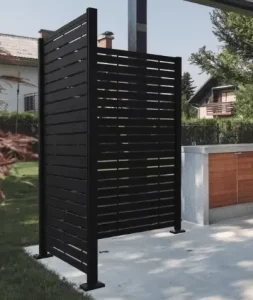
For rear privacy, vertical slat or louver panels give separation while still moving air through the gaps. A fully closed panel becomes a wind-loaded wall, and the posts must be specified like small structural supports, not decorative line posts. We treat solid privacy screens differently from open rail in our shop drawings because the bending load on the post is fundamentally higher.
Security requirements also change the profile. For a low street-facing boundary, an open rail with spear tops is easier to monitor visually. For a rear lane or side entry, a welded steel bar panel with a concealed gate weld detail reduces climb points while keeping enough sightline for the owner to see who is at the back gate.
Finish and Hardware Choices That Keep the Design Coherent
The fence finish is not a separate decision from the roof, window frames, and exterior trim. Black is common, but it can disappear against a dark cladding or feel heavy against a soft color palette. A better method is to choose the fence finish from one of three anchors: the window mullion color, the roof fascia, or the primary trim line. That keeps the fence tied to the house even when the panel style differs.
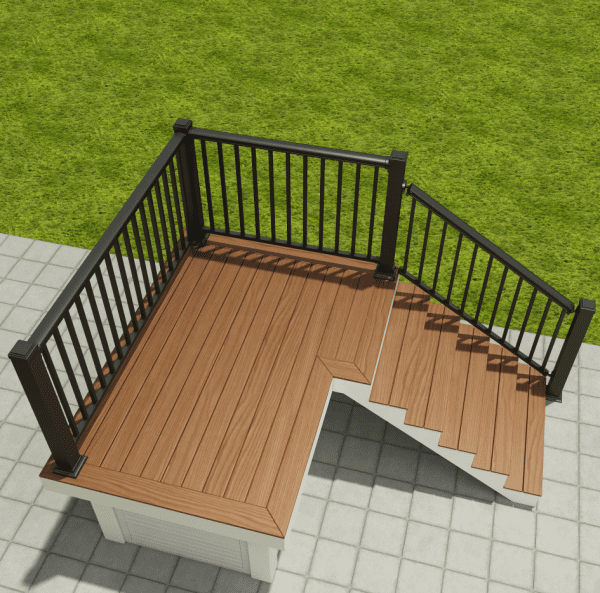
Hardware often breaks the visual match. Hinges, latches, post caps, and bolt heads can be ordered to match the panel finish or deliberately shifted to a darker accent. In residential work I prefer concealed welds on ornamental steel joints and matching powder coat on aluminum gate hinges, because visible silver hardware draws attention to the mechanical parts instead of the property line. We have covered hinge and latch selection in the aluminum gate hardware guide.
Post caps matter more than expected. A bulky cap changes the profile silhouette. Ask for the cap that matches the post section and rail spacing rather than the default decorative cap.
Residential Fencing Specifications That Avoid a House Style Mismatch
The most costly residential fencing order is not the one with the highest material price. It is the one reworked after the first installed section shows that the panel profile fights the house. By that point, the posts may already be set, the sections fabricated, and the schedule lost.
The practical way to avoid that failure is to specify the fence as a system: post style, panel profile, finish, hardware, and gate in one set of decisions made against the house elevation. Do not buy the panels from one source and the posts from another unless the dimensions and coating match accurately.
For residential fence sets that need matched profiles and consistent powder coating, send your elevation drawings, approximate linear meters, and the architectural style you are matching to yloongfence@gmail.com, or call +8619072006155. We will confirm the panel, post, and finish combination before you commit to a production order.
Common Residential Fencing Questions Before You Order
What fence material holds up best on a coastal residential lot?
Aluminum is the better default. It does not rely on a sealed coating edge to survive salt air; the oxide layer reforms after minor scratches and prevents the red rust that turns a coated steel panel into a maintenance problem. Zinc steel can work if it is hot-dip galvanized before powder coating, but the cut ends and fastener holes still need field touch-up. In a beachfront house where the owner wants an ornamental spear-top profile, we usually specify aluminum with a marine-grade pretreatment and a satin black powder coat. The visual result is nearly identical to painted steel, and the long-term corrosion risk is lower.
Can a traditional home use a horizontal slat fence without looking mismatched?
Most people assume the answer is no, but the real issue is not the slat panel itself. A slatted fence can work when the house already has a strong horizontal datum: a wide fascia board, a low-pitched roof line, or a continuous window band. If the elevation is formal and vertical, with tall sash windows and a steep roof, horizontal slats will usually feel like a borrowed detail from another site. The safer rule is to match the fence direction to the strongest line in the front elevation. On a strict Georgian or Colonial house, I would first look at spear-top aluminum or zinc steel.
How do you match an existing fence panel or gate profile?
In projects we have quoted, the owners often keep the original gate but replace the adjacent panels. The fastest way to avoid an obvious mismatch is to photograph the existing section straight on and record three dimensions: the picket center spacing, the rail height above grade, and the post cap outline. Send that record with the linear run you need. From those details we can usually identify whether the existing fence is a standard ornamental profile or a custom section. If the original was a custom iron fabrication, the most reliable match is often a new aluminum or zinc steel panel fabricated to the same spacing and finish rather than forcing a catalog product to look close enough.
Does a privacy fence reduce curb appeal on the front elevation?
It depends on where the panel sits and how tall it reads from the street. A six-foot solid slat or louver panel across the front yard usually lowers curb appeal because it hides the entry. The same panel on a side or rear lot line often improves the yard by creating a usable private area and blocking a neighboring wall. If you need front screening, keep the panel below four feet at the front edge and transition to a taller privacy section behind the main mass of the house. Share your lot plan and elevation; we can confirm the panel height and post spacing for privacy without losing the street view before you order.
If you’re interested, check out these related articles:
Commercial Steel Fencing: Top Options for Retail Parks and Offices
Paint & Maintain Ornamental Steel & Wrought Iron Fences