
Every ranch owner eventually faces a fencing decision where safety and durability aren’t just preferences—they’re non-negotiable. I’ve spent over a decade engineering aluminum and steel fences for projects that had to perform under manure exposure, freeze-thaw cycles, and the daily impacts of 1,200-pound animals. Horse ranch fencing sits squarely in that intersection of structural requirements and animal behavior, and getting it wrong means injuries to your stock or fencing replacement within five years. This article breaks down how material selection, proper heights, and sound engineering combine to produce a safe, low-maintenance perimeter.
What Safety Features Should Horse Fencing Include?
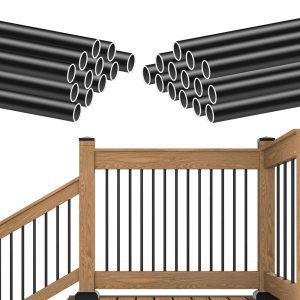
Horses have a particular response to confinement: they’ll lean against a fence, test gaps with a hoof, or spook and hit a rail at speed. A fence that handles this safely shares several common attributes. Smooth, rolled-top rails eliminate sharp edges that can catch on hide. In my experience reviewing field failures, I’ve seen lacerations from sheared bolt heads and cut ends of wire mesh—problems that never occur with properly designed aluminum rail systems where fasteners sit flush or inside the profile.
The visibility of the fence matters more than most people expect. I’ve walked properties where horses at a gallop ran into dark-colored stick-built rail because they didn’t perceive a barrier. For coated metal fences, a lighter color profile—white, light gray, or even a two-tone system with a dark bottom rail and light upper rail—gives horses the contrast they need to register the boundary while still providing the structural strength required. Polyester powder coating on aluminum also eliminates paint peeling, which means no toxic ingestion when horses chew on rails—a separate safety angle that’s rarely discussed in fence selection.
Which Fencing Material Offers the Best Durability for Horse Ranches?
The two metal options that dominate engineered ranch fencing are aluminum and steel, and they serve different priorities. When I consult on larger equestrian projects, the decision almost always comes down to a corrosion-versus-impact matrix.
Steel—whether hot-dip galvanized or powder-coated ornamental steel—offers high tensile strength. In applications where a panicked horse might deliver a full-body impact, steel’s yield strength is inherently higher. The trade-off is corrosion susceptibility. I’ve reviewed installations where manure and urine accumulated near the bottom rail, creating a micro-environment that stripped zinc coatings within two or three years in climates with regular rain. Once the base metal is exposed, steel sections can thin and eventually fail at the post-rail connection.
Aluminum extrusions, particularly 6063-T5 or T6 profiles, don’t experience that failure path. The metal forms a stable oxide layer that resists corrosion from ammonia and moisture—common in any stable or paddock environment. Impact resistance becomes an engineering question: a properly designed aluminum rail with a tall vertical web and internal reinforcing ribs can distribute a lateral impact across the section. I’ve seen our company’s heavy-duty aluminum horse fence panels, with a 2.5 mm wall thickness on the main horizontal rails, pass load tests that far exceed what a horse generates during a lean or moderate contact. The key is the structural profile, not just the material.
To put the comparison into specific numbers that matter for procurement:
| Property | Aluminum (6063-T5) | Galvanized Steel | Powder-Coated Steel |
|---|---|---|---|
| Corrosion resistance (salt fog per ASTM B117) | 1,000+ hours no red rust | 500–800 hours to base metal exposure | 400–600 hours depending on coating adhesion |
| Impact yield (typical rail section) | 240–280 MPa | 250–350 MPa | 250–350 MPa |
| Maintenance cycle | None beyond inspection | Zinc touch-up every 3–5 years in wet zones | Coating repair where scratches occur |
| Horse-safe profile | Extruded seamless rail with no weld bead | Welded assembly, seam grinding required | Welded assembly, seam grinding required |
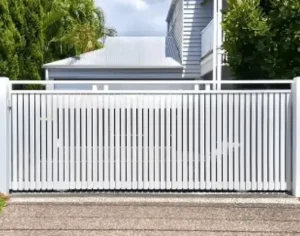
If your ranch sits in a coastal or high-rainfall region, or your pen layout naturally funnels manure toward fence lines, aluminum usually delivers the longer safe service life. In my own project work, I’ve specified aluminum for breeding facilities where staff simply can’t afford to chase rust repairs while managing livestock.
What Fence Height Is Safe and Effective for Horses?
There’s no one-size rule, but the data from equine safety standards and my field observations point to ranges that depart from what generic guides often repeat. For a perimeter fence enclosing a paddock or pasture, 54 to 60 inches is the minimum I recommend for adult horses, not the 48 inches you sometimes see cited for cattle fencing. A horse’s shoulder height and its ability to rear mean a taller fence reduces the risk of an animal getting a front leg over the top rail—a scenario that frequently ends in a broken leg or a cast horse that can’t get up.
The specific risk profile changes with use. For stallion paddocks or separation runs where horses can see but not reach each other, I’ve consistently found that 60 to 66 inches with a solid top rail eliminates the possibility of physical interaction. The extra 6 inches isn’t just about height; it affects the horse’s perception of whether it’s worth trying to clear the barrier. An aluminum fence with a wide, flat top rail—say 4 inches wide—further discourages attempts because the horse sees a surface it can’t hook a leg over.
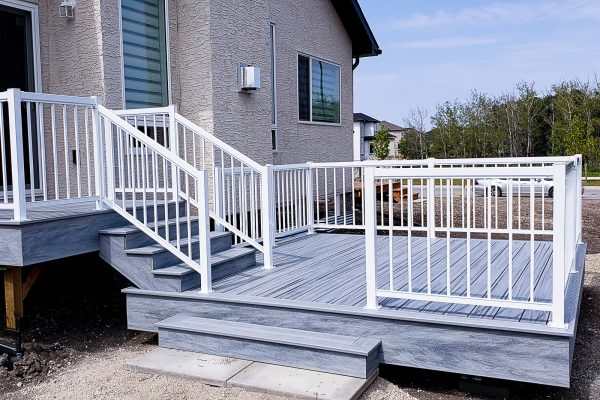
For foals and smaller breeds, downward adjustability matters. An aluminum rail system with a bottom rail set at 12 inches and a maximum gap of 3 to 4 inches between horizontal members prevents foals from rolling under or slipping through. This spacing also meets safety codes that prohibit openings large enough to trap a hoof.
How Should Ranch Fence Posts Be Installed for Maximum Stability?
The best panel or rail system underperforms if the post anchorage fails. On equestrian projects, I’ve learned that three variables control longevity: post material, foundation method, and loading alignment.
Aluminum posts—same alloy as the rails—provide galvanic matching and eliminate rust at the post-concrete interface. For a typical 54- to 60-inch fence, a post depth of 36 inches is standard in stable soil, but I increase that to 48 inches in sandy or frost-susceptible ground. Concrete footings should be used sparingly and only when soil conditions require it; a well-compacted gravel backfill around the post often outperforms concrete because it allows water to drain away from the post base, preventing freeze-jacking and standing moisture.
I’ve seen installations where a 100-foot run of steel posts shifted within two years because the contractor set them in concrete across the entire line and didn’t account for differential settling. Our practice is to set end and corner posts in engineered concrete piers with reinforcing bar, then set intermediate line posts in compacted gravel. The aluminum system’s lower weight—roughly one-third that of steel—also means fewer issues with gravity-induced leaning over time.
Every 50 to 75 feet, depending on wind exposure and topography, a brace assembly with a diagonal strut running from the top of the end post to the base of the next post locks the line into a structural unit. This is especially important for high-tension wire alternatives, where the continuous pull can deform a single unsupported post.
Why Sourcing from a Specialized Manufacturer Matters for Ranch Projects
The difference between a catalog order from a general metal supplier and a fence system engineered by a specialist shows in three places: profile design, coating quality, and documentation.
I’ll use our manufacturing process as an illustration. We extrude aluminum rail profiles with integrated channels for rubber gaskets and snap-fit brackets that eliminate exposed fasteners—this is a detail a general aluminum extruder doesn’t offer because they’re making standard angles and channels, not horse-specific products. Coating involves pre-treatment with a chrome-free conversion layer, then electrostatic application of polyester powder cured at 200°C, producing a 60- to 80-micron-thick uniform film that passes cross-hatch adhesion tests before any panel leaves the line. For a ranch fence that will see sun, ammonia, and pressure washing, that coating quality means the difference between a 20-year finish and a 5-year one.
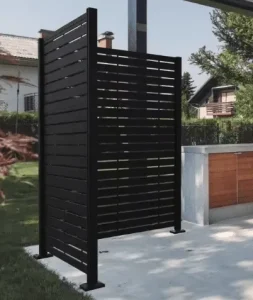
What makes your project easier is receiving a system with pre-punched rails, matched post caps, and a single shipping list that doesn’t require you to source mounting hardware separately. If your layout includes pasture divisions, corrals, and access gates, communicating the full site plan to the manufacturer upfront reduces field fabrication and the safety risks that come with modifying components after delivery. We handle this kind of engineering support daily because the alternative—a mix of generic parts assembled on site—creates the weak points that cause injuries and increase long-term ownership cost.
Common Questions About Ranch Fencing for Horses
Can I mix materials, like aluminum rails with wood posts?
Yes, but there’s a detail to watch. Wood posts retain moisture at the aluminum contact point, which isn’t a corrosion issue for the aluminum but can cause the wood to soften and lose fastener grip. I’ve handled projects where the client insisted on timber posts for aesthetic reasons, and we solved the problem by mounting an aluminum post bracket on top of the wood post using structural screws, with a rubber gasket between the two materials. That isolates the aluminum rail load from the wood’s moisture variation and extends the connection life. Before committing to a mixed-material plan, walk your supplier through the full detail—otherwise you’ll find loose rails within a few seasons.
What’s the biggest mistake people make when choosing a horse fence?
Underspecifying the post spacing because of budget pressure. I can’t count the projects where a buyer shaved costs by stretching post intervals from 6 feet to 8 feet, then called six months later because a horse leaning on a panel caused permanent deflection. The panel’s moment of inertia only works when supported at the designed span. If you must adjust cost, reduce the number of gates first—they’re the most expensive single item—rather than compromising structural support.
How long should an aluminum horse fence realistically last?
In a moderate climate with proper installation, a 6063-T5 aluminum fence with high-quality powder coating will easily reach 25 years of service with no more than visual inspection and occasional washing. We’ve had installations in coastal areas hit 20 years with no structural failure and only minor color fade on the sun-exposed south-facing rails. The limiting factor usually isn’t the aluminum itself but the post anchoring—if your foundation is solid, the metal will outlast the ranch operation. Compare that to painted steel, where I consistently see coating failure at weld joints within 5 to 8 years in any environment with rainfall above 30 inches annually.
For your specific project, send your site dimensions and livestock details to sales01@yulongkeji-ch.com or call us at +8619086315193, and we’ll help you specify a fencing system that matches your soil conditions and animal load without paying for over-engineering.
If you’re interested, check out these related articles:
Freestanding Outdoor Privacy Screens: Patio & Balcony Solutions
Stainless Steel Outdoor Handrails: Options for Steps, Decks & Gardens