
Most railing selection mistakes are locked in before the first post is set. Glass railing vs cable railing vs aluminum railing is not a style debate; it is a structural, maintenance, and procurement decision that changes with climate, traffic, and deck framing. In coastal or high-traffic commercial projects, our engineering team usually specifies aluminum as the low-risk backbone, then uses glass or cable only where view or design intent justifies the added cost. That position runs through the comparison below.
Which Glass, Cable, or Aluminum Railing System Fits Your Deck?
The answer changes once you separate the deck edge from the rest of the facade. A glass railing preserves sight lines across a pool or shoreline, but it turns wind gusts into a panel load the framing must carry. Cable railing reads lighter than glass and leaves most of the view open, yet it introduces tensioned stainless steel components that need precise post spacing and regular retensioning. Aluminum railing accepts wind load more predictably because the rail fill can be sized as infill rather than continuous glazing or tensioned wire.
Should You Prioritize View or Maintenance in a Coastal Climate?
In coastal projects, view is often the project driver, but maintenance is the cost driver. Glass panels near salt spray require frequent rinsing, and exposed stainless steel needs inspection for crevice corrosion. Cable runs perform better when the wire is T316 marine grade and the end fittings are not buried in standing water. If the owner cannot commit to that service schedule, aluminum with a polyester powder coat and T316 fasteners is a more defensible choice.
What Happens When Deck Framing Is Not Reviewed Early?
Glass and cable systems transfer load to posts and edge beams differently. A frameless glass channel with a guard height determined by local code can concentrate moment at the rim joist, so cantilevered decks need the engineer to check the connection before the railing drawings are approved. Cable systems apply continuous tension that pulls posts inward, and wood posts without through bolts can creep under repeated thermal cycles. Aluminum post-mounted systems are more forgiving, but the same review still applies at gate posts and stair landings.
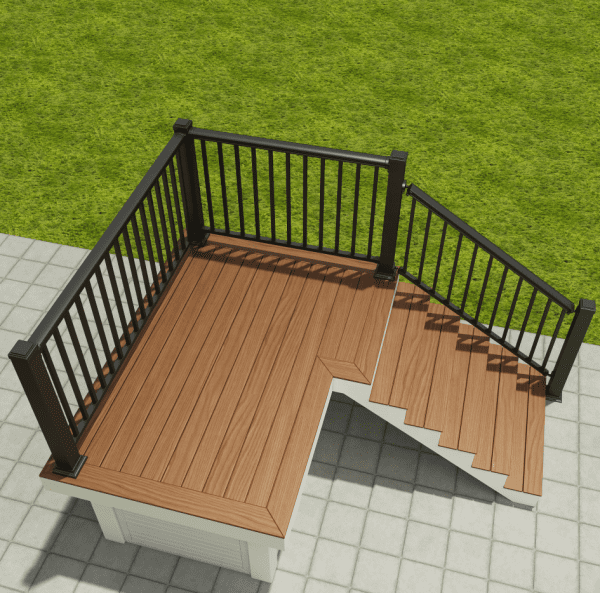
How Do Glass Railing Systems Compare on Safety, Cleaning, and Code Compliance?
Glass railing systems use tempered or laminated safety glass, usually 10 mm to 13.52 mm depending on the fixing method. Laminated glass creates a safety advantage because the interlayer holds the panel if one lite fractures. Most North American building codes require safety glazing in guard panels and a four inch sphere opening test under International Residential Code, 2021 edition, Section R312.1.3. That code path is well established, but the engineering is not forgiving of substitutions. Point-fixed glass panels need the hole geometry and edge finish called out by the system supplier; a field-drilled hole can shatter tempered glass under thermal stress.
What Glass Thickness and Edge Treatment Should the Drawing Specify?
Use 12 mm single tempered for short point-fixed runs only if the system has an approved detail. Use 13.52 mm laminated for frameless stair and balcony applications because it retains residual strength after breakage and performs better under rail load. Edges should be polished or pencil ground where exposed. If the drawing only says tempered glass, the procurement team is ordering uncertainty. The supplier needs the lite composition, hole positions, and guard height on the same sheet.
Why Does Glass Railing Cleaning Become a Project Cost?
Glass beside a pool, coast, or garden collects mineral film and dust faster than the specification suggests. The visible cost is labor, but the less obvious cost is scratched panels from abrasive cleaning. In coastal hotel terrace conditions, salt spray and hard water can make glass look dated within two seasons if the maintenance crew uses the wrong pads. That is not a glass failure; it is a cleaning protocol failure. If the owner cannot protect the surface with scheduled low-pressure washing and appropriate spray, the initial beauty of glass will not survive the first service year.
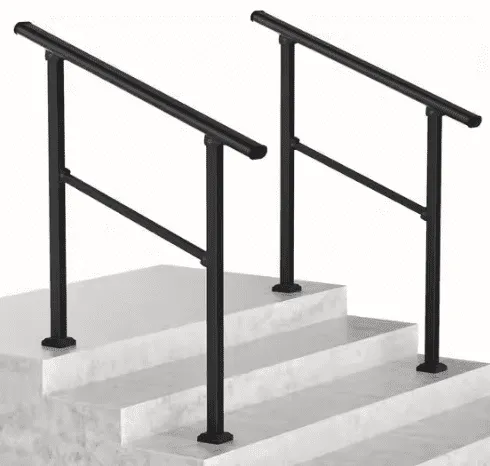
Where Do Cable Railing Systems Shine and Where Do They Create Problems?
Cable railing is the right answer when the view must stay open and the project can accept a tensioned system. The best specification is 1×19 T316 stainless steel wire because the smoother strand is easier to grip against and less prone to accumulating debris than 7×7. Posts must be spaced so the horizontal cable cannot deflect far enough to let a four inch sphere pass between the wire and the deck surface under load. That is the failure point most low-cost kits ignore.
Tension is not a set-once condition. Stainless steel cable lengthens slightly under load and temperature fluctuation, so the system needs visible tensioners or access points for retensioning. In a residential deck this is a two or three time annual task in harsh climates. In a commercial rooftop, it becomes a scheduled maintenance line with documented checks. The engineering team should specify the initial tension range and the maximum deflection limit, not leave that to the installer’s feel.
Do not mix bare aluminum posts with stainless cable without an isolation detail. The contact point can form a galvanic couple in marine environments and accelerate aluminum corrosion at the fitting. We isolate cable fittings with nonconductive sleeves or use all stainless components where the edge is repeatedly wet.
If your program combines coastal exposure with cable railing, confirm the wire grade, fitting isolation, and post spacing before the BOM is issued. Send the deck section to sales01@yulongkeji-ch.com and we will confirm the tensioning and hardware package.
Why Do Aluminum Railings Usually Win on Life Cycle Cost and Project Risk?
Aluminum railing wins when the buyer compares total installed cost plus service years. The material is lighter than steel, resists atmospheric corrosion without applied coatings, and can be extruded into profiles that shed water instead of trapping it. When we engineer aluminum posts and rails, we specify 6063-T5 for standard residential profiles and 6061-T6 where commercial loading or impact resistance governs. The difference matters more than many project schedules admit.
| Factor | Glass Railing | Cable Railing | Aluminum Railing |
|---|---|---|---|
| View retention | Highest, continuous glass | Very high, thin cables | Moderate, depends on baluster pattern |
| Maintenance | High, cleaning and hardware checks | Medium, retensioning and corrosion checks | Low, washing and fastener checks |
| Code compliance path | Well established, panel specific | Well established, tension and spacing specific | Well established, load and opening clear |
| Best fit | Pools, terraces, luxury facades | Coastal decks, view corridors | High-traffic, coastal, budget-driven projects |
How Does Powder Coating Change the Life Cycle Calculation?
Powder coating is the functional surface, not just color. A high-performance polyester powder to AAMA 2604 or AAMA 2603 creates the barrier between aluminum and chlorides, while aluminum itself carries the structural corrosion resistance. This two-layer logic means a scratched rail does not rust in the same way steel can. Touch-up is still required, but the failure mode is cosmetic at the scratch site, not structural at the base metal. For buyers comparing suppliers, the coating specification and pretreatment sequence are the questions to ask first.
Which Railing System Should You Specify for Your Next Project?
Most projects do not fail because the wrong material was selected in theory. They fail because the specification did not connect material, load path, climate, and hardware in one package. If the deck has salt exposure and high foot traffic, aluminum is usually the safer baseline. If the owner will accept cleaning and tensioning as scheduled maintenance, glass or cable can deliver a view that aluminum cannot.
At Hubei Yulong Building Materials Co., Ltd., our engineering team reviews railing packages as submittals, not price lists. Send your deck layout, guard height, and project location to sales01@yulongkeji-ch.com or call +8619086315193. Give us the post spacing, glass or cable preference, and the expected pedestrian load, and we will confirm the appropriate profile, finish, and hardware before you release the order. The goal is to remove the comparison guesswork before the fabricator cuts the first profile.
What Do Buyers Ask Most Often Before Ordering Railing Systems?
Which railing option costs the least to maintain?
Aluminum railing generally costs the least to maintain because it does not need retensioning and does not carry the cleaning burden of glass. The coated surface resists atmospheric corrosion, and most service reduces to washing and checking fasteners. Glass requires scheduled cleaning to protect visibility and laminated edge condition. Cable needs tension checks and occasional hardware inspection. If the owner has no maintenance crew or clear service contract, aluminum is the safer procurement choice.
Is cable railing unsafe for children and pets?
Many buyers assume cable is automatically unsafe, but the real issue is post spacing and cable deflection. A properly tensioned T316 system with posts spaced to the tested layout passes the same opening test as a baluster railing. The danger appears when a low-cost kit is installed over span or with slack cable. Specify the deflection limit and require the supplier to state the post spacing. Do not accept a kit that leaves the opening limit to the installer.
When should we choose glass instead of aluminum?
It depends on project priority. If the deck faces a shoreline or a mountain view and the owner will pay for scheduled cleaning, glass delivers the best sight line because the railing nearly disappears. If the deck is beside a pool with frequent wet traffic, glass also creates a clean barrier. However, if the site has blowing sand, hard water, or no maintenance schedule, aluminum is better because the surface tolerates neglect without a visible service issue. Make the choice on service commitment, not a photo.
What do factory engineers check before confirming a railing order?
In the orders our team reviews, we confirm three things before release: the guard height and opening limit for the local code, the post spacing and attachment detail, and the material grade for the environment. For coastal projects, the fasteners and cable grade matter as much as the rail profile. We also ask whether the glass panels will be lifted by crane or carried to an upper deck, because the edge protection detail changes. If your drawing shows an unusual post spacing or mixed material frame, send the section to sales01@yulongkeji-ch.com and we will confirm the code and hardware path before the order is locked.
If you’re interested, check out these related articles:
Steel Fence Gauge: Optimal Thickness for Perimeter Security
Source Steel Fencing from China: An Expert Import Guide
Aluminum Fence Grades: Understanding T5 and T6 Strength
Decorative Iron & Ornamental Steel Fence: Residential & Commercial Solutions