
Chain link fence vs 3D panel fence is not a straightforward choice between a cheaper mesh and a stiffer panel. A chain link system is the lower cost, open mesh perimeter workhorse for large compounds, sports grounds, and industrial lots. A 3D panel fence uses welded V-beam or D-section panels to deliver a cleaner facade with fewer visible fixings. I approach this comparison as a metal fencing systems engineer. The right specification follows from how the fence is attacked, how it is seen, and how long it must hold tolerance in service, not from the panel price alone.
Chain Link Fence Delivers Proven Low-Cost Perimeter Security
Chain link fence remains the default choice where the project length is measured in kilometers rather than meters. The mesh is supplied in rolls, cut to height on site, and tensioned between terminal posts. Installed cost is lower than welded panel systems because the material uses less steel per linear meter and the post layout does not require each panel to align with a rigid module. That flexibility matters on uneven ground. A chain link system follows grade changes without panel warping, which keeps installation straightforward for long boundaries, sports fields, and temporary site hoarding.
From a security perspective, chain link is transparent. Security staff can see through the fence line from one position, and CCTV coverage is not interrupted by solid panels. That visibility is a real protective feature for schools and transport corridors. The weakness is not visibility. It is the open diamond weave. Standard commercial chain link with 50 mm or 60 mm mesh and 2.0 mm wire can be climbed by someone with basic boots and cut with compact bolt cutters. Rolled mesh also relies on tension wire and line posts to stay flat. Once tension is lost, the mesh sags and becomes easier to force.
This does not make chain link a poor fence. It makes it a perimeter that must be paired with the right gauge, coating, and post schedule for the actual risk level. For low risk or supervised perimeters, it is still one of the most efficient options available.
3D Panel Fence Adds Rigidity and a Cleaner Facade
A 3D panel fence is a welded wire mesh panel with horizontal V-beam or D-section stiffening bends. The bends do more than change the look. They increase panel bending stiffness, so the fence holds a flat plane across wider post centers without rails or heavy tension wire. Posts are usually fixed at 2,000 mm to 2,500 mm centers, depending on panel width and wind load. Fewer visible rails give a cleaner architectural line, which is why the system appears around office parks, data centers, residential communities, and utility enclosures.
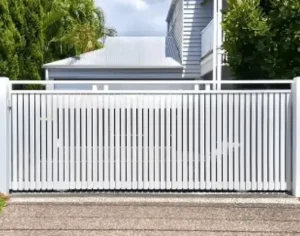
The welded joint is the structural difference. In a chain link system, the wire is woven and can shift at the intersection. In a 3D panel system, each horizontal and vertical wire is fused at the crossing point. If the weld is applied correctly and the panel is hot-dip galvanized after welding, the panel does not unravel and does not depend on mesh tension alone. That rigidity transfers security value. A 3D panel fence resists prying and distortion better than rolled mesh at the same wire diameter. It is still a mesh fence, not an anti-climb solid barrier, but the smaller rectangular openings leave fewer footholds than a diamond weave.
One tradeoff must be stated plainly. 3D panel fencing is less forgiving on difficult ground. Panels are rigid, so steep or irregular installation lines need stepped posts, raked panels, or earthworks. The prefabricated nature of the panel also means procurement must specify panel height, width, color, and post section precisely. Field adjustments are limited compared with chain link.
Security Performance Turns on Gauge, Coating, and Fixing
Comparing these two systems by material type alone misses the point. The security difference between a chain link fence and a 3D panel fence is set by three variables: wire diameter, zinc coating mass, and post anchoring. A 3D panel fence made from 3.0 mm wire will often be weaker than a chain link system built from 2.5 mm wire with a twin rail top and heavy terminal posts. The panel shape matters, but shape cannot replace material.
| Specification | Chain Link Fence | 3D Panel Fence |
|---|---|---|
| Typical commercial wire | 2.0 mm to 2.5 mm | 4.0 mm to 5.0 mm |
| Mesh opening | 50 mm to 60 mm diamond | 50 mm x 200 mm or 55 mm x 200 mm rectangular |
| Panel structure | Rolled mesh stretched between terminal posts | Pre-welded V-beam panels bolted to posts |
| Rigidity | Depends on line posts, rails, and tension wire | Panel bends supply inherent bending stiffness |
| Climb resistance | Open diamond weave is easy to grip | Smaller rectangular openings reduce footholds |
| Visual character | Industrial and utilitarian | Modern and architectural |
Wire Diameter and Coating Decide Cut Resistance
I have inspected failed perimeters where the buyer selected a 3D panel fence by panel height and color, then accepted 3.0 mm wire to hold cost down. The fence looked secure and passed a visual inspection, but a small bolt cutter opened the mesh at the crossing welds. The failure was not the 3D panel design. It was the wire diameter and the fact that the panel was electro-galvanized rather than hot-dip galvanized after welding. Electro-galvanized coating is thin, and it offers much less zinc than hot-dip galvanizing at the weld, which protects the exact point where corrosion starts.
Post Spacing Decides How the Fence Fails
A wide post spacing lowers initial cost but increases deflection between posts. When a fence panel deflects, the mesh openings distort and can work loose from fixings over time. In a chain link system, sagging mesh creates a handhold and a leverage point. In a 3D panel system, loose bolts at the panel to post connection let the panel be worked back and forth. Both failure modes are preventable. Specify two intermediate posts in a 2,500 mm bay for high risk perimeters, or reduce the bay spacing, and check that the post footings match the soil condition. No fence system corrects for a weak post foundation.
If your project involves a high exposure site, it is worth confirming the wire diameter, zinc coating mass, and post spacing as one set before the BOM is locked. Send the site drawings and required fence height to yloongfence@gmail.com and we can check the specification against the actual risk level.
Aesthetics and Site Function Shift the Final Choice
The aesthetic difference is easier to describe than to quantify. Chain link fences read as temporary or institutional unless they are fully screened. Black or green PVC-coated chain link improves the appearance, but the diamond mesh still signals utility rather than design. That matters when the fence faces a customer entrance, a residential street, or a public building. A 3D panel fence in a dark green, grey, or black polyester powder-coated finish reads as an architectural element. The flat panel face and narrow stiffening ribs create a clean line that architects and property developers accept more readily than chain link.
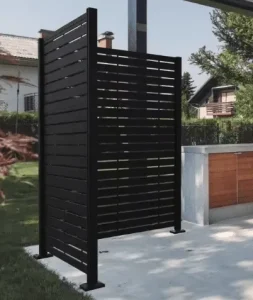
Site function often settles the issue before procurement begins. If the fence encloses a service yard that is visible only to staff, chain link is usually the rational choice. If the same fence runs along a visitor path or a premium office frontage, the 3D panel system carries less visual risk. I have seen projects where a chain link fence was rejected after installation not on security grounds but because the client’s real estate team considered the street facing elevation too industrial for the building’s brand. The replacement cost exceeded the initial saving.
Confirming Your Fence Specification Before Procurement
The most expensive specification error I see is treating a fence as a visual item rather than a structural system. A buyer approves a panel drawing, then the order moves through on the basis of appearance and price. Later, the fence is cut, sagged, or rejected by the site engineer because the wire gauge, zinc coating, post section, or fixing set was never tied to the actual site condition.
Before you release a purchase order, confirm five points as one package: mesh opening, wire diameter, hot-dip galvanized or powder coating standard, post section and spacing, and the anchoring method. If the site is coastal, confirm the zinc coating and fastener grade. If the fence carries climbing or cutting risk, do not accept a lower wire diameter to meet a budget target.
We manufacture chain link fence and 3D panel fence systems at Hubei Yulong, including hot-dip galvanized and polyester powder-coated finishes, and we can review a cut sheet against your site’s exposure and security requirements before production starts. Send your part number, site drawings, and quantity to yloongfence@gmail.com or call +8619072006155.
Common Questions About Chain Link and 3D Panel Fencing
Which fence is harder to cut through?
The 3D panel fence is harder to cut when both systems use the same wire diameter, because the welded joints hold the mesh geometry and the V-beam bends stop the panel from folding. The real variable is not panel style. A chain link fence built from 2.5 mm high-tensile wire with a taut top rail resists bolt cutters better than a 3D panel fence built from 3.0 mm wire. If cut resistance is the priority, specify wire diameter and hot-dip galvanizing before you compare panel types. Cut resistance follows material mass and coating, not the number of bends in the panel.
Is a 3D panel fence worth the extra cost for a warehouse?
A lot of buyers assume a 3D panel fence is only about appearance, but the cost issue changes quickly when a warehouse sits beside a customer facing road or a security office. The fence is still a perimeter barrier, not a facade. The extra cost is justified if the warehouse compound needs a flat panel face, fewer horizontal rails, and a modern look that survives for years without sagging. If the fence runs behind loading docks and is only seen by staff, chain link remains the more practical specification. The decision is site exposure, not price per meter in isolation.
Can chain link fencing look less industrial?
It depends on what the fence faces and how much of the line is visible from the street. Black or green PVC-coated chain link reads better than bright galvanized mesh, and a top rail with clean terminal posts improves the line. If the site has a setback or landscaping in front of the fence, chain link can recede enough to work on a light commercial boundary. If the fence is the first thing a visitor sees at the main entrance, screening slats or a 3D panel fence will usually be the safer visual specification. Chain link remains flexible, but it rarely stops reading as a utility product.
What should I confirm before ordering either system?
In the orders we review, the fastest way to lose time is to approve a panel drawing without checking wire diameter and zinc coating. I ask buyers to confirm the mesh opening, wire diameter, hot-dip galvanizing or powder coating standard, post section and spacing, and the anchoring method. If the site is coastal or high security, confirm the fastener grade and coating thickness as well. These five or six items determine whether the fence performs and how long it holds tolerance. Share your site drawings and quantity at yloongfence@gmail.com and we will confirm the correct gauge and coating schedule.
If you’re interested, check out these related articles:
Custom Aluminum Gates: OEM & ODM Solutions for Global Projects
Decorative Aluminum Gate Panels: Modern Home Design Solutions
Aluminum Fencing: Property Measurement Buyer’s Guide