
Airport perimeter chain link fence is not a commodity product. The specification determines delay time, surveillance visibility, and long term maintenance burden across a boundary that cannot be allowed to fail. Airport operators, security consultants, and perimeter contractors need to match fabric gauge, mesh size, coating weight, post embedment, and top treatment to the threat assessment, not to the lowest quote. At Hubei Yulong, our engineers review these systems from the perimeter line inward because the fence is a delay component inside a wider security response.
What Security Standards Apply to Airport Perimeter Chain Link Fence?
An airport perimeter fence does two jobs: it delays an intruder long enough for detection, and it channels pedestrian or vehicle movement to controlled entry points. In airport projects I have reviewed, the specification often starts with a security zone rating, then assigns the fence height and fabric type. For chain link fence around an active aircraft movement area, common baselines begin at 2.4 m (8 ft) of fabric with a top treatment. Where the threat level is higher, the same fabric may need to reach 3.7 m (12 ft) with an angled outrigger.
Installation work typically follows ASTM F567, and the zinc-coated steel fabric is specified under ASTM A392. Project-specific airport security drawings add the remaining details: clear zone width, bottom tension wire clearance, gate hardware restrictions, and intrusion detection cable integration.
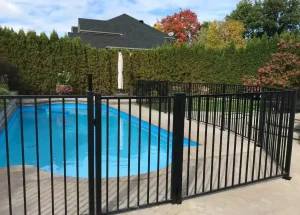
The standard that gets missed at the bid stage is the ground condition under the fence line. I have seen perimeter designs with correct fabric and posts fail because depressions under the bottom tension wire were never filled. The fence looks solid in the drawing, but the gap becomes an access point.
Which Chain Link Fabric Specifications Determine Performance?
Chain link fabric is defined by three connected variables: mesh opening, wire gauge, and coating. These are not independent choices. A small mesh with thin wire may look secure but can sag more, while heavy gauge wire with a large opening gives an intruder room to grip. As a fencing engineer, I start with the delay requirement, then work backward to the fabric.
What mesh size and wire gauge matter most?
For airport perimeter chain link fence, 2 in mesh with 9 gauge core wire is a common floor, not the only correct answer. Higher security zones sometimes move to 1 in mesh or use a laminated fabric with smaller openings to block footholds. The tradeoff is weight and wind load. Heavier fabric needs stronger line posts and tighter embedment, so a change in mesh size is not a one-line edit in the specification.
How does coating weight affect long-term performance?
Zinc coating weight governs how many years the fence resists atmospheric corrosion. In a coastal or de-icing salt environment, I would not accept the minimum galvanizing weight and call it equal. Specify a higher zinc loading or a zinc-aluminum alloy coating when the fence line sits near runways where de-icing fluid or saline air is present. The coating weight is the difference between a fence that lasts one maintenance cycle and one that becomes a recurring repair budget line.
| Specification | Common Security Choice | Why It Matters |
|---|---|---|
| Mesh size | 2 in or smaller | Smaller openings reduce finger and toe holds during climbing. |
| Wire gauge | 9 gauge core wire | Thicker wire increases cut resistance and keeps the fabric from stretching. |
| Coating type | Hot-dip galvanized or zinc-aluminum alloy | Coating weight determines corrosion life outdoors. |
| Selvage | Knuckled or barbed | Knuckled edges reduce installation injuries; barbed edges add deterrence. |
| Fabric height | 2.4 m to 3.7 m plus top treatment | Height establishes baseline delay before the anti-climb top guard. |
How Are Framework, Coatings, and Installation Details Specified?
The chain link fabric is only as stable as the line posts, rails, and tension system behind it. For airport perimeter projects, we specify line posts at no more than 3 m spacing in standard ground, with terminal and corner posts set in concrete. The top rail carries the upper fabric line, and a bottom tension wire resists the inward push from wind and animals. Missing bottom tension wire is a common cost reduction that becomes a security gap.
Coatings on the framework follow the same logic as the fabric. Hot-dip galvanized posts and rails work for most inland sites. Along the coast or where de-icing chemicals run off, a polyester overcoating or zinc-aluminum finish extends component life. I have seen airport specifications call for a polymer topcoat on galvanized steel where the perimeter crosses irrigation runoff, and for good reason.
If your perimeter includes coastal exposure or a run-off zone, it is worth confirming the coating weight and topcoat requirement before finalizing the bill of materials. Send the perimeter length and target coating standard to yloongfence@gmail.com or call +8619072006155.
Which Chain Link Fence Configurations Work for Airports?
Airport perimeter chain link fence configurations fall into two broad groups: single-fence with an anti-climb top guard, and double-fence with a cleared central zone. A single fence with a 0.6 m angled outrigger and razor tape is common around general aviation and controlled non-secure areas. A double fence with 3 m to 6 m between lines appears more often around high-security zones because it forces an intruder to clear two barriers in sequence.
The configuration choice should follow the security assessment, not visual preference. I have seen single-fence perimeters work well when the clear zone is flat and well lit, and double-fence perimeters that added cost without adding delay because vegetation inside the sterile zone blocked camera lines. Grading and vegetation control matter just as much as the fabric above ground.
Airport perimeter procurement often stalls at the mismatch between the written specification and the actual site condition. Our team reviews the height, coating, mesh size, and terrain variables with you before production so the material that arrives fits the security case, not just the drawing. Send your perimeter length, required height, and target specification to yloongfence@gmail.com or call +8619072006155.
What Do Buyers Ask About Airport Chain Link Fence Specifications?
Does an airport perimeter require a double fence or a single fence?
A single fence is appropriate for many general aviation and controlled non-secure perimeters. The decision rests on the security zone rating and the available clear zone. In a high-security area, a double fence with a sterile zone makes sense because it forces an intruder to clear two barriers and creates distance for camera operators. If you are procuring for a regional airport, start with the security assessment, then specify the configuration. Do not pay for a double line unless the threat model supports it.
What coating should be specified for coastal or de-icing salt exposure?
Many assume standard zinc coating is enough, but de-icing fluid and coastal salt shorten the service life of zinc-coated wire. I would specify a higher zinc loading or a zinc-aluminum alloy coating for runways and apron edges where chemical exposure is constant. For framework, a polyester topcoat over galvanized steel gives better resistance than galvanizing alone. The added cost is usually smaller than a mid-life recoating program.
How long should an airport chain link fence last before replacement?
It depends on the coating weight and the local environment. In a dry inland climate, a properly galvanized airport perimeter fence can remain serviceable for 20 years or more with regular tension adjustments and hardware checks. In a coastal or chemical exposure zone, the same fabric may need coating repair within 10 to 15 years. The more useful question is what maintenance interval the airport is willing to fund, because the fence is only as durable as its worst-performing section.
Can I order a custom height or top guard configuration?
In projects we have delivered, custom heights and top guard configurations are standard practice once the security requirement is known. A factory can adjust fabric width, post length, outrigger angle, and the type of razor tape attachment. The important step is to freeze the specification before production starts, because changing the top guard after the posts are set creates field modifications. If your airport program requires a specific height or anti-climb configuration, send your perimeter details to yloongfence@gmail.com and we will confirm fabrication dimensions and lead time.
If you’re interested, check out these related articles:
Round Aluminum & Galvanized Steel Fence Posts: Ultimate Guide
Importing Aluminum Fence from China: 5 Questions to Ask
Best Aluminum Fence Styles for Residential Gardens in 2025
Steel Fence vs Wrought Iron: Modern Options for Durable Fencing
Decorative Iron & Ornamental Steel Fence: Residential & Commercial Solutions