
Cable railing cost per linear foot is the figure most buyers ask for first, and it is also the easiest figure to misread. A per foot price only means something once post material, cable construction, hardware grade, and tensioning method are fixed; change any one variable and the number can swing by thirty dollars or more on the same deck. After twelve years quoting architectural metal systems, I treat a bare linear foot price as the start of a specification, not a finished bid. The cost logic below comes from the quoting method I use when pricing and checking cable railing systems for decks, stair runs, pool edges, and commercial terraces.
Cable Railing Cost Per Linear Foot Breakdown
Factory-direct cable railing pricing is usually built from three parts: posts, cable, and tension hardware. When I build a quick budget, I assign post cost from spacing and grade, cable cost from the number of lines and wire construction, and hardware cost from the number of termination points. A T316 stainless system with swaged fittings will cost more per running foot than a T304 system with basic compression fittings, and that difference shows up later as corrosion resistance along a coastline or beside a pool.
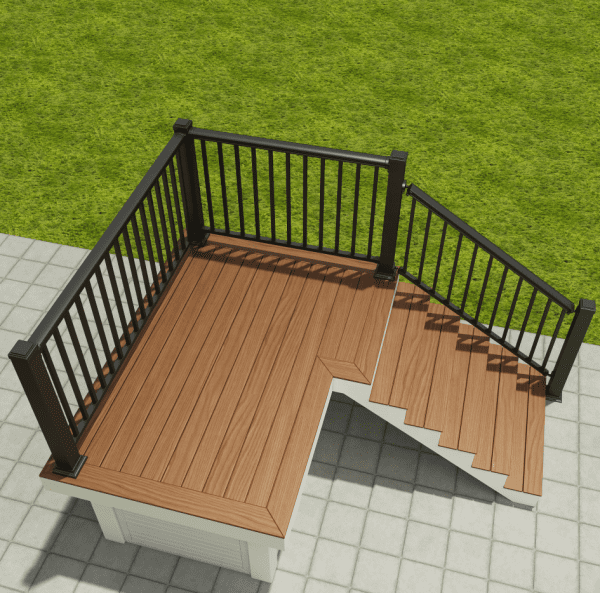
Posts tend to be the largest single cost line. Aluminum posts keep the system lighter and often cheaper, while stainless steel posts push the price up but handle higher tension and salt exposure with less long term wear. The cable itself looks simple, but 1×19 construction behaves differently from 7×7 construction under tension, and the hardware must match the build or the terminations will creep.
Material and Configuration Factors That Move Cost
When a buyer sends two quotes and asks why one is $52 a foot and the other is $81, I start with the post and the fittings. Cheap cable railing rarely saves money overall; it usually saves on exactly the two places that fail first, which are the cable grade and the terminal hardware.
T316 and T304 Cable Grades in Real-World Terms
T316 stainless carries molybdenum, which is the difference between a rail that stays clean beside saltwater and one that pits within a few seasons. T304 is acceptable for inland residential decks, but I avoid it for pool edges, coastal sites, and anywhere the railing stays wet. The material cost spread per foot is real but smaller than the replacement cost a buyer eats when pitting shows up eighteen months after handover.
1×19 and 7×7 Cable Construction Compared
1×19 cable is stiffer and harder to kink, with a cleaner visual line, and it requires swaged or properly matched fittings that hold under high tension. 7×7 cable is more flexible and less expensive, but it can flatten and stretch more if the tensioner is not sized correctly. For a commercial terrace with a long uninterrupted span, I specify 1×19; for a short residential run with standard post spacing, 7×7 is often enough if the hardware is decent.
Post spacing drives cost faster than most buyers expect. Widening the spacing from 4 feet to 5 feet reduces the post count and the per foot price, but it raises the load on each post and makes cable deflection more visible at the midpoint. Corners and end posts add structure that a simple per foot range quietly ignores.
If your program has any coastal exposure, wide post spacing, or a long stair run, confirm the cable grade, fitting type, and post wall thickness on the quote before locking the number. A hardware downgrade is where most underpriced bids recover margin; send the line items to sales01@yulongkeji-ch.com and I will point out what should be corrected.
Current Wholesale Cable Railing Cost Ranges by System Type
The ranges below are the figures I use as a first screen when a project launches, based on factory-direct supply of complete systems with standard finishes. They are starting points, not fixed bids, because freight, duty, and site-specific reinforcement move the delivered number.
| Configuration | Post and cable build | Typical factory-direct range |
|---|---|---|
| Vertical infill, aluminum posts | 6063 aluminum posts, T316 7×7 cable | $45 to $65 per linear foot |
| Vertical infill, stainless posts | 316 stainless posts, T316 1×19 cable | $70 to $95 per linear foot |
| Horizontal top rail system | Aluminum top rail, T316 1×19 cable | $55 to $80 per linear foot |
| Minimal post, high transparency | Slim stainless posts with swaged fittings | $85 to $120 per linear foot |
| Wood post hardware kit | Cable and hardware only, customer supplied posts | $25 to $40 per linear foot |
Vertical infill systems with aluminum posts cover most residential work and keep cost moderate. Stainless post systems cost more but carry a cleaner structural margin for wider spacing or heavier code loads. The minimal post option is the most expensive because it asks fewer, stronger posts and precisely swaged fittings to do the work that a standard system spreads across more components.
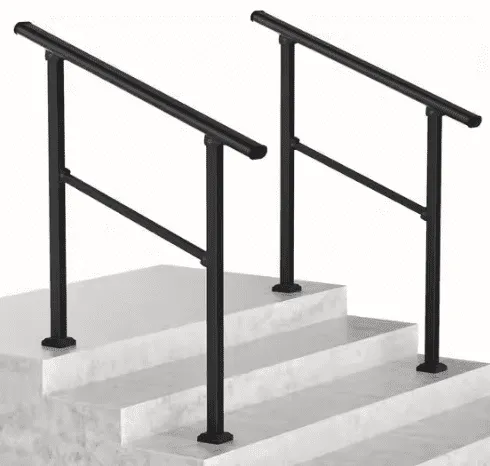
Specifying a Cable Railing System Without Leaving Quote Gaps
The single best way to get an accurate factory price is to stop asking for a per foot number and start sending a drawing. I see more budget errors from missing post spacing and missing hardware quantities than from any material price movement.
Post Spacing Numbers to Put in the RFQ
State whether posts run at 4 feet, 5 feet, or wider centers, and mark corners, ends, and stair transitions. Every termination point adds a tensioner, and every corner adds a post, so a drawing that leaves these off will come back low and then change after the deposit.
Hardware Lists That Stop Quote Drift
Write in the grade as T304 or T316, the construction as 1×19 or 7×7, and the fitting style as swaged or compression. Then fix the number of cable lines and the top rail profile if one is used. That list removes the ambiguity a supplier uses to swap in a cheaper fitting and call it equivalent.
Sourcing Cable Railing Without Paying for Hidden Risk
Most buyers do not lose money on the cable itself. They lose it on a low grade fitting substituted after the quote, a thin post that flexes once the cables are tensioned, or a freight quote that did not include the long top rail packaging. Those failures share one root cause: the order was judged on a single per foot price instead of a complete line item list.
You can avoid that by sending the elevation drawing, the post spacing, the cable spec, and the site condition to our engineering team. We will return a priced breakdown with the cable grade, fitting type, post schedule, and packaging spelled out line by line, so the number you compare is complete.
Email the drawing and quantities to sales01@yulongkeji-ch.com or call +8619086315193, and we will confirm the hardware count and a delivered per foot figure for your project.
Cable Railing System Pricing Questions From Buyers
Why do cable railing quotes vary so much for the same linear footage?
They vary because the components behind the footage are not the same. One quote may price a T304 7×7 system with compression fittings and wider post spacing, while another prices T316 1×19 cable with swaged terminals and closer posts. The second system is not overpriced; it is built for a different load cycle and a longer service life. Compare the line items, not the headline number. If two quotes look identical but differ by more than fifteen percent, something has been changed in the spec or left out of the cheaper one.
Is stainless steel cable railing worth the extra cost over an aluminum post system?
People sometimes assume the stainless option is only about appearance, but the cost difference is structural as much as visual. Stainless posts accept higher post spacing and higher tension without deflection, and T316 hardware holds up beside saltwater where aluminum fittings and lower grade steel will degrade faster. For inland residential decks, aluminum posts with T316 cable are a sensible middle ground. For coastal or high load projects, the stainless post system usually costs less over a ten year window because replacement and repair are rarer.
How many cable runs do I need and how does that change price?
It depends on the railing height and the code requirement for the opening between cables. A typical 36 inch guard rail needs roughly 9 to 11 horizontal lines depending on local spacing rules, while a 42 inch commercial rail may need 12 or more. More lines means more cable length, more through holes or guides, and more tensioning time, so the per foot cost climbs with infill density and rail height. Give the supplier the code section or the required clear opening, and the line count falls out of the calculation.
What should I ask before accepting a per linear foot price?
In projects we have quoted, the buyers who get the fewest surprises ask for the post schedule, the exact cable grade and construction, the fitting style, the number of terminators and tensioners, and the packaging method for top rails. That list converts a vague per foot figure into a buildable scope. If you share your project quantities and elevation, we will confirm the hardware count and a complete per foot figure for comparison.
If you’re interested, check out these related articles:
Freestanding Outdoor Privacy Screens: Patio & Balcony Solutions
Paint & Maintain Ornamental Steel & Wrought Iron Fences
Commercial Steel Fencing: Top Options for Retail Parks and Offices
Best Aluminum Fence Styles for Residential Gardens in 2025
Decorative Aluminum Gate Panels: Modern Home Design Solutions