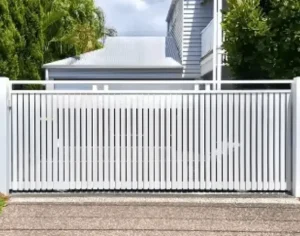
Best fence for hot climates selection often gets reduced to corrosion charts and price lists, but the failure I see most on sites with heavy sun is movement. Aluminum panels expand under direct heat until they bind in their brackets. Dark steel sections reach surface temperatures few installers plan for, and economy WPC can bow within two seasons when gaps are cut to winter dimensions. The comparison that matters runs through thermal expansion, UV-driven coating failure and surface heat, the three areas where hot climate projects actually pass or fail. For most residential and light commercial work, powder coated aluminum is the position I start from.
What Happens to Fencing in Hot Climates?
Direct sun applies three forces to a fence. It heats the surface, it expands the material, and it attacks the coating with ultraviolet radiation. A dark aluminum or steel panel in afternoon sun runs well above air temperature, and that heat travels into whatever touches it: fasteners, posts, gate hardware, and the structure behind it.
Metals and composites move differently. Aluminum expands about twice as far as steel for the same temperature rise, and most wood plastic composite profiles move even more than aluminum. The movement itself is not the issue. Every material moves. The issue is what the movement pushes against. A panel bolted tight to rigid posts has nowhere to go, so it bows, rattles, or forces the gate leaf out of square.
UV is the slower attack. Powder coated aluminum and hot dipped galvanized steel begin with a solid barrier, but a cheap polyester powder can chalk and lose gloss within a few years under intense exposure. WPC depends on pigments and stabilizers mixed into the polymer. Economy boards with thin cap stock or no co-extruded shell fade unevenly and can develop a rough fiber surface that traps dust.
That is why hot climate selection is not a simple material vote. It is a system decision in which coating chemistry, expansion clearance, fastener type and post spacing matter as much as the base material.
Which Performs Better, Aluminum, Steel or WPC?
| Performance factor | Aluminum | Steel | WPC |
|---|---|---|---|
| Thermal movement | High, needs clearance | Moderate, more forgiving | Highest, needs the largest gaps |
| Surface heat in full sun | Heats and cools quickly | Retains more heat, dark colors run hottest | Warm but not metal conductive heat |
| UV color retention | Strong with quality polyester powder | Strong with zinc plus polyester powder | Depends on cap stock quality |
| Corrosion risk | Very low, no red rust | Low while galvanizing stays intact | None, but poor boards can swell with moisture cycles |
| Hot climate fit | Best all round low maintenance choice | Best where impact or security loads dominate | Good for privacy screens with correct gaps |
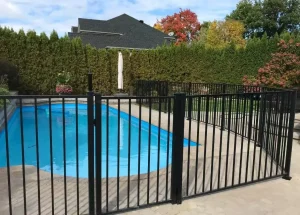
Steel keeps the strength advantage. A perimeter around a substation or a loading yard in a hot region is usually a steel application, and its moderate expansion makes detailing simpler. Zinc coating before the polyester topcoat protects cut edges and scratches far better than paint over bare steel ever could. For residential enclosures, pool barriers and decorative perimeters, aluminum does most of what steel does with less maintenance burden in dry, dusty heat.
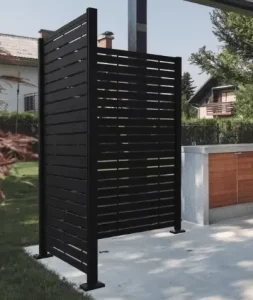
WPC operates in a different category. It works as a privacy and screening material rather than a structural fence, and many systems pair WPC boards with aluminum posts. Cap stock is the deciding factor. Co-extruded boards with a full polymer shell hold color longer and resist surface fiber bloom. Uncapped economy boards can turn into a warranty problem after two or three hot summers.
Use the table as a starting reference, then select by loading. Security gates and vehicle rated perimeters move toward steel. Nearly everything else in sun drenched residential or commercial work favors aluminum, and that distinction sits at the center of choosing the best fence for hot climates.
Is aluminum too soft for security fencing in extreme heat?
For residential and standard commercial perimeters, no. Heat softens most materials somewhat, but 6063 T5 and T6 aluminum fencing retains its structural capacity when specified to the right section depth. Where forced entry is the main concern, a thicker extrusion serves better than switching materials as a first step. If impact loading governs, steel is the right call.
Does WPC sag or soften in sustained high temperatures?
Low grade WPC can soften enough to distort, particularly under its own weight on long spans. A dense polyethylene core with a thick cap shell handles heat much better than a light mixed recycled board. This is the reason span limits and post spacing are tighter for WPC than for metal, and why we check the board formulation rather than the product category alone.
Why Do Some Coatings Fail Faster in Strong Sun?
UV failure comes down to pigment chemistry and the resin holding it. A quality super durable polyester powder with inorganic pigments keeps gloss and color for well over a decade in strong sun. A basic polyester with bright red or orange organic pigments can chalk within a few years. Dark colors show the change first because any coating loss contrasts sharply with the substrate, not always because the coating chemistry itself is worse.
Steel gets an extra step through hot dip galvanizing under the powder. The zinc layer sacrifices itself at scratches and cut edges, so rust cannot track beneath the coating. That combination matters in coastal hot climates where salt laden air adds to the load. Aluminum does not corrode the same way, but its powder coat still depends on a proper conversion layer. Without one, a scratch in humid heat can let filiform corrosion creep under the finish.
WPC protection comes from inside the board as much as from the surface. High quality boards carry heat stable pigments and light stabilizers. The line item to check is a co-extruded cap stock with a meaningful shell thickness, because that shell carries most of the color and weathering burden.
Which colors fade first on hot climate fences?
Bright reds, oranges and dark wood tones usually fade first. Light grays, sandstone and soft greens hide UV change better. Black works well with a quality powder coat but gets the hottest surface and shows dust. For WPC, walnut and dark coffee tones can lighten over time when the cap stock is too thin.
How Do You Prevent Warping and Gate Binding in High Heat?
Most hot climate failures I have walked into are installation failures, not material failures. The panel is sound, the gate is sound, but the clearances were set wrong.
Every panel and gate leaf needs a movement allowance. Fix aluminum sections with slotted brackets or fasteners that let the section shift slightly instead of clamping it rigidly along its full length. Give gate leaves a wider reveal at the latch side, because a gate that fits perfectly at 20°C will bind at 45°C.
WPC is the most demanding material here. Its expansion can exceed aluminum, so pre-drill oversized holes, use clips or slide systems, and leave visible gaps between boards. Do not butt boards tightly in winter and expect a straight fence by August.
Post spacing magnifies the result. Longer unsupported spans produce more visible bow. If a specification pushes spacing to save posts, the hot climate version of that fence will read as wavy under the sun. We keep aluminum panel spans conservative and check them against the manufacturer’s thermal and wind tables before quoting.
If the project involves extreme heat, dark bronze or black finishes, confirm the exact expansion allowance and coating specification before finalizing the bill of materials. Send the site location and panel dimensions to yloongfence@gmail.com.
How much expansion gap should be left between panels?
No single number covers all materials. As a working rule, leave several millimeters of clearance per meter between aluminum sections in high heat zones, and noticeably more between WPC boards. Manufacturer tables take precedence over any general rule. Gate leaves also need a larger latch side gap than hinge side gap, and the latch should be adjustable for seasonal movement.
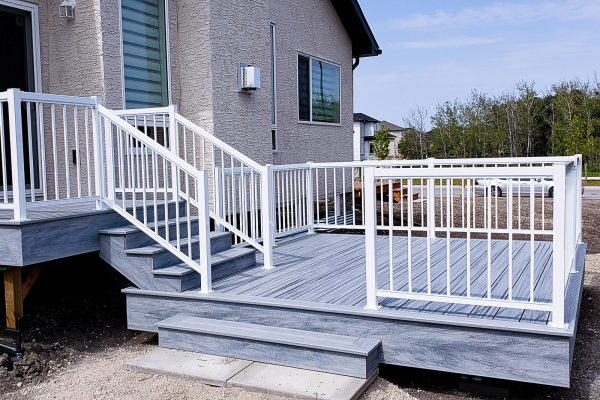
What Should You Specify When Ordering Hot Climate Fencing?
When a hot climate enquiry reaches us, I ask for five details before quoting: finish color, aluminum alloy and temper, steel zinc process, WPC cap stock, and the fastener and post system.
For aluminum, specify 6063 T5 or T6 extrusions with a super durable polyester powder coat. For coastal hot environments, a fluoropolymer topcoat option earns its cost. For steel, specify hot dip galvanizing before the powder topcoat and check how cut edges will be protected during installation. For WPC, require a co-extruded capped board with a high density polyethylene core instead of an uncapped mixed recycled grade.
Hardware fails early when it is overlooked. Stainless steel or coated stainless fasteners handle expansion stress and salt air better than plain zinc screws. Slotted or clip connections let panels move rather than locking every rail solid.
The most common hot climate mistake is ordering dark panels with tight winter clearances. Near black coatings look sharp for the first month, but they run hotter and magnify movement. If a dark color is required, plan wider gaps and stronger hinges from the start.
Hot climate programs with extreme heat, dark finishes or coastal exposure need more than a generic quotation. Send the site location, panel heights and color preference to Hubei Yulong at yloongfence@gmail.com or call +8619072006155, and we will confirm the expansion allowances, coating system and hardware package before you lock the bill of materials.
What Else Do Buyers Ask About Hot Climate Fencing?
Does aluminum fencing get too hot to touch beside a pool?
A dark aluminum rail in direct sun will feel hot, but it sheds heat quickly once shade arrives and does not burn the way a solid dark steel panel can. Lighter powder coated colors stay noticeably cooler. Around pools, we usually recommend lighter finishes and avoid wide dark surfaces at body height, while keeping the fence code compliant for height and spacing.
Does steel fencing rust faster in hot climates?
Heat alone does not rust steel. Corrosion needs moisture, oxygen and an electrolyte, so dry desert heat tends to be gentler on galvanized steel than a humid coastal climate. A hot humid site with salt air is the more aggressive condition. For those locations, hot dip galvanizing under a polyester powder coat is the specification I would hold to.
Can WPC fencing handle desert temperature swings?
It depends on the board construction and the size of the day night swing. A capped board with a dense polyethylene core handles movement better than an uncapped light board, but all WPC needs larger expansion gaps than aluminum or steel. If the site spans near freezing nights to scorching afternoons, the installer must leave room for the full range of movement from the first board.
How do I confirm a supplier’s hot climate coating claims?
In enquiries we process, coating claims are the most common point of confusion. Ask for the powder chemistry by name, the zinc process and thickness for steel, and a full polymer shell specification for WPC. Request a sample panel or a cut sample of the coating rather than relying on catalog language alone. If you are comparing suppliers for a hot climate program, share your site conditions and finish schedule with us at yloongfence@gmail.com, and we will confirm the compliance documentation and coating test data available for the system you are evaluating.
If you’re interested, check out these related articles:
High-Security Steel Fencing: Protecting Government & Military Assets
Chain Link Pool Fence: Codes, Heights, Gates & Pricing Guide
Stainless Steel Outdoor Handrails: Options for Steps, Decks & Gardens
Aluminum Pool Fence Safety: Standards, Heights, & Supplier Guide