
Cold climate fence selection starts with the failure mechanisms most buyers overlook. Snow load, freeze-thaw cycling, deicing salt, and frost heave act on the fence as a system, not just on the panel surface. In my experience reviewing winter-condition fencing specifications, the most durable combination is powder-coated aluminum panels with zinc-coated steel posts, set in concrete footings below the local frost line. This combination resists the coating damage and post movement that shorten the life of many cold weather installations. The right material and footing selection removes most winter failure modes before the first snow arrives.
Why Does a Cold Climate Fence Need System-Level Design?
Most winter fence failures begin below the panel line. Water enters the void around a post, freezes, and expands as it turns to ice. That expansion lifts an undersized post a few millimetres each cycle. Over one winter, those small movements accumulate into racked gates, broken welds, and misaligned latch strikes. Panels rarely fail first. What fails is the connection between the panel, the post, and the ground.
Freeze-thaw cycling and coating stress
Freeze-thaw cycling also tests the coating. Aluminum and steel expand and contract at different rates, and a panel surface that is warm in low winter sun can drop sharply at night. A powder coat that is too brittle, too thick, or poorly bonded will crack at punched edges and sharp corners. Once moisture and road salt reach the bare metal, corrosion begins under the film. That is why cold climate fence specification starts with coating chemistry and edge treatment, not just material choice.
Frost heave and post movement
Frost heave is the most predictable winter problem. If a post does not reach below the local frost line, ice lenses in the soil grip the concrete collar and drive it upward. The panel then carries a bending load for which it was never intended. This is most visible at gates, where the latch side rises and the gate no longer closes. The correction is excavation, not hardware adjustment.
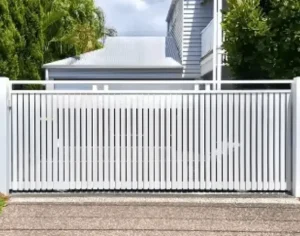
How Do Aluminum Panels Perform as a Cold Climate Fence?
Aluminum is the material I specify most often for cold climate fence systems where deicing salt is present. It forms a passive oxide layer at the surface, so it does not rust the way bare steel does. Alloy selection matters. 6063-T6 extrusions give enough strength for pickets and rails without brittle behavior in subzero conditions. The panel is also light, which reduces the load transferred to posts when snow drifts and ice dams push against the face.
But the weak point is not the aluminum. It is the coating system and the fasteners. Cold weather exposes every cut edge and punched hole. If a low grade liquid coating or an over-thick powder film is used, thermal movement opens microcracks and salt water drives corrosion along the edge. For cold climate duty, I look for a thermosetting polyester powder coat over a passivated substrate, with enough film thickness to protect edges but not so much that flexibility is lost.
When Does Zinc-Coated Steel Deliver Better Winter Performance?
Zinc-coated steel earns its place at the post, rail, and gate hardware, especially where snow clearing equipment may strike the fence. Steel has higher tensile strength than aluminum, so a steel post can tolerate a snowplow back-drag or a hard ice impact without taking a permanent bend. The zinc layer gives sacrificial protection; if the coating is scratched, the zinc corrodes first and delays base metal rusting. That property is useful along roadways where deicing salt spray is constant.
Material choice is not simply a metal question. The table below separates the practical cold climate behavior of the common options.
| Material | Cold climate behavior | Best use in winter conditions |
|---|---|---|
| Aluminum 6063-T6 | Oxide layer resists salt; light panels reduce post load | Panels, pickets, and gates |
| Zinc-coated steel | High tensile strength; zinc layer protects cut edges | Posts, rails, and latch hardware |
| WPC composite | Low visual maintenance but higher thermal expansion; reduced impact toughness in deep cold | Privacy screens in mild cold |
| Chain link | Coating loss leaves wire exposed; low mass handles frost heave better | Temporary or low security enclosures |
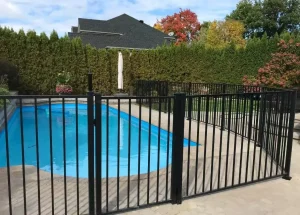
For most cold climate fence projects, I use both materials in the same system. Aluminum panels keep the visible surface stable, and zinc-coated steel posts carry the structural load. The point is that the two must be isolated where they connect. Direct aluminum-to-steel contact in a wet salt environment forms a galvanic couple that accelerates corrosion of the aluminum if the protective coating is interrupted. Isolating washers or a barrier pad prevent that.
Do not finalize a cold climate fence order until the coating system and post depth have been cross-checked against the site frost line. If your project sits in a region with regular freeze-thaw cycles, send your site conditions and required fence height to yloongfence@gmail.com or call +8619072006155 and we will confirm the coating film thickness, post wall thickness, and hardware grade before quoting.
What Specifications Should a Cold Climate Fence Include?
Post depth and frost line
Post depth is the first specification a buyer should lock. The bottom of the post or concrete collar has to sit below the established local frost line, not at the average winter freeze depth. If the exact depth is unknown, the local building code or a geotechnical review should fix it. The backfill around the post must drain, and the concrete collar should be shaped so water does not collect at the steel. Where frost depth is severe, a wider bell at the footing base resists uplift.
Coating system and cut-edge protection
The second specification is the coating system. A thermosetting polyester powder coat or a polyester-plus-primer system is the standard I specify for aluminum and zinc-coated steel in cold regions. Minimum film thickness has to be stated, and edge coverage needs to be checked before shipment. Cut edges made on site should be treated with a zinc-rich touch-up compound. If the fence is near a salted road, the coating specification should include a salt spray performance requirement.
Gate hardware and winter clearance
Gate hardware is the third item. Latch boxes should drain downward, and hinge leaves should have enough clearance for ice buildup. Stainless steel or zinc-coated hardware works best. I also specify a deeper gate post and, where possible, a concrete header between gate posts so the opening does not move out of plane under snow load.
Cold climate fence failures rarely come from one bad material. They come from a specification that ignores frost depth, deicing salt, and coating edge coverage at the same time. If your project sits in a snow belt, send your site conditions and required fence height to yloongfence@gmail.com or call +8619072006155. We will confirm the post depth, coating system, and hardware grade against your local winter exposure before you commit to a bill of materials.
What Questions Do Buyers Ask About Cold Climate Fence Systems?
Is aluminum too brittle for subzero temperatures?
A common assumption is that aluminum becomes dangerously brittle in cold weather, but that is not how the material behaves. Unlike some plastics, aluminum retains enough toughness for fence rails and pickets at temperatures well below freezing. The more relevant cold climate risk is coating adhesion strain from repeated thermal movement, which is controlled by powder coating film thickness and substrate preparation. For most residential and commercial fence loads, aluminum panels do not need to be replaced with heavier steel simply because the site sees subzero winters.
Does powder coating crack when panels contract in cold weather?
It depends on film thickness, pretreatment, and how sharply the metal was bent. A properly applied thermosetting polyester or polyester-plus-primer system on clean, passivated aluminum will flex through normal winter contraction without cracking. Low grade liquid paint or over-thick coats can fail along punched edges and corners. If the panel edge geometry creates sharp stress risers, we specify edge rounding or a zinc-rich touch-up procedure on site. The coating specification matters more than the temperature itself.
Which cold climate fence needs the least winter maintenance?
Powder-coated aluminum panel fence requires the least winter maintenance among common fence types. It does not need repainting after deicing salt exposure, and its lower mass places less load on frost-susceptible posts. You still clear snow away from gate tracks and check hinge fasteners after hard storms, but the panel surface itself does not rust or flake. Zinc-coated steel is close behind on strength, though exposed cut edges need more inspection. WPC and wood fences demand the most attention in snowy conditions.
Can you install a cold climate fence in frozen ground or should you wait?
In cold-region projects I have reviewed, installing posts in frozen ground is the point where small schedule savings turn into long-term problems. Frozen soil does not compact around the footing, and backfill leaves voids that fill with water and expand during later freezes. The better sequence is to dig below the frost line, place a concrete collar, and let the concrete cure before backfilling. If a schedule forces winter installation, you still need thawed, compacted fill and a plan to direct surface water away from the posts.
How do you keep gate hardware working through ice and snow?
The more useful question is whether the hinge and latch assembly can shed ice rather than whether the fence panel itself can survive. Exposed latch boxes tend to collect meltwater, refreeze, and jam the mechanism. We specify stainless steel or zinc-coated hardware with a downward drainage path and leave extra clearance at the latch strike. Where possible, gate posts should be set deeper than line posts because they carry all of the gate swing load. If your project includes multiple gates in a heavy snow area, send your gate layout to yloongfence@gmail.com or call +8619072006155 and we will confirm the hardware grade and clearances before ordering.
If you’re interested, check out these related articles:
Steel Fence Coating: Epoxy, Polyester, PVC for Longevity
Custom Aluminum Gates: OEM & ODM Solutions for Global Projects
Commercial Aluminum Fencing: 5 Key Business Applications
Aluminum Pool Fence Safety: Standards, Heights, & Supplier Guide
Custom Chain Link Fence: Gauges, Heights, Gates & Bulk Guide