
Aluminum privacy screen fences for HVAC equipment enclosures solve a persistent challenge for facility managers and property owners: how to conceal noisy, unattractive outdoor units without compromising their performance or violating building codes. A properly engineered screen provides visual screening while maintaining the airflow and service access that HVAC equipment demands. I have seen too many installations where a poorly designed enclosure caused compressors to overheat or made maintenance a serious struggle. This article outlines the essential design, material, and installation factors that determine whether a privacy screen becomes a reliable asset or an expensive liability.
Understanding Clearance and Airflow Requirements for HVAC Privacy Screens
Every HVAC manufacturer specifies minimum clearance distances around their units for unobstructed airflow. These are not suggestions; they are engineering requirements that directly affect system efficiency and equipment lifespan. When a privacy screen fence is installed too close, it restricts air intake or discharge, forcing the compressor to work harder and potentially leading to premature failure.
The two critical zones are the condenser coil area, usually on one or multiple sides of the unit, and the top discharge area. For a typical residential air conditioner, the manufacturer may require at least 12 to 24 inches of clearance on the coil sides and a minimum of four to five feet of unobstructed vertical space above. Commercial rooftop units demand even larger clearance envelopes. Ignoring these numbers and building a solid fence right next to the unit is a recipe for frequent service calls.
A fundamental rule I apply in our designs: the screen must not create a microclimate that traps heat. Even with adequate distance, a solid fence can reflect heat back onto the coil. This is why louvered or slatted designs are strongly recommended. They allow air to pass through while still blocking direct sightlines. Horizontal slats angled downward are particularly effective. They shed rain away from the unit and prevent hot air from recirculating.
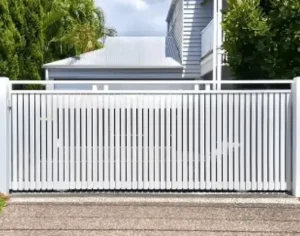
Building code requirements add another layer. Most jurisdictions enforce clearance rules that mirror manufacturer specifications, and some local codes dictate specific screening materials for fire safety. Before designing an enclosure, always obtain the unit’s installation manual and check with the local building department. I have worked on projects where the screen had to be redesigned because the inspector flagged insufficient clearance around a gas meter that happened to be near the HVAC unit. Consider all nearby equipment and utility connections.
What Are the Typical Manufacturer Clearance Requirements?
Clearance values vary by equipment size and type. A small residential split-system unit might need only 12 inches on the sides, while a large commercial package unit could require 36 inches or more. The top discharge area almost always requires at least five feet of open space. Measure from the outside surface of the unit, not from the center. Always consult the installation manual for the specific model. When in doubt, adding an extra 6 inches of clearance costs little and avoids rejected inspections later.
Choosing the Right Aluminum Material and Coating for Long-Term Durability
Aluminum is the material of choice for HVAC privacy screens because it does not rust, weighs less than steel, and can be formed into precise profiles that balance strength with airflow. Not all aluminum is the same, though. For structural fence components exposed to weather year-round, we specify alloy 6063-T6 or 6061-T6. These alloys offer an excellent combination of strength, corrosion resistance, and extrudability. The T6 temper indicates that the material has been solution heat-treated and artificially aged, giving it significantly higher tensile strength than T5.
The table below compares the two most common alloys used in aluminum fencing.
| Property | Alloy 6063-T6 | Alloy 6061-T6 |
|---|---|---|
| Tensile Strength (MPa) | 240 | 310 |
| Yield Strength (MPa) | 215 | 276 |
| Corrosion Resistance | Excellent | Very Good |
| Typical Application | Architectural profiles, fences | Structural components, heavy-duty frames |
For most privacy screen panels, 6063-T6 is sufficient and provides a smoother surface finish for powder coating. However, when the screen must support heavier loads, such as large gate panels or screens in high-wind coastal areas, I recommend 6061-T6 for its higher strength.
The coating is equally important. Powder coating is the industry standard for aluminum outdoor products. A high-quality polyester or polyester-TGIC powder coat applied over a chromate conversion coating provides a barrier that resists UV degradation, salt spray, and chemical exposure. We use a multi-stage pretreatment process that includes degreasing, rinsing, and chromating before electrostatic powder application, followed by curing at 200°C. This produces a finish that can last 20 years or more in normal conditions, and 10 to 15 years in harsh coastal environments.
When specifying the finish, choose a color that blends with the building exterior or vegetation. Dark colors absorb more heat but may improve the screening effect. A textured finish helps hide scratches and reduces visible gloss. For commercial applications, RAL color matching ensures consistency across project phases.
Designing Aluminum Privacy Screen Fences That Maximize Ventilation and Privacy
The core challenge in HVAC enclosure design is achieving visual screening without choking the unit. Three design approaches dominate: louvered panels, slatted panels, and perforated metal sheets. Each has its trade-offs in openness, privacy, and structural cost.
Louvered panels with fixed horizontal or vertical blades provide the best directional control of light and air. By angling the blades downward, you can allow air to circulate while blocking the view from typical eye level. The key parameter is blade pitch and spacing. A tighter pitch increases privacy but restricts airflow. I have found that a louver angle of 45 degrees with a blade spacing of about 4 inches yields a good compromise for most residential and light commercial units.
Slatted panels, where narrow aluminum slats run vertically or horizontally with gaps, offer a modern look and decent airflow. The gap width determines both privacy and ventilation. A gap of 1.5 to 2 inches is common; anything wider and the screen loses visual effectiveness. For maximum privacy while maintaining air movement, I often recommend a vertical slat design with the slats positioned to block the direct view of the unit from the most common vantage points.
Perforated metal sheets, while popular in architectural screening, require careful selection. The percentage of open area, the ratio of hole area to total sheet area, directly affects airflow. For HVAC enclosures, an open area of at least 40% is advisable. Below that, you risk creating a significant pressure drop across the screen. In our experience, perforated panels with circular holes 3/16 inch to 1/4 inch in diameter and staggered patterns work well, but they must be structurally reinforced because large panels with high open area flex under wind.
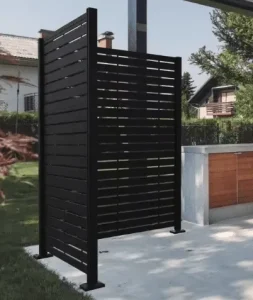
Another aspect often overlooked is accessibility. The screen must allow easy removal of panels or include a gate large enough for a technician to access the unit for cleaning, repair, and seasonal maintenance. We typically design one side of the enclosure as a removable panel or a double-swing gate, sized to accommodate the unit’s full service area. This adds to the initial material cost but saves significant labor over the equipment’s lifetime.
If your site layout includes multiple units, tight corners, or unusual height restrictions, it is worth discussing the airflow and access design with an experienced fence engineering team before ordering. Send your equipment specifications and photos to sales01@yulongkeji-ch.com, and we will confirm the screen configuration meets clearance requirements.
Installing Aluminum Privacy Screen Fences Around HVAC Equipment
A privacy screen is only as reliable as its mounting system. The two primary methods for securing the fence around HVAC equipment are post-anchored systems embedded in a concrete pad or footing, and freestanding weighted base systems that rely on ballast. For permanent installations, I strongly prefer anchored posts. They resist wind loads, prevent shifting, and provide a solid frame for gates and removable panels.
The posts, typically 2.5 inch or 3 inch square aluminum extrusions, are set into concrete footings dug to a depth below the frost line in cold climates, usually 24 to 36 inches. In regions with expansive soil or high wind, we increase the footing diameter and embed the post deeper, sometimes adding reinforcing bars. The panel sections then bolt or clip between the posts. This modular design simplifies transport and allows for on-site adjustments.
Grounding is another detail that must not be skipped. A metal fence installed near electrical equipment, such as an HVAC disconnect or outdoor control panel, must be bonded to the grounding system per the National Electrical Code. We supply grounding lugs and instructions with each panel system to ensure safe installation.
For areas where concrete is already present and excavation is not possible, a freestanding screen with a heavy base plate and rubber feet can work. However, this type must be anchored with concrete screws or chemical anchors to prevent tipping in high winds. The base plate must be sized to distribute the load, and the screen’s overall height should be limited to about 6 feet to maintain stability.
Customizing and Ordering Aluminum Privacy Screen Fences from a Manufacturer
While stock panel sizes exist, commonly 6 ft wide by 4 ft or 6 ft high, most HVAC enclosure projects benefit from custom dimensions and configurations. A factory that produces aluminum fence systems can tailor the panel width, height, slat spacing, color, and gate design to match the exact footprint of your equipment and the aesthetic of your building. At Hubei Yulong, we routinely handle custom orders that start from a site sketch or equipment layout, directly communicating with the project engineer to verify all technical parameters.
When approaching a manufacturer, have the following information ready: the make and model of the HVAC unit or units, the required clearance dimensions, the orientation of the unit and which sides need access, local building code references, and your preferred color or RAL number. This allows the factory to propose a layout with post positions, panel segments, gate locations, and a bill of materials that includes all hardware such as hinges, latches, post caps, and anchors.
Lead times for custom aluminum privacy screen fences vary by order volume and complexity. A typical order of 50 to 200 linear feet can be manufactured in 30 to 45 days after design approval. For large commercial projects, we coordinate container loading and shipping schedules to align with site readiness. I recommend placing orders at least 12 weeks before the projected installation date to accommodate production, quality inspection, and ocean freight.
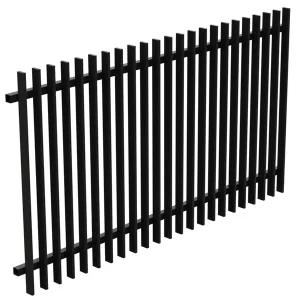
Manufacturing quality is non-negotiable. Look for a supplier who provides mill certificates for aluminum extrusions, batch testing reports for powder coat adhesion and thickness, and a detailed packing list. We include photos of the packed containers before shipment so that contractors can verify the load on arrival. This level of transparency has eliminated disputes on dozens of projects I have overseen.
Securing a Reliable Screening Solution for Your Equipment
An improperly screened HVAC unit is an eyesore and a maintenance headache. A well-designed aluminum privacy screen fence eliminates the visual intrusion while protecting the equipment’s performance. The key is to treat the enclosure not as a decorative afterthought but as a functional extension of the HVAC system. This means respecting manufacturer clearances, selecting the right alloy and coating, choosing a design that balances privacy with airflow, and installing it on a reliable mounting system.
Getting this right from the start avoids costly retrofits and equipment damage. Send your equipment specifications and site dimensions to sales01@yulongkeji-ch.com or call +8619086315193 to discuss a custom aluminum privacy screen fence that meets your project’s engineering and aesthetic requirements. We will prepare a layout and quotation based on your exact conditions.
Common Questions About Aluminum Privacy Screen Fences for HVAC
Do aluminum privacy screens trap heat and reduce HVAC efficiency?
They can if they are solid panels placed too close. A properly designed louvered or slatted screen with adequate clearance does not reduce efficiency. The key is maintaining the manufacturer’s required clearance and using an open design that allows hot air to escape freely. In fact, a screen that shades the unit from direct sun can sometimes improve performance slightly.
Can I build a privacy screen fence around a heat pump that operates in winter?
Yes, but you must account for the additional clearance needed for the outdoor coil. In heating mode, a heat pump’s outdoor unit extracts heat from the air, so airflow is critical year-round. The same clearance rules apply. Additionally, snow accumulation must be considered. A louvered design that allows snow to blow through rather than accumulate against the coil is preferred.
Does powder coating hold up in coastal salt air?
Yes, a properly applied polyester powder coat over a chromate conversion layer provides excellent salt spray resistance. We regularly ship aluminum fence systems to coastal areas in Australia, the Caribbean, and Southeast Asia. The key is correct pretreatment and full curing. A high-quality coating, when maintained with occasional washing, lasts 10 to 15 years in marine environments.
What if my HVAC unit is mounted on a roof? Can the screen be installed there?
Absolutely, but wind load becomes the dominant design factor. Rooftop installations require a structural analysis to ensure the screen and its anchoring can withstand local wind speeds. We often use heavier posts and deeper brackets bolted to the roof structure. A licensed structural engineer should verify the roof membrane penetrations and load transfer. Share your roof specifications, and we will confirm the appropriate mounting method for your site.
If you’re interested, check out these related articles:
Decorative Iron & Ornamental Steel Fence: Residential & Commercial Solutions
Decorative Aluminum Gate Panels: Modern Home Design Solutions
Steel Fence vs Wrought Iron: Modern Options for Durable Fencing