
Cable railing tension is usually treated as a single number, and that approach produces the most field failures I see. The cable itself rarely breaks first. The end post rotates, the tensioner pulls loose, or the top rail deflects because the cable load was never treated as part of one structural path. Most codes do not give a universal cable tension value. They require the completed guard to resist specific loads after the cables are tightened. The specification has to start with the load path and end with field verification, not hand feel.
The Load Path Behind Cable Railing Tension
Tension only becomes a safety feature when the frame can hold it. A tensioned cable pulls inward on the two end posts with the same force the turnbuckle or swaged stud carries. If two cables run between the same posts, the end post receives the sum of those tension loads. If the post is a thin aluminum section or a wood post mounted with a single anchor, the first evidence is often a visible lean before the cable loses its grip.
Under the International Code Council’s International Building Code and International Residential Code, a guard must resist a 200-pound concentrated load applied at any point along the top rail and a 50-pound-per-linear-foot load distributed across the guard. The four-inch sphere requirement also applies to the infill area. These loads are the pass/fail condition. The cable tension is only an input that keeps the assembly within deflection and load limits. It is not the code value.
Code Load Requirements for Cable Railing Safety
We review railings for several international markets, and the most common misunderstanding is that a cable system passes code when the cables feel tight and the spacing is under four inches. The code test is different. It asks whether the finished guard can carry load without excessive displacement or permanent damage. The post connection to the structure usually controls the result, not the cable.
Three controlling requirements apply: a 200-pound concentrated load at any top rail point, a 50-pound-per-linear-foot uniform load across the guard, and the four-inch sphere limitation on the infill. Some jurisdictions also review the post spacing and the top rail section when cable tension is part of the approved assembly test.
Use the cable type comparison below to keep tension ranges tied to construction, not to guesswork.
| Cable type | Construction | Typical working tension | What we specify it for |
|---|---|---|---|
| 1×19 T316 stainless | 19 parallel wires | 200 to 400 pounds | Straight runs where low sag matters |
| 7×7 T316 stainless | 7 strands of 7 wires | 150 to 300 pounds | Stair and corner transitions with more flexing |
| 1×7 T304 stainless | 7 parallel wires | 100 to 250 pounds | Lower-load infill areas where diameter is fixed |
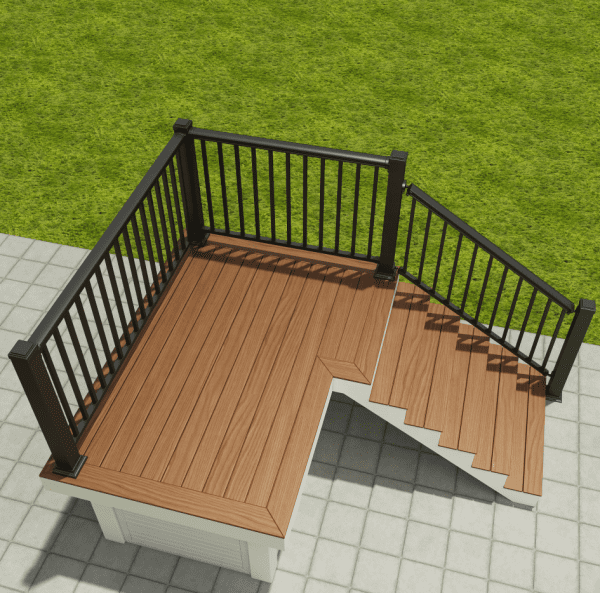
Cable Tension Specification for 1×19 and 7×7 Systems
1×19 cable has become the default for straight residential runs. Because it is less flexible and stretches less than 7×7, it holds a visibly cleaner line between posts. The trade-off is that the end fitting must be matched carefully to the cable diameter and finish. A 1/8-inch 1×19 T316 cable with a compression swage stud is common, but the working tension we specify depends on the post spacing and the terminal hardware. For typical 4-foot to 6-foot post spacing, our mock-ups target between 200 and 400 pounds on the cable, verified with a tension gauge rather than a torque estimate.
7×7 cable is more flexible, but it settles after installation. We retension 7×7 runs after the first 24 hours and again after the first sharp temperature swing because the strands seat under load. A specification line we use reads as follows: furnish and tension each cable to the hardware manufacturer’s working range, verify midspan deflection under a 25-pound lateral pull against the approved mock-up value, and retension after 48 hours if the reading falls below the manufacturer’s working range.
If your program involves post spacing beyond 6 feet, corner transitions, or a coastal installation, it is worth confirming the end post load path and cable construction before finalizing your BOM. Send your layout and cable type to sales01@yulongkeji-ch.com and we will confirm the tension range, swage pattern, and hardware set.
Field Tension Testing Without Guesswork
Hand feel is the weakest inspection method we see. A cable can ring under a finger without reaching the working tension that keeps the top rail from moving under the 200-pound concentrated load. The only way to verify tension consistently is with a cable tension gauge sized to the cable diameter and construction. Gauges that clamp onto the cable and measure side load are fast, but they must be calibrated for the specific strand pattern. A gauge that works on 1×19 will not read correctly on 7×7 without recalibration.
We run two checks in the field. First, each cable is measured at roughly midspan after the full run is tensioned from the center outward. Second, a representative cable is deflected laterally under a known pull while the assembly is under observation. If the measured deflection is larger than the value recorded on the approved mock-up, we stop and check the end post movement before adding more tension. Adding tension to a moving post hides the problem instead of fixing it.
In projects we have reviewed, installers frequently mistake a high-pitched cable for a safe cable. The more useful test is to watch the top rail while the cable is pulled. If the rail moves before the cable reads in range, the frame is flexing. On one replacement job, the end post rotated less than a quarter inch under tension, the top rail displaced more than an inch under a 200-pound test load, and the cable had never slipped. The tension was fine; the connection was not.
Procurement Specifications That Prevent Tension Failures
For buyers and contractors ordering a cable railing system, the weakest part of the purchase is usually the specification line that says only “stainless cable railing.” That leaves the cable grade, post section, and tensioning hardware open to substitution. We specify the following items separately: cable diameter and construction, T316 or T304 grade for the exposure, swage stud diameter and thread, tensioner type, end post wall thickness and base connection, and the retensioning procedure.
- Cable diameter, construction, and alloy
- Post section and wall thickness for end posts and corner posts
- Swage stud and tensioner material
- Fasteners and embedment for the substrate
- Tension range and field deflection acceptance limit
The tender should also require a mock-up or a test report for the first assembly, not only a material certificate. This is where tension failures are caught before they leave the factory.
A cable railing system that looks tight at installation but moves under a guard load is not a product failure; it is usually a specification gap. If you are working through a project with long spans, stair transitions, or coastal exposure, send your layout drawings, cable type, and post spacing to sales01@yulongkeji-ch.com or call +8619086315193. We will review the tension range and end post details before you commit to a purchase order.
Common Questions About Cable Railing Tension and Safety
How tight should cable railing cable be?
Between 200 and 400 pounds of working tension is common for 1/8-inch 1×19 stainless cable, but the correct value follows the post spacing, top rail section, and the manufacturer’s hardware range. We do not specify a tension number without confirming the end post connection first. A shorter straight run with heavy end posts can sit near the higher end. A corner or stair transition often needs the lower end and a retensioning schedule. The code does not fix the value.
How is cable tension tested on site?
Many installers believe a tight-feeling cable is a passing cable, but hand feel is not a test. The cable tension gauge is the primary field check, and it must be calibrated for the cable diameter and construction. We take the reading at midspan after tensioning from the center outward. If the run uses a top rail, we also apply a controlled lateral pull and compare deflection with the approved mock-up. A cable that rings under a pluck can still read under the working range.
Do cables lose tension over time?
It depends on the cable construction and the temperature range. 1×19 cable stretches less, but all stainless cable responds to cold by shortening and to heat by lengthening. 7×7 cable tends to seat into the strands after installation and often needs retensioning within the first day or two. We retest after the first significant temperature change. If the reading moves far enough to fall below the specified working range, the end posts and tensioners get checked before the cable is simply tightened again.
Can cable tension fail a code test even when the cables feel tight?
In the replacements we have reviewed, visible sag usually traces back to a moving end post or a fitting that was never seated, not to the cable breaking. Once the cable reads in range, we load-test the top rail and watch the base connection. If the post rotates before the guard reaches the allowable deflection, the tension is not the problem. Share your layout and cable type with us at sales01@yulongkeji-ch.com and we will confirm whether your end post details and tension range fit the project before ordering.
If you’re interested, check out these related articles:
Round Aluminum & Galvanized Steel Fence Posts: Ultimate Guide
Hubei Yulong Shines at 2026 Indiana Fence Show, Securing 8 New Partnerships
Powder Coating: Shielding Aluminum Fences from Corrosion
Ornamental Steel Fence: Design, Quality, & Direct Pricing
Aluminum Fencing: Property Measurement Buyer’s Guide