
Aluminum railing for floating stairs has to solve a different problem than the same railing on a conventional stair. On a normal stair, the railing works as a protective edge. On a floating stair, the open treads transfer lateral force into the guard, and the visual design depends on thin sightlines. The right aluminum railing holds the design without turning the guard into a heavy frame. Our structural position is simple: specify the connection and the post stiffness before you finalize the baluster pattern, because the connection controls how the entire staircase behaves under load.
The Structural Problem Floating Stair Railings Create
A conventional stair railing acts as fall protection. A floating stair railing also braces the open side and often becomes the only continuous vertical line in the stair hall. Because there is no adjacent wall to restrain movement, the railing carries hand load, guard load, and the small lateral movement that comes from the tread connection. The 2021 International Residential Code sets the minimum stair guard height at 42 inches and requires the guard to resist a 200 pound concentrated load applied at any point. On a floating stair, we treat that code requirement as the floor, not the target. A visible flex at the base plate is a failure even if the guard still meets the code load.
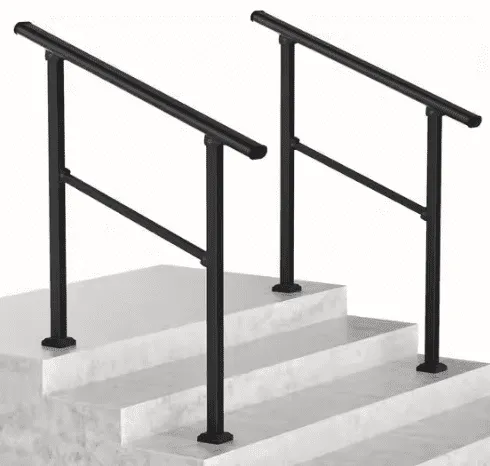
Aluminum Railing Material Specs for Cantilevered Stair Loads
For a floating stair, the material choice matters less than the temper and the connection scheme. Aluminum weighs roughly one third of steel, which reduces dead load on the stair structure while the guard remains rigid when the post section and wall thickness are chosen correctly. I prefer 6005A-T6 for load carrying posts because it gives higher tensile capacity than 6063-T6 without forcing a heavier visual profile. For top rails and balusters, 6063-T6 remains the practical choice because it anodizes and powder coats cleanly.
| Component | Preferred material | Reason |
|---|---|---|
| Top rail | 6063-T6 aluminum profile | Clean surface finish and consistent extrusion |
| Load carrying post | 6005A-T6 aluminum profile | Higher tensile capacity for cantilevered loads |
| Base plate | 6061-T6 aluminum plate | Good weld response and bearing strength |
| Balusters | 6063-T6 aluminum tube | Stable profile and good powder coat adhesion |
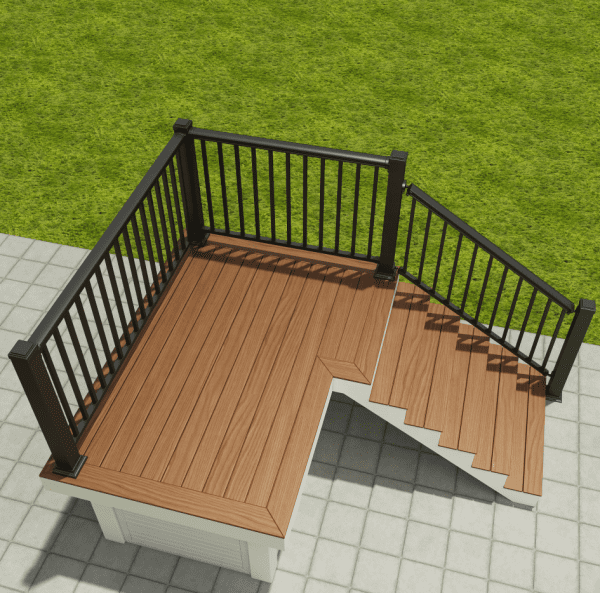
Modern Floating Stair Railing Design Details That Hold Up
The modern floating stair look depends on flat top rails, narrow vertical balusters, and hidden fasteners. Those details read as light, but they place more demand on the railing because there is no bulky connection to hide the engineering. The top rail needs enough vertical dimension to resist bending between posts. The baluster spacing can go close to the code limit, but the baluster itself must have enough section to stay straight when a hand load is applied at mid height.
In projects I have reviewed, the first problem is rarely the railing profile. The problem is the fixing line. If the base plate sits slightly off the tread edge, the installer uses shims, and the visible joint becomes uneven. On a floating stair, that uneven line stands out immediately because the treads themselves are aligned to a narrow tolerance. We specify a machined base plate and a template drawing before welding. The visual result is a clean joint, but the real benefit is that the post lands exactly where the stringer or embedded bracket can carry the load.
If your design includes a glass tread, a narrow channel stringer, or a hidden fixing detail, the connection becomes the decision point. Send the stair section drawing and your expected load condition to sales01@yulongkeji-ch.com, and we can confirm the post size and base plate thickness before you lock the bill of materials.
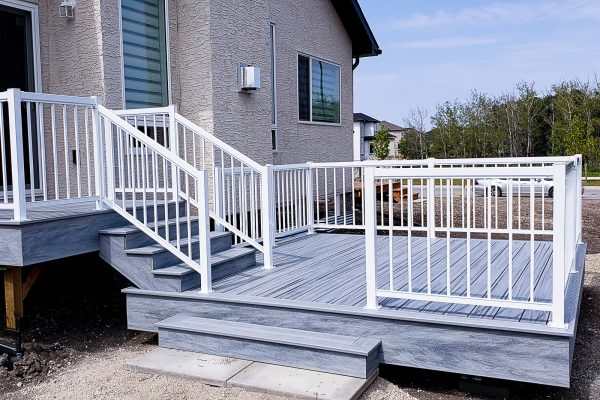
Mounting Aluminum Railing on Floating Stair Treads and Stringers
Three mounting positions work for aluminum railing on floating stair treads and stringers: side mount to a steel channel stringer, top mount through the tread into the stair structure, and fascia mount pinned back into the wall or glass edge. Each option puts the fixing in a different load path.
If the tread is stone, engineered timber, or a thick steel plate, top mounting works when the bracket is embedded into the tread mass and the post is through bolted. If the tread is a thin steel plate or glass, side mounting through the stringer is the better route because the tread itself should not carry the full guard moment. A fascia mount can preserve the open underside, but it needs a stronger wall or channel behind the visible line, and the fixing pattern must line up with the railing module.
That is the structural reason we ask for the stair section drawing before quoting a floating stair railing. The railing length is not enough information. The fixing position determines the post size, bracket type, and base plate thickness, and those decisions control whether the finished stair stays rigid over time.
Specifying Aluminum Floating Stair Railing With Your Manufacturer
Floating stair railings fail in specification more often than in material. For aluminum railing for floating stairs, the check starts at the connection, not the profile catalog. The risk sits in the connection details and the fixing position, so a manufacturer that only asks for a railing length is not checking the right thing. At Hubei Yulong, we review the stair section, the mounting position, and the load condition before we recommend a post and bracket system.
Send your stair geometry, preferred mounting position, finish code, and quantity to sales01@yulongkeji-ch.com, or call +8619086315193 and ask for a structural drawing review. We confirm the post size, base plate thickness, and fixing hardware from your tread and stringer dimensions before quoting. That way the railing arrives as a matched system, not as a set of standard profiles with unresolved connections.
Common Questions About Aluminum Floating Stair Railing
Does aluminum railing make floating stairs look too heavy?
No, if the top rail is selected for horizontal emphasis and the balusters are kept vertical and narrow. The heavy appearance usually comes from a bulky post or a top rail that is too tall for the tread depth. Specify a lower profile top rail and let the post spacing follow the structural load, then the railing reads as part of the stair rather than a separate frame around it.
What post size should I specify for a floating stair railing?
A small square post is often assumed to be enough because it matches a standard railing, but that assumption ignores the cantilevered grab load. For a floating stair with a side mount or a wide open tread, I start with a larger post or a heavier wall, then adjust the baluster pattern around that requirement. The post section depends on the fixing height, the base plate connection, and whether the guard is expected to carry hand load at the midpoint between posts.
Can I use side mounted aluminum railing with glass treads?
It depends on the tread backing. If a steel stringer carries the glass tread, side mounting works when the fixing point transfers into the stringer. If the glass is point fixed and carries part of the load, a top mount or core mount is safer because the tread edge does not have the bearing area for a full guard moment. The railing can still look light, but the engineering line moves to the stringer.
How do I confirm the railing meets structural code before ordering?
For orders we have specified, the fastest path is to send the stair section and connection detail before the finish color is finalized. The structural review has to come first, because changing the mounting position later changes the post spacing and the bracket layout. Send your stair section drawing and the code reference you need to meet, such as IRC or a local building code, to sales01@yulongkeji-ch.com. We will confirm the compliance documentation available for your order.
If you’re interested, check out these related articles:
YLOONG Factory Tour: Aluminum Fence Manufacturing Excellence
Freestanding Outdoor Privacy Screens: Patio & Balcony Solutions
Aluminum Fence Panels: 2025 Wholesale Price Per Foot Guide
Aluminum Fencing: Property Measurement Buyer’s Guide