
When sourcing 6ft WPC fence panels for wholesale distribution, standard sizes and color charts only tell part of the story. From my experience in product development, the differences in material composition, extrusion quality, and factory testing protocols separate panels that remain straight and fade-resistant for years from those that warp within two seasons. This article breaks down the commercial specifications that matter: actual panel dimensions, color consistency across batches, and how pricing is structured at bulk volumes, along with a practical checklist for qualifying a manufacturer before placing a container order.
Standard Sizes and Configurations for 6ft WPC Fence Panels
The 6ft height (1.83 m) is the most common residential privacy fence specification in North America and many European markets. Manufacturers typically offer two standard widths: 72 inches (1830 mm) and 96 inches (2440 mm). The wider panel suits installations with evenly spaced posts on large perimeters, while the narrower option provides more adjustment room for irregularly shaped properties.
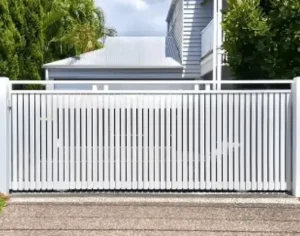
Panel thickness usually falls between 20 mm and 28 mm. Solid-core profiles around 25 mm give the best balance of wind resistance, impact strength, and manageable weight for handling and shipping. Hollow profiles reduce material cost but need internal ribbing to prevent sag under high temperatures. For bulk orders, many factories also produce a 48-inch (1220 mm) width variant and can cut custom lengths when an entire production line is dedicated to one project, though tooling charges typically apply below a certain volume threshold.
Color Options and Finishes Available Wholesale
Most wholesale 6ft WPC fence panel catalogs start with wood grain finishes in teak, walnut, grey oak, and charcoal. These colors use a co-extruded outer layer that carries the UV stabilizers and pigment, leaving the core material uncolored and therefore lower in additive cost.
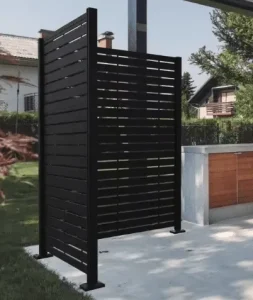
Solid colors like pure white, dark brown, and black are increasingly common for modern architectural projects that avoid wood aesthetic entirely. Some manufacturers also offer dual-sided color panels, one shade on the street-facing face and a different tone on the yard side. Custom matching to RAL or Pantone references is possible when order volume supports a dedicated production batch, usually starting around 500 panels per color. The key specification to check is the UV stabilizer loading in the cap layer, which directly determines how well the color holds after years of direct sunlight exposure. A cap layer below 0.5 mm thickness frequently fades unevenly across a single panel.
Composition and Material Quality of WPC Fence Panels
WPC fencing combines wood fiber or wood flour with a thermoplastic binder, usually high-density polyethylene (HDPE). The ratio matters: a 60/40 wood-to-plastic mix typically offers better rigidity and thermal stability than 70/30 blends, which can become brittle in cold climates or overly flexible under summer heat.
Additives including coupling agents, internal lubricants, and UV absorbers determine long-term performance far more than the base ingredients alone. Co-extruded panels add a second layer of virgin HDPE loaded with UV inhibitors and colorants over a core that may contain recycled materials. This construction keeps raw material costs under control while putting the protective chemistry exactly where sunlight and moisture hit the surface. When evaluating a manufacturer, ask about the UV test standard they use, ASTM G154 or ISO 4892-2 both simulate accelerated weathering, and whether test reports cover the full assembled panel rather than raw material chips alone.
| Property | Co-Extruded WPC Panel | Monolithic WPC Panel |
|---|---|---|
| Outer layer protection | Dedicated UV cap layer, typically 0.5–1.2 mm | Additives distributed throughout entire profile |
| Color retention after 2000 hrs QUV | AE typically under 4 | AE typically 6–10 depending on formulation |
| Impact resistance at -20°C | High, cap layer absorbs micro-cracks | Moderate to low, more prone to freeze-thaw cracking |
| Cost per panel (FOB China, 6ft × 72″, 22 mm) | Higher, but material cost can be partially offset by recycled core | Lower, but additives must be mixed into full volume |
Wholesale Pricing Factors and MOQ for Bulk Orders
Panel material cost is driven by four variables: the wood-to-plastic ratio, the percentage of virgin vs recycled content, cap layer thickness, and overall panel thickness. A 6ft × 72″ panel at 25 mm thickness with a 0.5 mm co-extruded cap layer and 30% recycled core typically prices lower than an all-virgin formulation of the same dimensions, but the recycled content percentage must be disclosed because it affects fastener holding strength and thermal expansion.
Manufacturers quote FOB pricing per panel or per square meter. Most set a minimum order quantity around 200 to 300 panels per container, mixed colors often push the MOQ higher since each color change stops the extrusion line. Lead time for a 20-foot container load of standard colors runs roughly 20 to 30 working days after deposit, while custom color matching adds two to three weeks for compound mixing and sample approval.
Freight and packaging are not theoretical line items. Panels ship vertically on pallets with strapping and corner protectors; any supplier willing to ship panels laid flat without crating should raise a concern about damage rates. When comparing quotes, confirm whether the unit price includes PE film wrapping, edge guards, and fumigated pallets, and ask for a packing list specifying pieces per pallet and panels per container.
If your program targets high-humidity regions, it is worth confirming the panel’s moisture absorption percentage and freeze-thaw test results before finalizing your purchase list, reach out at sales01@yulongkeji-ch.com with your project requirements and we can share representative test data.
How to Choose a Reliable Manufacturer for 6ft WPC Fence Panels
Third-party testing reports separate serious manufacturers from trading companies that rely on someone else’s quality control. Request an SGS or TUV report for the specific panel model you intend to order, covering formaldehyde emissions (EN 717-1 or ASTM D6007), UV aging (QUV 2000 hours minimum), and mechanical strength. Zero-formaldehyde certification is increasingly a tender requirement for residential developments in Europe and Southeast Asia.
A factory visit or independent audit answers questions that email quotes cannot. The extrusion line should show consistent temperature control and die calibration, and the cooling tank must be long enough that the panel reaches room temperature slowly to avoid internal stress. Warehouse conditions matter too: panels stored outdoors under tarps or in direct sun before shipping are already aging before they leave the factory.
Ask for reference projects rather than sample boards. The manufacturer should be able to share photographs and, with permission, contact details of distributors or contractors who have ordered the same panel profile in the past two years. When a supplier cannot produce a single installation reference for a panel model they claim to sell in volume, treat that gap as a reliability flag.
Our WPC Privacy Fence system uses aluminum posts with co-extruded WPC panels that go through SGS testing before release, and we provide batch-level test reports with every shipment.
Common Questions About 6ft WPC Fence Panels
Does a thicker panel always last longer?
Not necessarily. Panel longevity depends mainly on the cap layer quality and the wood-plastic bonding, not on overall thickness alone. In our project support work, we have seen 20 mm co-extruded panels with high UV stabilizer loading outperform 28 mm monolithic panels after three years of Mediterranean sun exposure. The failure mechanism in monolithic panels is usually surface micro-cracking that lets moisture reach the wood fiber, not cross-sectional strength loss. Choose thickness based on span and wind load requirements, not solely as a durability indicator.
Can WPC fence panels be painted?
Co-extruded WPC panels are not designed to hold paint well because the cap layer is non-porous polyethylene. Attempting to paint them usually results in peeling within the first year. If a specific color is required long-term, the better path is to order panels in that color from the extrusion line directly, even if it means meeting a minimum batch quantity. Monolithic panels with higher wood content can sometimes be stained, but this also requires factory confirmation of surface preparation requirements.
How should the panels be stored on site before installation?
Flat stacking is the most common cause of pre-installation warping, especially with dark-colored panels in warm weather. Store panels on edge, slightly off vertical to avoid point loading on the bottom edge, and cover them with a breathable tarp that leaves the ends open for air circulation. Panels that arrive with slight curvature from storage in a shipping container frequently relax back to straight within a few days of being properly stacked, provided they are not exposed to direct sun on one side only.
What is the expected lifespan compared to wood fencing?
A correctly manufactured co-extruded WPC fence panel with adequate UV protection should reach 15 to 20 years of service without structural degradation, compared to roughly 8 to 12 years for pressure-treated pine under similar conditions. The gap narrows in shaded, low-humidity sites where wood performs well, and widens in coastal or high-UV environments where WPC naturally resists salt spray and moisture absorption. The real cost comparison needs to factor in maintenance hours over the lifespan, not just the initial panel price.
If your project requires documented accelerated weathering test data or a specification sheet for your tender submission, share your requirements at sales01@yulongkeji-ch.com or call +8619086315193 and we will confirm what is available for the panel model you are evaluating.
If you’re interested, check out these related articles:
Aluminum Fences: School & Playground Safety Compliance
Steel Fence Gauge: Optimal Thickness for Perimeter Security
Aluminum Pool Fence Safety: Standards, Heights, & Supplier Guide
Aluminum Fencing for Coastal & Humid Environments
High-Security Steel Fencing: Protecting Government & Military Assets