
For a modern home, the fence is not just a boundary. It is a long architectural line that sets the character of the property from the street. Among the growing range of aluminum fencing styles, black vertical slat panels have become the single most specified option we see from architects and project owners. The reason is not purely aesthetic. After more than twelve years working with aluminum extrusion and powder coating systems, I have found that black aluminum slat fencing solves a specific technical problem better than lighter finishes, and that technical edge is what carries it past short-term design trends. While most articles on this topic focus on appearance, this article addresses the material and coating behavior that makes black aluminum slat fences perform differently over time, covering heat management, surface stability, and long-term color retention that practitioners encounter but rarely read about.
Why Aluminum Slat Fences Fit Modern Residential Projects
Modern residential architecture leans on clean horizontal or vertical lines, flat planes, and a deliberate absence of ornament. A fence system that introduces heavy post caps, scrollwork, or excessive rail detailing fights against that vocabulary. Aluminum slat panels, by contrast, strip the fence down to its structural essentials: posts, rails, and evenly spaced slats. The result is a surface that reads as a continuous architectural screen rather than a decorative barrier.
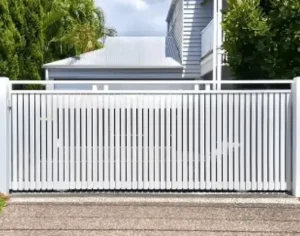
From an engineering standpoint, the slat profile itself carries part of the aesthetic weight. We extrude slats in several channel depths and widths, typically between 100 mm and 200 mm in overall coverage per slat, which allows the specifier to control the ratio of solid metal to air gap. A 25 mm slat with a 15 mm spacing produces a near-solid visual plane when viewed from an angle, while an open 50/50 split maintains some see-through transparency. For a modern street-facing elevation, most of our residential customers land on a configuration that gives roughly 70 percent visual density. That is dense enough to define the property line clearly but open enough to avoid looking like a commercial security installation.
The material choice supports the look. Aluminum does not need heavy post foundations the way a masonry wall does, nor does it demand the ongoing sealing and staining schedule of timber. At a typical 1.8 m height, a complete slat panel system weighs roughly 12 to 15 kg per linear meter, which means two-person handling and straightforward post-anchor installation in most soil conditions.
Why Black Powder Coating Outperforms Lighter Colors Over Time
The practical argument for black starts with heat, but not in the way most people assume. On a summer afternoon, a black aluminum surface will reach a higher peak temperature than a white or light-grey surface. That is basic physics. The more useful question is what the coating does with that heat over thousands of thermal cycles.
We apply a polyester powder coat in a multi-stage electrostatic line, cured at roughly 200 °C. The cured film bonds to the aluminum substrate at a molecular level. What matters over a 15- or 20-year service life is not the peak temperature on a single hot day but the cumulative effect of daily expansion and contraction. Every color expands and contracts with temperature. Black coatings and the aluminum underneath them cycle through a wider temperature delta than light colors. If the coating film is brittle or undercured, those cycles create micro-cracks long before the color fades. What we have observed in accelerated weathering tests, and in projects we have tracked for over a decade, is that a properly formulated matte black polyester coat, cured to full cross-link density, actually shows less visible degradation than many lighter high-gloss finishes after the same exposure period.
| Color & Finish | Typical 10-Year Color Shift (Delta E) | Gloss Retention | Common Failure Mode |
|---|---|---|---|
| Black matte | 1.5–3.0 | High | Minimal visible change |
| White gloss | 3.0–5.5 | Moderate | Yellowing, chalking |
| Wood-look transfer | 4.0–8.0 | Moderate to low | Film delamination at edges |
| Bright silver metallic | 3.5–6.0 | Low | Clear coat erosion, base metal exposure |
The table above reflects typical field performance rather than laboratory ideal conditions. Black matte holds its original appearance longer because there is no clear coat layer to fail separately, and the low gloss hides the fine surface erosion that produces a chalky look on gloss finishes. This is why we recommend matte black for coastal and high-UV sites even though lighter colors would theoretically run cooler.
How Slat Orientation and Profile Affect Privacy and Drainage
A slat fence is a louver system, whether the slats are fixed vertically or horizontally. The profile geometry and spacing set the sight-line angles. On a standard vertical slat panel with slats running perpendicular to the rails, the visual cutoff angle is determined by slat depth minus the gap width. A 150 mm deep slat with a 30 mm gap will block all sight lines steeper than roughly 11 degrees from the plane of the fence. That means someone walking along the sidewalk will see almost nothing of the yard, while the homeowner standing close to the fence can still look out through the gaps at a shallow angle.
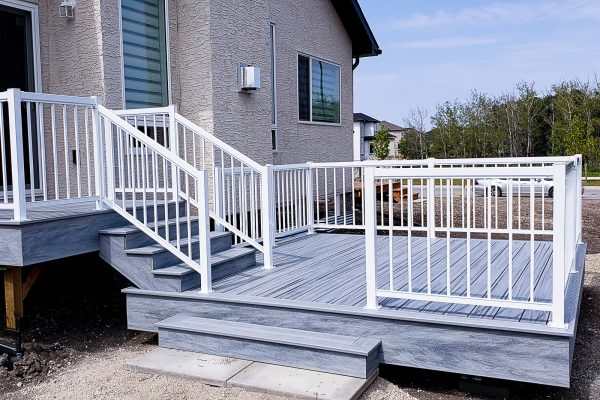
Drainage and debris are the less glamorous side of slat orientation. Horizontal slats create ledges that collect dust, pollen, and rain splash. In temperate and tropical climates, that trapped moisture accelerates coating wear on the top edge of each slat. Vertical slats shed water immediately down the narrow edges, and the open gaps at the bottom of each bay allow air movement that dries the posts and rail connections. In project specifications where long-term maintenance cost is a hard constraint, vertical orientation almost always beats horizontal when we run the numbers on coating life and cleaning frequency.
For clients whose program sites combine high privacy requirements with coastal salt spray, it is worth confirming the slat-to-rail fixing detail before finalizing the bill of materials. Hidden clip systems keep the face clean but can trap salt-laden moisture behind the slat. Exposed screw-fixed slats simplify drainage and allow individual slat replacement. Reach out at +8619086315193 or sales01@yulongkeji-ch.com with your site conditions, and we will confirm which fixing method keeps maintenance to a minimum for that environment.
What to Verify When Ordering Custom Black Aluminum Slat Fencing
Factory-direct custom orders collapse several steps that a distributor normally handles, which saves cost but shifts specification responsibility onto the buyer. The five items below are the ones that most often need correction after the first submittal.
First, confirm the slat profile section. Drawings can look similar across the 100 mm to 200 mm width range, but weight per panel, visual density, and wind load all change. We stock common profiles in 6063-T6 alloy, but custom dies are available for large-volume programs.
Second, match the post system to the site. A 50 mm × 50 mm post suits a 1.2 m decorative fence; a 1.8 m privacy fence on a windy site needs at minimum a 65 mm × 65 mm post, and often larger if the panels run uninterrupted for more than 2.5 m between posts. Post spacing, embedment depth, and footing diameter need to be sized together.
Third, specify the powder coat standard. Our default is a Qualicoat Class 2 or equivalent polyester powder for architectural applications, but for aggressive industrial or marine atmospheres, a super-durable polyester topcoat extends the warranty period and delays chalking.
Fourth, gate integration. A slat panel gate weighs more than an open picket gate. The hinge and latch hardware, post reinforcement, and diagonal bracing all need to be specified for the actual leaf weight, not the standard hardware set. Aluminum slat gates over 1.2 m wide typically require a welded steel sub-frame inside the aluminum cladding to prevent sagging.
Fifth, packaging and container loading. Panel sizes longer than 2.4 m push into oversized freight categories on standard sea containers. We pre-assemble panels to the maximum length that fits efficiently in a 40-foot high-cube container and supply simple splice connectors for on-site joining, which keeps freight cost per panel under control.
If your program involves a mix of gates, panels with different slat densities, and corner posts on a sloping site, it is worth confirming the complete hardware schedule and wind-bracing plan before releasing the order. Send your part numbers and quantities to sales01@yulongkeji-ch.com, and we will return a panel-by-panel takeoff matched to the post layout.
Why Black Aluminum Slat Fences Make Economic Sense for Larger Residential Developments
For a multi-unit residential development or a planned community, fencing cost runs into the hundreds of thousands of dollars when you include gates, access control integration, and installation labor across hundreds of linear meters. The upfront material difference between a black aluminum slat system and a mid-range timber or composite fence is real, but the maintenance reserve the developer needs to set aside flips the comparison within the first five to seven years.
Timber fences in a development with a homeowners’ association typically require a staining cycle every two to three years and plank replacement on a rolling basis. Those costs compound because access to rear-lot fences often requires coordination with residents. Aluminum slat fences, once installed, need only periodic washing. The coating does not require repainting, and the slats do not warp, split, or host insect colonies. Over a 15-year maintenance forecast, the aluminum fence frequently comes out ahead even before accounting for the labor cost escalation on recurring timber maintenance.
From a procurement perspective, the other advantage is factory-finished consistency across the entire development. We powder coat all panels for a single project in a single production batch wherever possible, which eliminates lot-to-lot color variation. For a streetscape where the fence runs continuously past 50 or 100 homes, that uniformity is one less punch-list item for the developer to negotiate with the buyer.
Common Questions About Black Aluminum Slat Fencing
Does a Black Fence Fade Faster Than Lighter Colors?
A well-cured black polyester powder coat does not fade faster in any meaningful structural sense, and in matte formulations it often holds its visual quality longer than high-gloss white or metallic finishes. What people perceive as fading on a light-colored fence is frequently chalking, a surface erosion of the resin that scatters light and appears as a white powder on the surface. High-gloss whites and silvers show chalking dramatically. Black matte hides the same surface change because the low-gloss finish already scatters light, and the dark pigment masks the resin powder. In accelerated QUV-B testing we run as part of our quality checks, black matte samples routinely post Delta E values under 3 after 3,000 hours.
Will a Black Aluminum Fence Make the Yard Too Hot?
The fence itself will get hot to the touch on a sunny day, but it does not meaningfully raise the air temperature in the yard. Unlike a dark paved surface that absorbs solar energy and re-radiates it as long-wave infrared across a large horizontal plane, a vertical fence surface intercepts far less total solar energy over the course of a day, and the open slat design allows air to move through the panel. Microclimate effects from a fence are negligible compared to those from roofing, paving, and planting.
Is Black Aluminum Prone to Showing Scratches?
A deep scratch that cuts through the powder coat to bare aluminum will be visible on black because the silver-white aluminum substrate contrasts against the dark film. That said, a scratch that only mars the surface of the coating is often less noticeable on black matte than on a gloss color, because the matte texture diffuses the scratch visually. For minor chips, a factory-matched touch-up pen applied promptly keeps the damage from spreading. In programs we have supported where the fence is adjacent to driveways or play areas, we spec a slightly thicker powder film, typically 80–100 microns, to give an extra margin against incidental contact.
Can I Get a Custom Black Finish Beyond Standard RAL Colors?
Standard architectural black is typically RAL 9005 Jet Black or RAL 7016 Anthracite Grey for a softer off-black. Beyond those, we can match custom black variants, including warm blacks, blue-blacks, and ultra-matte low-reflectance finishes for projects where glare control matters. Minimum order quantities apply for custom color runs because the powder supplier formulates the batch specifically, and our line must be purged and cleaned between color shifts. If your project requires a specific black tone to match window frames or door hardware, share the reference standard with your inquiry, and we will confirm feasibility and lead time before you commit.
If you’re interested, check out these related articles:
Steel vs Aluminum Fencing: Budget, Durability, and Value
Custom Chain Link Fence: Gauges, Heights, Gates & Bulk Guide
Wholesale Steel Garden Fence Panels: Distributor Pricing & Supply
Stainless Steel Vertical Cable Railing: Design, Specs, & Factory Pricing Guide