
When sourcing WPC fences for a project, the difference between a long-lasting installation and one that fails prematurely often comes down to whether the product has been rigorously tested. WPC fence SGS CE testing verifies that the fence meets strict European standards for safety, durability, and environmental performance, because these certifications check formaldehyde emissions, mechanical strength, and weather resistance through accredited laboratory methods. Having managed quality verification for hundreds of fence shipments, I’ve found that buyers who understand these tests make far better sourcing decisions. This article explains exactly what SGS and CE testing involve for WPC fences and how to use test reports to qualify a supplier.
Why SGS and CE Testing Matters for WPC Fences
WPC fences are marketed as a low-maintenance, eco-friendly alternative to wood and PVC, but the actual performance of any given panel depends heavily on the manufacturing process and the raw material formulation. Third-party testing by independent laboratories like SGS and compliance with CE marking requirements provide objective evidence that the product meets published specifications. Without this verification, a buyer is essentially relying on the manufacturer’s word. SGS testing covers physical, mechanical, and chemical properties under internationally recognized standards, while CE certification demonstrates conformity with European health, safety, and environmental regulations. Together, they form a baseline of credibility that separates reliable suppliers from those making unsupported claims. Having evaluated dozens of WPC suppliers over the years, I’ve seen that the presence or absence of these tests is often the differentiator between a product that still looks good after five years and one that warps and fades in two.
Key SGS Tests for WPC Fence Panels
The SGS test report for a WPC fence panel includes several critical parameters that determine its fitness for outdoor use. When we send samples to SGS, the laboratory evaluates formaldehyde emission against EN 16516, which measures indoor air quality contribution. Formaldehyde is a concern because some WPC formulations use adhesives containing formaldehyde; passing the E1 or lower class ensures the product is safe for residential use. Mechanical properties are tested according to EN 310, which covers bending strength and modulus of elasticity. These tests use a three-point bending setup that simulates wind load and impact forces the panel will experience over its lifetime.
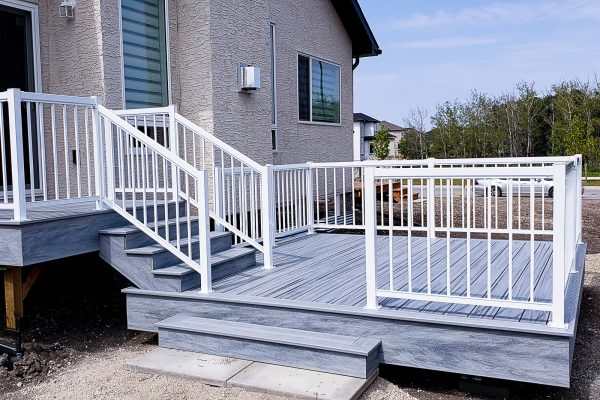
Weathering resistance is assessed through accelerated UV aging, often following ISO 4892, where panels are exposed to cycles of UV radiation, moisture, and elevated temperature for hundreds of hours, then checked for color change, chalking, and surface cracking. Water absorption is measured by immersing specimens and tracking weight increase over time, with acceptable limits defined in EN 15534-1 for wood-plastic composites. The screw withdrawal resistance test, performed per EN 320, measures the holding power of fasteners, which directly affects the fence’s ability to withstand wind loads without fasteners pulling loose. I routinely review these reports, and the two numbers I look at first are formaldehyde emission and bending strength, because they tell you immediately whether the panel is safe and structurally sound.
| Test Property | Typical Standard | What It Verifies |
|---|---|---|
| Formaldehyde emission | EN 16516 | Indoor air safety, low emissions |
| Bending strength | EN 310 | Structural rigidity under load |
| UV aging resistance | ISO 4892 | Color stability and surface integrity |
| Water absorption | EN 15534-1 | Swelling resistance and durability |
| Screw withdrawal | EN 320 | Fastener holding capability |
Each of these tests produces a numerical result that is compared against a pass/fail threshold. A complete report will show both the measured value and the acceptance criteria, allowing the buyer to assess not just pass/fail, but the margin of compliance.
How CE Certification Applies to WPC Fencing
CE certification for WPC fence panels falls under the EU Construction Products Regulation (CPR), which requires manufacturers to declare that the product meets applicable harmonized standards. For WPC products, the key standard is EN 15534 (Wood-plastic composites) along with its parts covering specifications, test methods, and classification. The manufacturer must prepare a Declaration of Performance (DoP) that lists the essential characteristics of the product and the achieved performance levels. This DoP is the basis for affixing the CE mark.
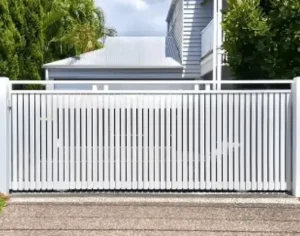
To obtain CE marking, the product must undergo initial type testing by a notified body, and the factory must implement a Factory Production Control (FPC) system. The initial testing typically includes reaction to fire (EN 13501), which classifies the fire behavior from A1 to F. Most WPC materials fall in the E or D class because they contain organic wood fibers, but manufacturers can modify formulations to achieve better ratings if required by building codes. In addition, the FPC system requires regular internal testing of incoming raw materials and finished products, documented records, and traceability of production batches. An annual surveillance audit by the notified body verifies that the FPC is maintained. I often get asked by importers whether CE is just paperwork or a real quality indicator. The answer is both: it’s paperwork, but only if the underlying testing and FPC are genuine. We maintain our FPC system meticulously because an auditor’s visit can happen any time.
For a buyer importing WPC fences into the EU, checking for a valid DoP and CE certificate is essential. The DoP must list the intended use, the applicable standard, and the performance levels for each declared characteristic. Without this documentation, the product cannot legally be placed on the EU market under the CPR.
If your project involves exporting to the EU, confirming the exact CE harmonized standard that applies to your planned use is critical before finalizing your bill of materials. Reach out at sales01@yulongkeji-ch.com with your target market and application details, and we will verify which standards apply to your order.
How We Maintain Consistent Testing Compliance
Passing a one-time type test is only part of the story. Consistent quality across production batches requires a robust internal quality management system that mirrors the third-party testing protocols. At YLOONG, our WPC production line integrates several quality checkpoints that feed into the Factory Production Control system required for CE certification. Each batch of raw wood fiber and polymer resin is tested for moisture content and melt flow index before it enters the extrusion line. During production, we pull samples every two hours and run a rapid bending test using a calibrated three-point bending rig, comparing the results against the same acceptance thresholds used by SGS.
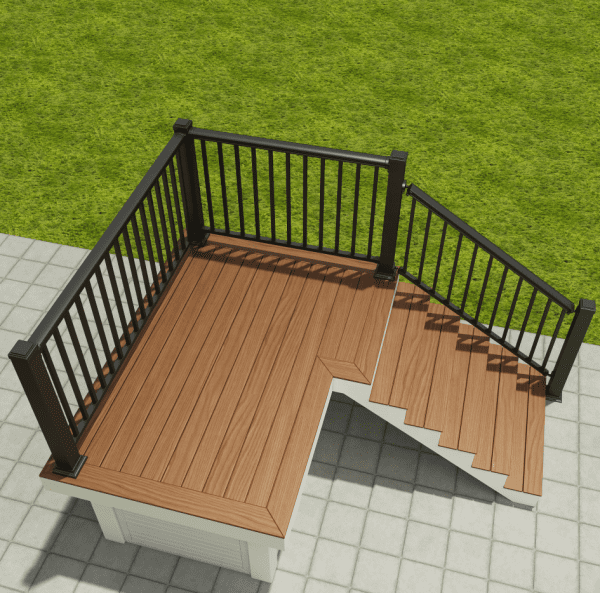
We also maintain a weather chamber that accelerates UV exposure and moisture cycling on randomly selected panels from each shift, allowing us to detect any deviations in color fastness or surface integrity before the panels reach the customer. This in-house testing does not replace third-party SGS testing; rather, it confirms that the day-to-day output stays within the performance envelope established during the initial certification. Every third-party test report we receive from SGS is cataloged and linked to the corresponding production batch, so that when a buyer asks for documentation, we can provide the exact test data for the batch that produced their order. Because we control both the formulation and the extrusion parameters, we can correlate test results with process adjustments and maintain a continuous improvement loop that benefits every shipment. I personally oversee the correlation between SGS data and our in-house test results to catch any drift early.
What Buyers Should Look for in Test Reports
When reviewing a WPC fence supplier’s test reports, look beyond the pass/fail summary and examine the actual measured values. A product that barely passes a test may perform differently in real-world conditions than one that exceeds the threshold by a wide margin. For formaldehyde emission, for instance, EN 16516 sets an E1 limit of 0.124 mg/m³. A result of 0.08 mg/m³ is meaningfully better than 0.12 mg/m³, even though both pass. Similarly, bending strength results that show a margin of 30% above the required minimum indicate a more robust structural design.
Also verify that the test report covers the exact product code and dimensions you are ordering. SGS reports reference the specific profile, thickness, and coating; a test on a 20 mm thick panel does not automatically validate a 15 mm panel from the same line. Check the report date to ensure it is recent and, ideally, ask for batch-specific reports rather than relying on a single type-test certificate from years ago. Reputable manufacturers maintain a testing schedule tied to production batches and can provide recent reports upon request. Finally, confirm that the laboratory issuing the report is accredited to the relevant ISO/IEC 17025 standard. SGS laboratories carry this accreditation, but always look for the accreditation body’s logo on the report itself. In my 12 years in this industry, I have never seen a reliable supplier who couldn’t provide recent batch-specific reports.
Requesting Verified Test Reports for Your WPC Fence Project
When sourcing WPC fences internationally, the assurance that comes from independent test reports is worth the extra step of requesting them. We provide complete SGS test reports and CE Declaration of Performance documents for every production batch, giving you the data you need to make an informed decision. For your next project, share your part number and required quantity with us at sales01@yulongkeji-ch.com or call +8619086315193. We will send you the relevant test documentation and help you confirm that the product meets the specific regulatory requirements of your target market.
Common Questions About WPC Fence Testing and Certification
Does SGS testing cover color fading?
Yes, SGS testing can include UV aging tests that measure color fastness and surface chalking. The test exposes panels to simulated sunlight and moisture cycles; afterwards, color change is measured with a spectrophotometer against a reference sample. A typical passing threshold is a color difference of less than 5 Delta E units after 1500 hours. If color stability is critical for your project, ask for the specific UV aging result in the test report.
How often should WPC fences be re-tested for CE?
A common misconception is that CE certification is a one-time event. In reality, CE marking requires ongoing Factory Production Control with annual surveillance audits. The initial type testing validates the design, but the manufacturer must continually test production samples internally and maintain records. The notified body conducts annual inspections to confirm the system is maintained. When ordering, verify that the supplier’s CE certificate is current and that they can provide the latest audit report.
What is the difference between an SGS report and a CE certificate?
It depends on what you need. An SGS report is a third-party test document showing measured values for specific samples against defined standards. A CE certificate, on the other hand, is the manufacturer’s declaration, supported by a notified body’s assessment, that the product consistently meets all applicable EU requirements. For procurement decisions, the SGS report gives you detailed performance data, while the CE certificate confirms ongoing compliance for market access. Both should be requested.
Can a WPC fence with formaldehyde-free claims skip SGS testing?
In my experience reviewing supplier documentation, a formaldehyde-free claim without SGS verification is insufficient. Even if a WPC formulation uses zero-added-formaldehyde resins, other components or processing aids might contribute residual emissions. Independent testing by SGS verifies the actual emission level, not just the raw material claim. A buyer should always request the emission test report regardless of marketing claims.
Why should I ask for batch-specific test reports instead of a single type-test certificate?
The real question is whether the panels you receive will perform the same as the tested prototype. WPC properties can be influenced by raw material variations, process parameters, and even seasonal humidity. Batch-specific testing, or at least periodic testing linked to production lots, demonstrates an active quality monitoring system. A single type-test from three years ago says little about today’s output. When you share your project requirements with us, we’ll confirm which test documentation applies to your order and provide the relevant batch reports.
If you’re interested, check out these related articles:
Industrial Steel Security Fences: Anti-Climb & Anti-Cut Protection
YLOONG Factory Tour: Aluminum Fence Manufacturing Excellence
Wholesale Aluminum Fence Panels: MOQ, Pricing, and Lead Time Strategies