
A well-maintained ornamental fence does more than mark boundaries. It holds its ground against weather, resists the slow creep of rust, and keeps looking sharp year after year. But getting there takes more than slapping on a coat of paint when things start to look tired. The real work happens before the brush ever touches metal, in how you prep the surface, what coating you choose, and whether you catch small problems before they become expensive ones. This piece walks through the practical side of keeping steel and wrought iron fences in solid condition, from the gritty details of rust removal to the long game of preventative care.
Why Surface Preparation Determines Coating Success
The coating you apply is only as good as what’s underneath it. Skip the prep work, and you’re essentially painting over problems that will resurface within months. For steel and wrought iron fences, this means getting serious about cleaning, rust removal, and priming before any finish coat goes on.
Start with a thorough cleaning to remove dirt, grease, and loose debris. Pressure washing works well for general grime, but stubborn deposits may need a degreaser. Once the surface is clean, assess the rust situation honestly. Surface oxidation that wipes off easily is one thing. Deep pitting that’s eaten into the metal is another problem entirely.
Mechanical removal using wire brushes, sandpaper, or angle grinders handles loose rust and flaking paint effectively. For rust that’s bonded more stubbornly, chemical rust converters transform iron oxide into a stable compound that accepts primer. These converters work particularly well in crevices and decorative details where mechanical tools can’t reach.
Priming serves as the critical bridge between bare metal and topcoat. A quality rust-inhibiting primer creates a chemical barrier that slows oxidation even if the topcoat gets scratched. For galvanized steel fence maintenance, use primers specifically formulated for galvanized surfaces, as standard primers may not adhere properly to the zinc coating.
Matching Coatings to Performance Requirements
Not all paints perform equally on metal fencing, and the right choice depends on your specific conditions and expectations. Each coating type brings distinct strengths to the table.
Oil-based enamels have been the traditional choice for ornamental ironwork for good reason. They penetrate well into porous surfaces, resist moisture effectively, and cure to a hard finish that holds up to physical contact. The trade-off is longer drying times and cleanup that requires solvents.
Latex paints have improved dramatically for metal applications. Modern formulations offer good flexibility, which matters on metal that expands and contracts with temperature swings. They clean up with water and emit fewer fumes during application. However, they generally don’t match oil-based products for moisture resistance in consistently damp environments.
Epoxy coatings deliver exceptional hardness and chemical resistance. They’re particularly valuable in industrial settings or areas with chemical exposure. Two-part epoxy systems require careful mixing and have limited working time, but the resulting finish is remarkably tough.
Powder coating represents a different approach entirely. Rather than liquid paint, a dry powder is electrostatically applied and then heat-cured to form a continuous film. The benefits include exceptional chip resistance, uniform coverage even on complex shapes, and minimal environmental impact since there are no solvents. Factory-applied powder coating typically outperforms field-applied liquid paints for longevity.
| Paint Type | Key Benefits | Application Method | Durability | Environmental Impact |
|---|---|---|---|---|
| Oil-based Enamel | Excellent adhesion, moisture resistance | Brush, Roll, Spray | High | Moderate |
| Latex | Easier cleanup, flexible, less odor | Brush, Roll, Spray | Medium | Low |
| Epoxy | Superior hardness, chemical resistance | Brush, Roll, Spray | Very High | Moderate |
| Powder Coating | Exceptional durability, uniform finish, eco-friendly | Spray (specialized) | Very High | Very Low |
If you’re interested, check 《YLOONG Solutions: Engineered for Security, Designed for Performance》.
Application Methods That Actually Work
The gap between a professional-looking finish and a mediocre one often comes down to technique and timing rather than expensive equipment.
Brushing remains the best approach for intricate ornamental details, scrollwork, and hard-to-reach areas. Use a quality brush with natural bristles for oil-based products or synthetic bristles for latex. Work the paint into crevices and joints where rust tends to start. The goal is complete coverage, not speed.
Rolling covers flat surfaces and rails efficiently. Use a short-nap roller designed for smooth surfaces to avoid leaving texture in the finish. Rolling works well as a primary method for pickets and horizontal rails, with brush touch-ups for details.
Spraying delivers the smoothest, most uniform finish and works fastest on large fence runs. Airless sprayers handle thicker coatings well and provide good coverage. HVLP (high-volume, low-pressure) systems waste less material through overspray. Either way, proper masking protects surrounding surfaces, and multiple light coats beat one heavy application.
Environmental conditions matter more than many people realize. Paint applied below 50°F may not cure properly. Above 90°F, it can dry too fast and leave brush marks or fail to level. High humidity slows drying and can cause blushing in some finishes. Early morning dew and late afternoon temperature drops create windows where moisture can interfere with fresh coatings. The ideal conditions are moderate temperatures, low humidity, and no rain in the forecast for at least 24 hours.
Building a Maintenance Routine That Prevents Problems
Reactive maintenance, waiting until problems become obvious, always costs more than preventative care. A systematic approach catches issues early when they’re still easy to fix.
Annual inspections should cover the entire fence systematically. Look for rust spots, especially at joints, welds, and areas where water might pool. Check for chipped or peeling paint that exposes bare metal. Examine fasteners for looseness or corrosion. Note any structural issues like bent sections or posts that have shifted.
Cleaning extends coating life significantly. Dirt and organic debris hold moisture against the surface and can harbor corrosive compounds. A simple wash with mild detergent and water once or twice a year removes this buildup. For fences near roads, salt residue from winter treatments is particularly damaging and should be washed off promptly in spring.
Spot repairs prevent small problems from spreading. A rust spot the size of a quarter can be cleaned, primed, and touched up in fifteen minutes. Left alone, it becomes a rust patch that requires extensive prep work and may have compromised the metal underneath. Keep touch-up paint on hand that matches your fence color.
Vegetation management matters too. Plants growing against fencing trap moisture, scratch coatings, and can physically damage the structure. Maintain clearance between landscaping and fence surfaces.
Solving the Problems That Actually Happen
Even well-maintained fences develop issues over time. Knowing how to address common problems saves money and extends service life.
Chipping and flaking usually indicate either poor initial adhesion or impact damage. For small areas, sand the edges of the damaged spot to feather them into the surrounding coating, clean thoroughly, apply primer to any exposed metal, and touch up with matching paint. Widespread chipping suggests the coating system has failed and a complete strip-and-repaint may be necessary.
Fading affects most coatings eventually, particularly on south-facing surfaces that receive intense UV exposure. Touch-up painting on faded sections often creates visible color mismatches. When fading becomes noticeable, a full repaint with UV-resistant coating provides the most uniform result.
Rust bleeding through paint indicates corrosion that wasn’t fully addressed during preparation. The rust is still active underneath and will continue spreading. Proper repair requires removing the coating in the affected area, treating the rust completely, and recoating with appropriate primer and topcoat.
White powdery deposits on galvanized surfaces, called white rust, form when zinc oxidizes. This is different from iron rust and indicates the galvanized coating is doing its job of sacrificial protection. Light white rust can be cleaned and painted over. Heavy deposits suggest the zinc layer is depleting and the underlying steel may need additional protection.
How Material Choice Affects Long-Term Maintenance
The maintenance burden varies dramatically depending on what your fence is made from. Traditional wrought iron requires the most attention. Its porous structure absorbs moisture, and the material itself is highly susceptible to oxidation. Beautiful when maintained, wrought iron demands consistent care.
Mild steel fencing is less porous but still requires diligent rust prevention. Galvanized steel adds a zinc layer that provides sacrificial protection, the zinc corrodes preferentially, protecting the steel underneath. This extends maintenance intervals significantly but doesn’t eliminate them entirely.
Aluminum fencing represents a fundamentally different approach. Aluminum doesn’t rust in the traditional sense because it forms a stable oxide layer that actually protects the underlying metal. Combined with powder coating, aluminum fencing systems can go decades with minimal maintenance beyond occasional cleaning.
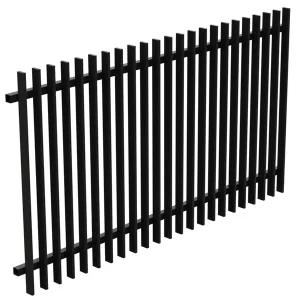
Zinc steel fencing systems combine steel’s strength with zinc’s corrosion resistance and often include additional powder coating for a multi-layer protection system. These materials are engineered specifically to reduce maintenance requirements while maintaining structural integrity and appearance.
Working with Professionals
Some fence maintenance falls within DIY capability. Other situations call for professional help.
Consider professional services when dealing with extensive rust damage that may have compromised structural integrity, when complete stripping and recoating is needed, for fences with complex ornamental details that require specialized techniques, or when height or access issues create safety concerns.
When selecting contractors, look for experience specifically with metal fencing rather than general painting. Ask about their surface preparation methods, the coating systems they use, and what warranty they offer. Quality contractors will inspect the fence before quoting and explain their recommended approach.
For new installations, working with manufacturers who integrate corrosion protection into their production process often provides better long-term value than field-applied coatings. Factory-controlled surface treatment, automated powder coating application, and quality-controlled curing produce more consistent results than field conditions typically allow.
Partner with Hubei Yulong for Superior Fencing Solutions
Hubei Yulong Environmental Protection Building Materials Technology Co., Ltd. specializes in aluminum and zinc steel fencing systems engineered for minimal maintenance and maximum durability. Our automated production lines and advanced surface treatment technology, including powder coating, deliver superior corrosion resistance from day one. Contact our team at +8619072006155 or yloongfence@gmail.com to discuss how our products can meet your specific project requirements.
Frequently Asked Questions About Ornamental Fence Care
What is the best type of paint for outdoor steel and wrought iron fences?
For field application on existing fences, high-quality oil-based enamel with rust-inhibiting properties provides the best combination of adhesion, moisture resistance, and durability. Apply over a compatible metal primer for best results. For new installations or professional refurbishment, powder coating outperforms liquid paints significantly. The electrostatically applied and heat-cured finish resists chipping, maintains color stability, and provides superior corrosion protection compared to brush or spray-applied alternatives.
How often should ornamental metal fences be repainted or maintained?
Conduct thorough inspections annually, looking for rust spots, paint damage, and structural issues. Address spot repairs promptly as they’re identified. Full repainting typically becomes necessary every five to ten years, though this varies considerably based on climate, coating quality, and how well the fence has been maintained. Coastal environments, areas with heavy industrial pollution, or regions with harsh winters may require more frequent attention. Fences with factory-applied powder coating generally extend these intervals substantially.
What are the common mistakes to avoid when painting wrought iron fences?
The most consequential mistake is inadequate surface preparation. Painting over rust, even if it looks minor, guarantees early coating failure. Other frequent errors include skipping primer, which compromises adhesion and corrosion resistance. Painting in unsuitable weather, whether too hot, too cold, or too humid, affects how the coating cures and performs. Applying coats too thick causes runs, uneven drying, and can trap solvents that weaken the film. Taking time with preparation and applying multiple thin coats produces dramatically better results than rushing through the process.