
OEM aluminum panel fence projects demand more than cutting panels to length and applying a coat of paint. The structural behavior of an extruded aluminum profile changes with height and span, and not every coating formula bonds equally to every alloy surface. Over twelve years of designing custom fencing systems, I have learned that the difference between a fence that performs for decades and one that fails prematurely comes down to the engineering decisions made before production begins. This article steps through how we handle custom sizes and colors, from initial feasibility checks to final inspection, so you can see what real factory customization involves.
What Dimensional Limits Apply to Custom OEM Aluminum Panel Fences?
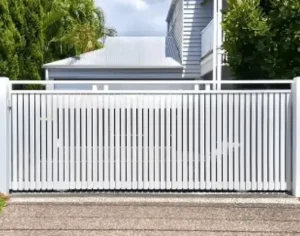
Customization does not mean every dimension is achievable without tradeoffs. The table below outlines the typical range we work with and the hard constraints imposed by extrusion technology and structural loading.
| Dimension | Standard Range (mm) | Custom Max / Min (mm) | Constraint |
|---|---|---|---|
| Panel Height | 900–1800 | 600–2400 | Wind load becomes the dominant design factor above 2000 mm, especially in coastal zones. |
| Panel Width | 1200–2000 | 800–2500 | Panels wider than 2500 mm require a mid-rail or thicker profile section to control deflection. |
| Post Spacing | 2000 | 1500–3000 | Wider spacing demands heavier post sections; we typically specify post wall thickness based on the project’s wind zone. |
| Slat / Louver Width | 65–100 | 40–150 | Slat aspect ratio affects torsional stiffness; very narrow slats can vibrate audibly in high wind. |
These numbers are not theoretical. They come from direct experience with projects in Asia, the Middle East, and coastal Australia, where wind speeds and site exposure vary dramatically. If a project requires a 3‑meter‑wide panel in a typhoon region, we will first run a structural check before committing to anything.
What Are the Standard vs Custom Height Ranges?
Standard production tooling is optimized for 900 mm, 1200 mm, 1500 mm, and 1800 mm panel heights. These cover the majority of residential and light commercial applications. When a buyer requests a 2100 mm or 2400 mm panel, we need to verify that the vertical stiffeners and rail sections remain within deflection limits under the specified wind load. In many cases the profile can handle the extra height. When it cannot, we discuss adding a mid‑rail or stepping up the profile section depth. We have also engineered 600 mm panels for low‑level accent fencing, where the primary concern is blade spacing for privacy rather than structural strength.
How Does Custom Width Affect Structural Integrity?
Panel width directly influences mid‑span sag and rail bending. For an aluminum alloy 6063‑T5 extrusion, the deflection under a uniform wind load follows a power relationship with span length. Moving from 2000 mm to 2500 mm increases the bending moment by over 50 percent. We either increase the rail section dimension or add a third horizontal rail to redistribute the load. In a recent project for a resort with wide beachfront panels, we used a 100 mm deep bottom rail and a reinforced top channel to keep deflection under L/180 — a common serviceability limit for architectural fencing. The client got the uninterrupted sightline they wanted, but the hidden engineering made it possible.
How Does Custom Color Matching Ensure Consistency Across Panels?
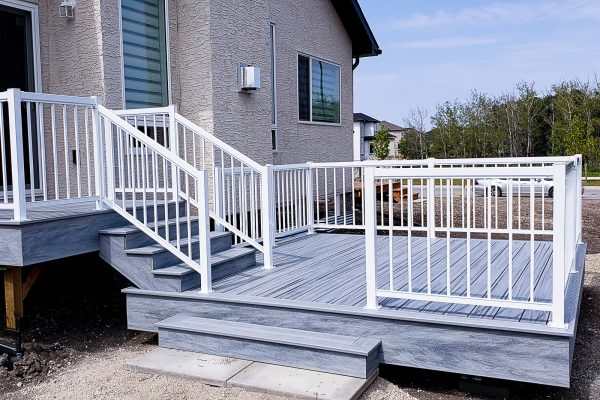
Most buyers start with a RAL or Pantone reference. That works for standard architectural colors, but not every shade transfers well to a powder‑coated aluminum surface. We coat with a polyester powder system applied over a chromate conversion pre‑treatment, which provides the adhesion and corrosion resistance needed for outdoor exposure. The process itself is straightforward. The hard part is maintaining color consistency from panel to panel and batch to batch.
We use a spectrophotometer to measure ΔE (color difference) against the target standard. For a typical order, we hold ΔE below 1.0 across panels. This is tighter than the visible threshold for most people, and it matters when panels are installed side‑by‑side under uniform lighting. Light greys, beiges, and off‑whites are the most unforgiving: a small pigment variation becomes obvious. Dark bronzes and blacks hide minor shifts better, but they absorb more solar radiation, raising the panel surface temperature and increasing thermal expansion. We flag this early to the client. A black panel in a hot climate may need slightly wider post‑slot clearances to avoid binding.
What RAL Colors Are Suitable for Outdoor Aluminum?
Not all RAL colors are formulated for exterior powder coating. The standard polyester systems we use cover most RAL Classic and RAL Design hues, but certain bright reds and deep blues have poorer UV stability. We maintain a library of tested exterior‑grade variants. If a color sits outside our proven range, we either switch to a super‑durable polyester formulation or advise the buyer on a near‑match that holds its gloss better under five‑years of UV exposure.
Can You Match a Specific Brand Color?
Yes, and we do this regularly for commercial franchises and branded residential developments. The work starts with a physical color chip or a documented Lab value. Our lab prepares a set of spray‑out panels at different film thicknesses, because the final color shifts slightly with coating thickness. We send those samples for approval before starting production. It adds about five business days to the pre‑production timeline, but it eliminates the risk of a batch rejection later.
Engineering Considerations for Custom Panel Profiles
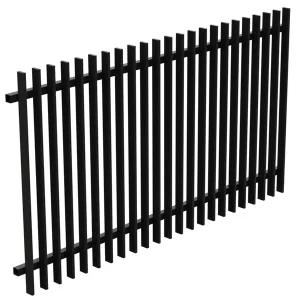
Engineers who design die tooling for aluminum extrusion think in terms of profile complexity, wall thickness uniformity, and tongue ratio. For a panel fence, the profile governs slat geometry, rail engagement, and assembly method. Custom slat shapes are possible. We have produced teardrop profiles for architectural privacy screens and wide flat slats for horizontal‑line modern fences. The limiting factor is the extrusion die’s capability. Deep, narrow slots or sharp internal corners increase die wear and make the extrusion process unstable. A sensible design keeps wall thicknesses above 1.2 mm and avoids sections that can trap the profile as it exits the press.
Wind resistance is the second gate. For a custom panel, we do not simply scale the standard design. We model the panel as a series of simply supported beams under a uniform pressure, applying the wind speeds from the relevant national standard (AS/NZS 1170, EN 1991‑1‑4, or ASCE 7, depending on the destination). For panels above 2 meters in height, we often increase the post section from 80×80 mm to 100×100 mm and specify a thicker wall. These are not speculative decisions. They come from having seen panels through typhoon seasons and knowing where failures happen.
Why Does Alloy Selection Matter for Custom Fences?
6063‑T5 aluminum is the standard architectural extrusion grade. It offers a good balance of formability, surface finish quality, and moderate strength. When a project demands higher strength — say, a security panel with narrow slat spacing or a tall gate leaf — we can move to 6061‑T6, which provides roughly 40 percent higher yield strength. The trade‑off is a slightly rougher as‑extruded surface and higher die cost. For most panel fence applications, 6063‑T5 is the right starting point, but we always check the section modulus against the required loading.
How Do We Validate Wind Resistance for Large Panels?
Physical testing is ideal, but for project‑specific custom panels we rely on a combination of finite element analysis and empirical deflection checks on the first production sample. We mount the panel on a test rig at the factory and apply a static load equivalent to the design wind pressure, measuring mid‑span deflection. If the measured deflection exceeds the design limit, we adjust the profile or add a reinforcing rail. This step adds a day to the sample phase, but it is far cheaper than discovering an issue after installation.
Quality Control Steps for OEM Custom Fence Orders
The risk with custom orders is that no two panels are identical enough to look uniform once installed. We run a series of checks designed to catch both dimensional and aesthetic drift.
Pre‑treatment is the foundation. Every extrusion passes through a multi‑stage chromate conversion line to create a stable, corrosion‑resistant substrate. This step is invisible in the final product, but without it, even a thick powder coating will peel after a few wet‑dry cycles. We control chemical concentration and immersion time to match the alloy, and we test adhesion with a cross‑hatch cutter on sample pieces from each batch.
Coating thickness is measured with a digital gauge at multiple points. We target 60–80 microns for standard architectural applications and 80–100 microns for coastal or industrial environments. Thinner coats risk pinholes. Thicker coats can chip under impact. Consistency across the panel matters more than the absolute number. For color, we use a portable colorimeter at three positions per panel and compare the readings against the approved master sample. If the ΔE exceeds 1.2, the panel is reworked. Dimensional checks cover panel squareness, slot alignment, and post‑hole positioning, all referenced to the approved fabrication drawing.
For a deeper look at the production environment, our factory tour article walks through the extrusion and coating lines in detail. YLOONG Factory Tour: Aluminum Fence Manufacturing Excellence
How Is Color Consistency Measured Across Production Batches?
Color consistency is a statistical process, not a one‑time check. We pull sample panels from the start, middle, and end of each production run and measure them against the same standard. If the trend drifts — say, a gradual darkening as the powder reclaim ratio shifts — we adjust the powder feed before the drift becomes visible. This is where a factory’s process discipline separates a professional OEM supplier from a shop that simply paints to order.
From Design Approval to Shipment: The Custom Order Timeline
A realistic timeline for a custom panel fence order runs from six to ten weeks, depending on whether new extrusion dies are needed. The breakdown usually looks like this:
- Drawing confirmation and die design (1–2 weeks if existing dies are usable, 3–4 weeks for new tooling). We review the customer’s dimensional and structural requirements and finalize the profile drawing.
- Sample production and approval (1 week after die ready). We produce a short run of panels for customer sign‑off on color, assembly, and overall appearance. This is the last easy point to change anything.
- Bulk production (2–4 weeks depending on order volume). Our automated powder coating line can handle continuous runs, but color changes require booth cleaning, adding time.
- Final inspection and component packaging (3–5 working days). Panels are individually wrapped, and hardware is packed into clearly labeled cartons. We palletize for LCL or FCL shipment according to the buyer’s forwarder requirements.
Lead time pressure usually comes from the glazing or landscaping schedule on site. We can sometimes pull in a deadline by allocating a dedicated production slot, but we will not skip the sample approval stage. That step has saved more projects than any other single action. For volume pricing references, our 2025 wholesale price per foot guide offers a useful starting point.
What Factors Influence Lead Time for Custom Panels?
New extrusion dies are the single biggest variable. A simple slat die may take 10–12 working days. A complex multi‑hollow profile with integral fastening channels can push beyond three weeks. Coating color changes also add time if the required shade demands a fresh powder batch that needs to be tested and matched. The quantity plays a role too, but less than most buyers think. A 500‑linear‑meter order and a 2000‑meter order often follow the same tooling and sampling timeline; the bulk production duration scales, but the front‑end steps are fixed.
Starting Your Custom Panel Fence Order
Custom aluminum panel fence projects fail when the supplier treats the order like a standard catalog sale with a different color code. They succeed when the engineering team asks the right questions about wind zone, access limitations, and coating durability before a single extrusion is cut. We bring twelve years of fencing‑specific engineering experience to that conversation.
If you have a project that requires precise color matching or non‑standard panel dimensions, send your drawings or color reference to sales01@yulongkeji-ch.com. Our team will review feasibility and confirm lead times. For time‑sensitive commercial tenders, you can reach us directly at +8619086315193.
Custom Aluminum Fence Panel FAQs
How do I request a custom color sample before committing to a large order?
Send us the RAL code, Pantone number, or a physical color chip, and we will prepare two or three spray‑out panels at different coating thicknesses for your approval. The sample set ships within five to seven working days after we receive your reference. This step is especially useful when the color must match existing architectural elements, because a screen‑printed RAL fan deck rarely shows how the shade reads in natural light against a building facade.
It’s a common misconception that panels wider than the standard range are impossible to manufacture. The real constraint isn’t the extrusion press; it’s the installed deflection under load.
If your design calls for a panel width above our typical maximum, we first model the bending behavior with your project’s wind data. In most cases, reinforcing the rail profile or modifying the post spacing brings deflection back within acceptable limits. We have delivered 2500 mm‑wide panels for several resort projects where uninterrupted sightlines were a priority, using a deeper bottom rail and mechanical fasteners that reduce slip at the rail‑post connection.
The answer depends on whether you are ordering a full container or LCL. Panels above 2400 mm in length are difficult to containerize unless they can be split into sections that bolt together on site.
For full container shipments, we can pack pre‑assembled panels up to 2200 mm inside a 40‑foot HQ container with careful stacking. Most international orders ship as knock‑down kits, with slats, rails, and hardware packed separately to maximize container utilization and reduce freight damage. The assembly method is designed to be contractor‑friendly, with slotted connections that self‑align. We provide a detailed assembly drawing with every order, and panel‑to‑post brackets are pre‑drilled to match.
In programs we’ve supported, color damage during ocean freight almost always traces back to panel‑to‑panel abrasion, not to the coating itself.
We wrap each panel in a protective polyethylene sleeve and separate layers with corrugated cardboard dividers. For premium architectural finishes, we add a foam edge protector on corners where contact pressure is highest. Pallets are stretch‑wrapped and strapped to prevent shifting inside the container. If a project has a strict no‑mark delivery requirement, we can switch to a custom timber crating solution. Share your project’s location and we will confirm the packing specification that has worked for similar routes before.
If you’re interested, check out these related articles:
Aluminum Fencing for Coastal & Humid Environments
Freestanding Outdoor Privacy Screens: Patio & Balcony Solutions
Importing Aluminum Fence from China: 5 Questions to Ask
Steel Fence Quality Control: Essential Pre-Shipment Checks