
A Decofor panel fence has to perform two jobs on the same property line: deter intrusion and look deliberate. Urban and residential buyers often treat decorative metal panels as a lighter alternative to industrial mesh, but the specification errors show up later in loose rails, dull coatings, and mismatched gate hardware. I approach panel fence selection as a structural security decision first, with streetscape finish second. The panels must hold their geometry under forced contact and weather, while remaining visually compatible with sidewalks, courtyards, and housing facades. This article covers the construction, urban deployment, coating, and specification checks that determine whether the system lasts.
Decofor Panel Fence Construction and Security Performance
Panel fence performance starts at the connection between the panel face, the horizontal rails, and the post. A decorative panel can look substantial and still fail if the rails rely on light mechanical fixings that loosen through repeated wind load and pedestrian contact. In our engineering review, we check three points before approving a panel for urban use: the stiffening method on the panel face, the rail to post fixing detail, and the edge condition at every punched or welded picket.
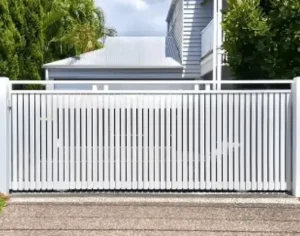
The infill pattern is not a visual choice alone. Openings can be spaced so sightlines pass through the panel, but any gap wide enough for a foothold becomes a climbing aid in an alley or park edge. We look for panels that keep openings below a handhold or foothold threshold while preserving enough visibility for natural surveillance. The goal is a decisive perimeter, not a solid barrier. Urban sites usually need sightline penetration more than total concealment.
Urban Deployment Requirements and Sightline Control
In street facing urban projects, the panel pattern has to work with CCTV coverage, lighting, and public access. A fully closed decorative panel may satisfy privacy expectations but creates a blind zone along a sidewalk or entry court. We prefer an open panel geometry that preserves camera sightlines and still blocks passage, especially near building setbacks and parking entries.
| Condition | Panel fence response | Site check before order |
|---|---|---|
| Street facing boundary | Open pattern that preserves camera sightlines | Confirm camera angles and lighting |
| Pedestrian pinch point | Smooth infill edges and tamper resistant fasteners | Verify post spacing and gate swing |
| Utility corridor | Panelized sections sized for maintenance access | Locate buried services before post setting |
| Residential courtyard | Lower panel face with refined finish | Confirm permit or association height limits |
Post installation is the part most likely to be rushed on an urban timeline. Existing utilities, tree roots, and curb profiles push post centers off the nominal panel module. When the module is broken with a short panel at the end of a run, the visual rhythm collapses. We map the actual post positions before panel fabrication whenever a project runs along a street edge or mixed use frontage.
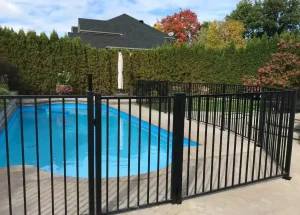
If your installation includes street facing panels, CCTV review, or a mixed pedestrian and vehicle gate, confirm the panel pattern and post centers before locking the panel schedule. Send your site plan to yloongfence@gmail.com and we will check the module against the access layout.
Decofor Panel Fence Finishes for Residential Streetscapes
Residential projects fail approval less often on structure and more often on appearance. The fence has to read as a designed part of the street scene, not a leftover industrial product. Panelized construction can carry this role when the face is clean, the posts are consistent, and the color matches the window frames, gate, or coping lines rather than competing with them.
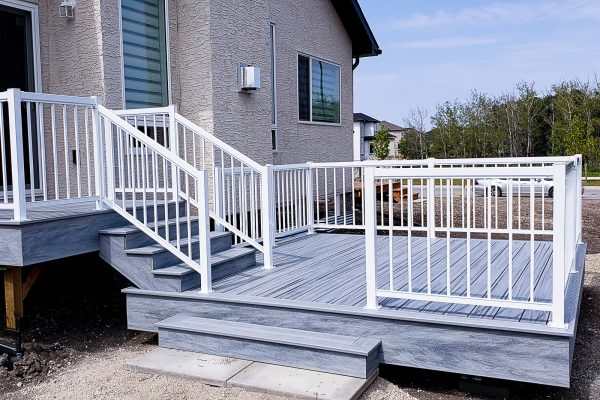
Finish choice drives that perception. A low gloss powder coat in a dark tone reduces visual noise on narrow lots. A light finish widens a small courtyard but shows urban dust more readily. For partial privacy, the panels can be paired with aluminum privacy screens to close selected sightlines without turning the whole frontage into a solid wall. That approach keeps the street presence lighter and gives occupants better control over views from the house to the sidewalk.
Coating Selection and Long Term Corrosion Resistance
The same panel geometry performs differently in a dry inland parking court and a coastal residential street. The coating system, not the visible color alone, decides whether the fence keeps its edge after exposure to acid rain, deicing salts, or marine chlorides. Zinc steel gives a useful strength to cost balance for longer spans, while aluminum is easier to handle and carries strong natural corrosion resistance in most urban conditions.
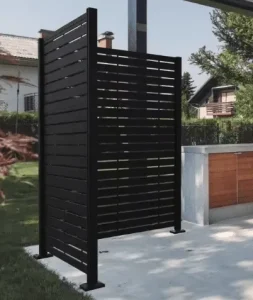
Before accepting any finish, I want the pretreatment confirmed, not assumed. A powder coat applied over poorly prepared steel will fail first at punched holes, cut edges, and welded intersections. We specify a conversion pretreatment before powder on cut edges and welds, because that is where oxidation starts. The visible face often looks perfect while the edge is already lifting. Smooth powder surfaces also shed urban dust during rain, which reduces the dulling effect of traffic film. Buyers should ask for a coating test report and edge condition samples, not only a color swatch.
Decofor Panel Fence Specification Checks That Prevent Rework
Most rework on decorative panel projects comes from undocumented decisions made too early. Post centers do not match the panel module, gate swing conflicts with a wall, or the approved finish sample differs from the final powder batch. These are not supplier failures as often as they are missing specification checks.
Before you finalize the bill of materials, confirm panel height, coating system, post embedment, and gate hardware as one package. Send your site drawings and required panel height to yloongfence@gmail.com or call +8619072006155, and we will check the panel schedule against the selected system. If your installation window is already set, share the timeline and we will confirm stock and lead time against that date.
Common Questions About Specifying Panel Fences
Is a panel fence suitable for high traffic pedestrian areas?
Yes, when the panel infill is selected to prevent climbing and the post fixings are specified for repeated contact. High traffic locations put more vibration into rails and gates than a quiet garden boundary, so the panel to post connection becomes the controlling detail. We also keep edges smooth to avoid clothing snags at narrow walkways. If pedestrian flow is heavy, a wider gate opening or a double leaf gate usually reduces concentrated wear at the latch.
Is decorative panel fencing weaker than standard security mesh?
Not as a rule. Buyers often assume a decorative pattern trades strength for appearance, but security mesh and a Decofor panel fence system can be engineered to similar forced entry resistance. The difference is usually in the fixing method, the post spacing, and the rail connection, not the visual pattern. A decorative panel with a properly fixed rail at the top and bottom behaves more like a framed assembly than an open mesh sheet. The specification matters more than the panel style.
How does the finish hold up in coastal or high pollution urban air?
It depends on the coating system and the substrate. Zinc steel panels in a marine exposure need a high quality pretreatment and powder coat, with particular attention to cut edges and welds. Aluminum carries better natural corrosion resistance in coastal air, but the finish should still be checked for pitting at drilled fixing points. If the project sits close to saltwater, we ask for a salt spray test report and confirm edge coverage before release.
Can gates be matched to the panel system?
In projects we have reviewed, gates are the first point of failure when they are treated as an add on rather than part of the same structural system. The gate frame should match the panel rail section, and the hinge load must be calculated from the actual leaf weight and opening width. For panel fence assemblies, we review swing direction, latch height, and post reinforcement at the same time as panel layout. If your layout includes matched gates, send the opening widths and swing direction to yloongfence@gmail.com and we will confirm hardware compatibility before you order.
If you’re interested, check out these related articles:
Steel Fence Quality Control: Essential Pre-Shipment Checks
Order Custom Aluminum Fencing from China: A Strategic Guide