
Aluminum vs glass vs cable vs steel railing decisions usually turn on corrosion, sight lines, and long-term ownership cost, and after twelve years of specifying architectural metal systems my recommendation is that powder-coated aluminum is the strongest default for most exterior and commercial railings. Glass and cable earn their place when the view is the priority, while steel remains the right call where impact resistance or hardened perimeter thinking controls the specification. The error I see most often is not choosing the wrong material in isolation; it is comparing purchase price instead of installed cost and maintenance over the service life.
What Actually Separates Aluminum, Steel, Glass, and Cable Railings?
Each railing material brings a different failure mode, and that is more useful than a generic strength ranking. Powder-coated aluminum is an extruded structural system, usually 6063-T5 or 6061-T6 alloy, with a polyester or fluoropolymer finish over a chromate or chrome-free pretreatment. The aluminum substrate does not rust, so the finish becomes the first line against coastal salt and industrial fallout. Zinc steel railing depends on hot-dip galvanizing or a multi-layer coating system. It carries higher weight and higher tensile strength, but any scratch that exposes the base steel becomes a corrosion point unless the zinc layer is thick enough to self-heal at the cut edge. Glass railing is a composite assembly: tempered or laminated panels carried in aluminum base shoes, clamps, or point-fixed hardware. The glass itself is not the weak point; the connection and the post stiffness usually govern how much movement reaches the panel. Cable railing relies on Type 316 or Type 304 stainless steel wire under tension, with intermediate posts controlling deflection.
Why aluminum becomes the default exterior choice
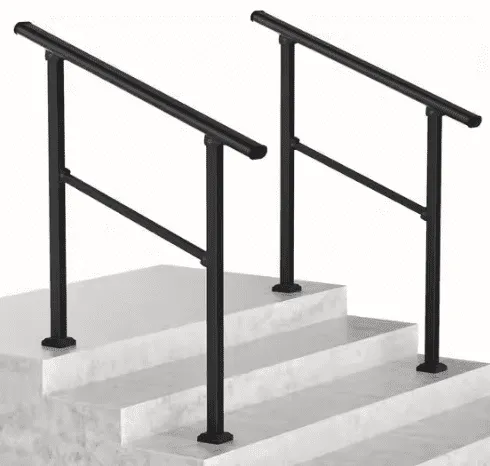
Aluminum stabilizes the maintenance conversation. It can be extruded into integrated handrail profiles, infill channels, and post bodies that eliminate many hidden fasteners. When we review project drawings, aluminum usually reduces the number of dissimilar metal contacts and simplifies the fixing detail at the slab edge. Those are the two places where exterior railing corrosion starts.
How Do Upfront Cost and Long-Term Ownership Compare by Material?
The purchase ranking depends on the region and the system, but the ownership ranking is more stable. Glass carries the highest installed cost in most projects because the panels, lifting, alignment, and connection hardware all move together. Stainless cable and fittings sit in the mid to upper range, especially when Type 316 is specified. Powder-coated aluminum can often be ordered as a pre-assembled panel system, which removes fabrication labor from the install. Zinc steel is frequently the lowest initial metal cost, but the maintenance reserve is larger if the coating is damaged during transport or site cutting.
| Material | Upfront profile | Maintenance expectation | Best fit |
|---|---|---|---|
| Powder-coated aluminum | Moderate; panelized systems reduce field labor | Wash annually; inspect fasteners no painting cycle | Balconies, decks, pool edges, coastal buildings |
| Zinc steel / ornamental steel | Often lowest initial cost | Coating touch-up after cuts and scratches | High-security perimeters, impact areas |
| Glass | Highest installed cost | Panel cleaning; sealant and clamp inspection | View corridors, terraces, penthouse decks |
| Stainless cable | Mid to upper cost | Tension checks; T316 in coastal conditions | Minimal sightlines, modern exteriors |
The decision should not end at initial price. A low-cost steel system with a thin organic coating can require recoating within a few years in saline air, while a fluoropolymer aluminum system may only need cleaning. If the client holds the property for seven years or more, the aluminum and glass approaches often compress the total cost gap.
Which Railing Materials Clear Code and Structural Review?
Code review creates the first elimination, not the final choice. Most residential railing in the U.S. falls under a 36-inch minimum height for guards on level surfaces and 42 inches for commercial and many stair conditions, with a 4-inch sphere rule controlling infill openings. The material only passes when the system holds those dimensions under load and movement. Aluminum extrusions can be designed as structural profiles with internal reinforcement, and the system can meet the same load requirements as lighter steel sections when the post spacing and connection are matched to the span. Glass panels must be tempered or laminated safety glass, and the edge arrangement needs to account for thermal movement so the panel is not loaded as a structural brace. Cable railing has a specific code issue: taut horizontal cables may be treated as climbable infill in some jurisdictions, which limits the application unless the design is modified or local rules permit it.
How post spacing changes the railing selection
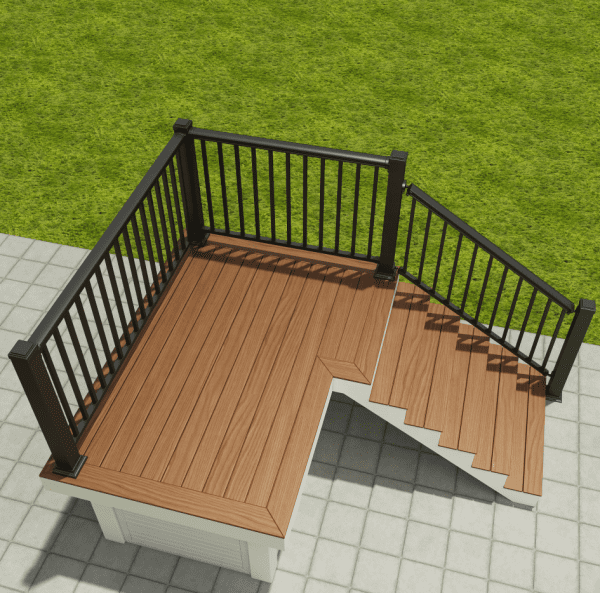
Post spacing is where a material’s true cost appears. Glass railings need closer post centers or heavier base shoes to keep the panel deflection acceptable under wind load. Cable systems need enough intermediate posts to hold the wires parallel; too few and the cables deflect into the opening before tension can resist the load. Aluminum panel systems can often span further because the infill and rail act as one structural unit, but the installer must anchor the end posts correctly or the whole system tests badly in the field.
If your project involves a coastal setback, a high wind zone, or a child-accessible building, it is worth confirming post spacing and material grade before the bill of materials is fixed. Send those conditions to yloongfence@gmail.com and we will check the system against the relevant load path.
How Does Maintenance Behave After Installation?
Maintenance separates materials more than the initial product data. Powder-coated aluminum has no bare-metal touch-up cycle unless the coating is damaged and moisture reaches the substrate. The normal service task is washing with mild detergent and checking that fasteners have not loosened at the concrete interface. I have inspected coastal aluminum railings where a thin polyester finish chalked within three years while the fluoropolymer finish on the same building was still intact; the failure was in the coating selection, not the aluminum. Zinc steel requires a disciplined touch-up routine after field cutting, welding, or transport scratches. If the zinc layer is not restored, rust starts at the cut edge and travels under the coating. Glass maintenance looks simple but concentrates at the hardware: gaskets and clamps need periodic inspection because a failed gasket can let the panel move or create glass-to-metal contact. Stainless cable needs tension verification, especially in the first year, because temperature cycles and cable bedding settle the system. Coastal installations should always use Type 316, not Type 304; I have seen 304 handrails show tea staining at the weld zones within two seasons.
What Should You Confirm Before Finalizing a Railing Spec?
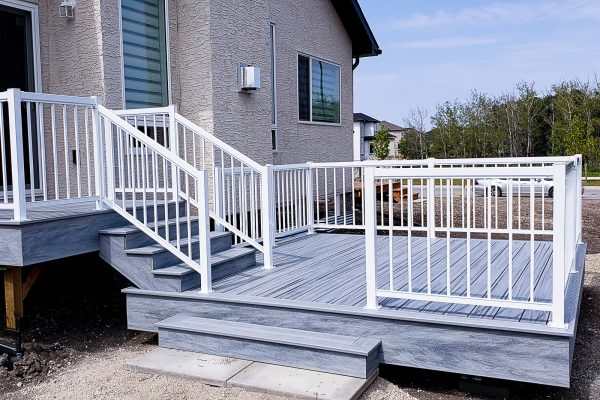
The wrong railing decision rarely comes from a single data sheet. It comes from a specification that compares materials but does not fix the substrate, the post connection, the finish class, or the governing code. A balcony with a narrow slab edge and a glass railing requirement looks different from a rooftop with a point-fixed cable line, and pricing an extruded aluminum panel against a site-welded steel handrail without equalizing those details produces a false comparison. Before you lock the bill of materials, confirm the height and infill rule for the jurisdiction, the post spacing available from the structure, and the coastal or corrosion class of the site.
For a preliminary system check, send the section drawings, material preference, and project quantity to yloongfence@gmail.com or call +8619072006155. If the project does not have a specific view or impact requirement, powder-coated aluminum will usually be the simplest path through cost, code, and maintenance, and a drawing-based review will confirm that position against the actual site conditions. Hubei Yulong supplies aluminum and zinc steel railing systems with factory-controlled surface treatment.
What Else Do Buyers Ask About Railing Materials?
Is powder-coated aluminum strong enough for commercial balconies?
There is a lingering assumption that aluminum is a lightweight residential product, but the structural performance depends on the profile and the wall thickness, not the alloy group alone. A correctly engineered 6061-T6 or 6063-T5 extrusion with internal reinforcing can meet the same guard load requirements as a light steel section. The condition that usually fails is not the aluminum; it is an undersized post embedment or a weak connection at the slab edge. For commercial balconies, the specification should include the post schedule and the connection detail, not just the material name.
Do glass railings need more maintenance than cable systems?
They need different maintenance, not necessarily more of it. Glass requires panel cleaning and periodic inspection of gaskets, clamps, and base shoe drainage. Cable requires tension checks and attention to the threaded fittings and end terminations. In a coastal environment, the glass may look dirty faster, but the cable hardware is more likely to corrode if the wrong stainless grade was selected. We recommend matching the inspection burden to the system, rather than assuming glass is universally higher maintenance.
When should I choose stainless steel over aluminum?
It depends on the exposure condition and the visual objective. If the project uses cable infill, the wires and tension fittings must be stainless steel, and Type 316 is worth specifying near saltwater or industrial fallout. If the railing is a fully infilled panel with a clean view corridor, aluminum is usually the lower-maintenance choice. If the structural environment includes frequent impact, abuse, or a requirement for a higher stiffness-to-section ratio, zinc steel may fit better. The material should follow the failure mode, not a general preference.
Can aluminum railing be customized to match a specific color or profile?
In our production reviews, powder-coated aluminum is the easiest system to adjust because the extrusion die, the cut length, and the coating color are all specified at the factory rather than modified on site. We have adjusted panel widths and bracket positions many times to match existing slab edge conditions. The profile and the color should be confirmed early, because die changes and powder coating batches influence lead time. Share your section details and finish requirement to yloongfence@gmail.com and we will confirm the fabrication approach before you order.
If you’re interested, check out these related articles:
High-Security Steel Fencing: Protecting Government & Military Assets
Paint & Maintain Ornamental Steel & Wrought Iron Fences
Stainless Steel Vertical Cable Railing: Design, Specs, & Factory Pricing Guide