
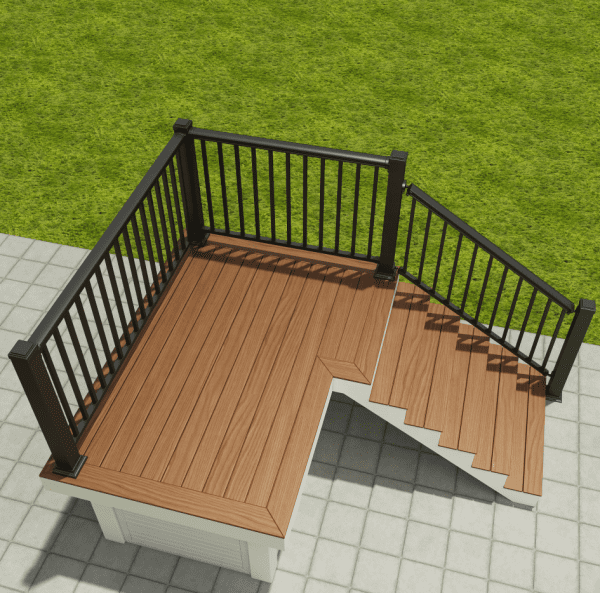
Aluminum deck railing kits promise a faster, simpler installation, but not all kits deliver the same structural reliability. From my twelve years working with architectural metal products, I’ve seen how subtle differences in alloy selection, post connection design, and surface treatment can determine whether a railing system stays tight and corrosion-free through years of weather and human loads. This article examines the engineering factors that separate a dependable kit from one that creates future headaches, so you can ask the right questions before ordering.
What Does a Complete Aluminum Deck Railing Kit Include?
A fully specified kit eliminates guesswork and multiple supplier orders. The basic package should contain extruded aluminum top and bottom rails, vertical balusters or infill panels, structural corner and end posts, mounting base plates or core-drill brackets, all stainless steel fasteners, end caps or trim pieces, and a printed installation manual with a bill of materials. Kits that also include pre-punched rail holes and pre-cut baluster lengths save the installer several hours of layout and trimming work.
Missing components are the most common frustration I hear from contractors. A kit that arrives without post base covers or touch-up paint forces the builder to stop and source parts, eating into the labor budget that a kit was supposed to reduce. Before you pay, ask the supplier for a photograph of the actual kit layout, not a catalog illustration, and confirm that every listed part number is present.
Why Do Alloy Grade and Surface Treatment Matter?
Aluminum railing extrusions are most often produced in 6063‑T5 or 6061‑T6 alloy. The table below shows the practical effect of that choice for a deck application.
| Property | 6063-T5 | 6061-T6 |
|---|---|---|
| Yield strength | 145 MPa minimum | 240 MPa minimum |
| Typical use | Residential railings, light‑duty profiles | Commercial and high‑traffic decks, heavy‑section posts |
| Extrusion shape complexity | Higher — allows intricate profiles | Lower — limited to simpler, thicker sections |
| Corrosion resistance | Excellent, sufficient for most outdoor settings | Good, but 6063‑T5 is the standard choice for architectural exposures |
For most single‑family decks, 6063‑T5 provides more than enough strength while giving the design freedom to create slim, attractive baluster profiles. Commercial projects or decks subject to heavy wind or public crowds are where the jump to 6061‑T6 pays off.
The coating is equally critical. A polyester powder coat cured to a minimum 60‑micron thickness will resist chalking and fading for well over a decade in temperate climates. Coastal or high‑UV sites benefit from a fluoropolymer‑based powder, which can add years of color retention. The number on the spec sheet matters less than the cure schedule behind it — a coating cured at the correct temperature for the specified dwell time forms a cross‑linked polymer network that under‑cured material never catches up to. If your deck faces saltwater, confirming the coating’s salt‑spray test hours is not optional. When you order, request the ASTM B117 report for the exact coating batch. You can verify these specifications directly with our engineering team at sales01@yulongkeji-ch.com.
Which Connection Methods Make Installation Simpler?
The way a post anchors to the deck determines how much of the installation can be done with standard tools and how much requires a skilled carpenter. Three common approaches exist.
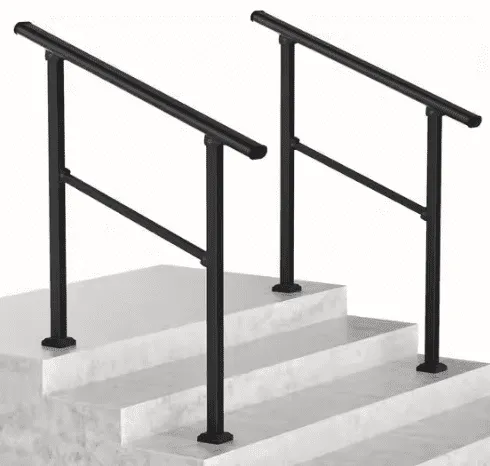
Surface‑mount base plates bolt directly onto a solid deck surface using lag screws or through‑bolts. This is the fastest method when the deck is level and the blocking is already in place. Core‑drilling the deck surface and setting the post in a sleeve creates a cleaner look but demands precise drilling and waterproofing. Adjustable brackets, where the post sits in a shoe that allows for tilt and rotation, handle the real‑world reality that no deck is perfectly flat.
In our experience, adjustable post brackets with integrated leveling screws reduce alignment time by more than half compared to fixed‑angle plates. That is a small engineering detail with a direct labor cost impact. We also see fewer call‑backs on decks built with adjustable shoes because seasonal wood movement does not transfer stress into the aluminum post.
Pre‑assembled panel sections, where balusters are already fixed to the top and bottom rails, further simplify the job. Picking up an assembled section, dropping it into the post brackets, and tightening a few set screws is work one person can complete over a weekend.
How Do You Meet Building Codes Without Guesswork?
Residential deck railings in the United States must comply with the International Residential Code or the locally adopted version. The basic requirements are familiar to most contractors, but the enforcement details are where mistakes happen.
Guardrail height must be at least 36 inches above the deck surface. Any opening between balusters, or between the bottom rail and the deck, must not allow a 4‑inch sphere to pass through. The completed system must resist a 200‑pound concentrated load applied in any direction at the top rail without permanent deformation or fastener pull‑out. Commercial decks raise the height requirement to 42 inches, and some jurisdictions add a 50‑pound‑per‑linear‑foot uniform load test.
A trustworthy aluminum railing kit supplier provides a code compliance data sheet that references the specific ASTM E985 test standard. That sheet should list the permitted post spacing, baluster spacing, and the fastener torque values used during the certification test. If the supplier hesitates to share this document, treat it as a red flag. No amount of installation skill can compensate for a railing that was never engineered to the code in the first place.
What Questions Should You Ask to Verify Quality?
Start with the metallurgy. Ask for the mill certification that shows the alloy designation and heat treatment condition. “Aluminum 6063” is not enough; it must read “6063‑T5” or the equivalent, and the certificate should match the heat number stamped on the extrusions.
Move to the coating. Request the cure oven chart for the production lot or, at minimum, the independent lab report for coating thickness and adhesion. A cross‑hatch adhesion test result of 5B is the benchmark for exterior powder coating.
Hardware grade is the third checkpoint. 304 stainless steel handles most inland environments. For decks within five miles of breaking surf, switch to 316 stainless to avoid the pitting corrosion that will seize the fasteners long before the aluminum shows any sign of age.
Finally, ask what happens if a part is damaged in transit. A supplier that stocks spare components and can ship a replacement bracket within 48 hours shows the operational depth you need on a construction schedule.
How to Start Your Deck Railing Project with Confidence
Choosing an aluminum deck railing kit means trusting that every component — the alloy in the top rail, the stainless grub screw in the bracket, the polymer network in the powder coat — was engineered to work together. The most common frustration I hear from project owners and contractors is discovering a missing bracket or an undersized post three days into installation. Avoiding that starts with requesting a complete bill of materials and the code compliance data sheet before you pay.
To discuss your specific deck elevation, post layout, or coastal exposure requirements, email your project details to sales01@yulongkeji-ch.com or call +8619086315193. Include the rough deck dimensions and post spacing you are planning, and we will return a verified component list and current lead time.
Common Questions From Deck Railing Buyers
What exactly should a complete kit include?
A complete kit should contain everything except the installation tools. You should receive top and bottom rails, balusters, posts, mounting brackets with stainless steel screws, post caps or trim covers, and a printed installation guide. If any of these are missing from the packing list, the supplier has cut corners.
Is a thicker powder coating always more durable?
Not necessarily. A properly cured 60‑micron polyester coating that has passed a standardized adhesion test will outlast a 100‑micron coating that was cured too quickly. Coating performance depends more on cure temperature and dwell time than on thickness alone. Ask the supplier for the bake schedule, not just the final mil reading.
Should I use 304 or 316 stainless hardware?
It depends on your distance from saltwater. For decks more than five miles from the coast, 304 stainless fasteners are adequate and cost‑effective. Within five miles of breaking surf, road salt, or industrial fallout, 316 stainless is the minimum to prevent pitting and seizing.
What is the most common installation mistake with these kits?
In the projects we have supported, the single most common error is misaligning post brackets on a sloping or uneven deck surface. Using a laser level and adjustable brackets from the first layout line saves hours of rework later. Spending an extra hour on accurate layout before drilling any holes always pays off.
Are welded railing joints stronger than mechanically assembled ones?
What most people really want to know is how the joint performs under repeated thermal cycles and live loads. A mechanically assembled connection with properly torqued 316 stainless fasteners distributes stress without the heat‑affected zone weakness that can appear near welds. For residential decks, both methods can meet code; the deciding factor is usually whether you need field‑adjustability during installation. If your project involves poolside salt spray or high‑wind zones, share your conditions with our team and we can confirm the appropriate structural hardware specification — reach out at sales01@yulongkeji-ch.com.
If you’re interested, check out these related articles:
Best Aluminum Fence Styles for Residential Gardens in 2025
Aluminum Gate Hardware: Hinges, Latches, and Lasting Security
Assembled vs Welded Aluminum Gates: Performance, Cost, & Use Cases
Steel Fence vs Wrought Iron: Modern Options for Durable Fencing
Stainless Steel Vertical Cable Railing: Design, Specs, & Factory Pricing Guide