
3D wire mesh fence panels are not a decorative screen. They are a welded steel perimeter system whose security value depends on panel profile, wire diameter, mesh opening, and post stiffness. Most buyers look first at panel height, but height alone does not make a boundary secure. The more reliable specification is built from the inside out: heavier wire, a smaller mesh, and posts that will not twist under load. In the commercial perimeter audits I have worked on, panels usually survive while posts or coatings fail first. That observation changes how a buyer should write the specification and where they should put the inspection effort.
3D Wire Mesh Fence Panels Combine Visibility With a Hard Boundary
A 3D wire mesh fence panel is a welded steel panel with horizontal V-shaped ribs pressed into the face. The ribs create stiffness across a wider span, which lets a panel use thinner wire than a flat mesh while still resisting bending. Typical commercial panels run 2,400 mm to 2,500 mm wide and 1,200 mm to 2,400 mm high, with mesh openings in the 50 mm by 200 mm range. The panel attaches to square or rectangular posts with clamp brackets, which makes a run of fence a structural system rather than a stretched fabric. That matters when a fence has to hold its line after impact.
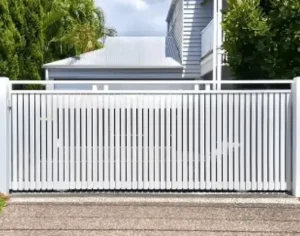
A 3D Wire Mesh Panel’s Profile, Mesh Size, and Coating Set Security Level
Security performance is not produced by the coating color. It starts with wire diameter and mesh geometry. A panel made from 3.0 mm wire will bend under a heavy boot or a crowbar much earlier than one made from 4.0 mm or 5.0 mm wire. The V-rib depth also changes stiffness: a shallow rib saves material but reduces the panel’s resistance to bending between posts. For industrial perimeters, I usually move buyers to a smaller vertical spacing, such as 50 mm by 50 mm or 50 mm by 100 mm, when toe-hold or tool-entry resistance is part of the requirement.
| Security Level | Wire Diameter | Mesh Opening | Typical Use |
|---|---|---|---|
| Entry commercial | 3.0 mm | 50 mm by 200 mm | parking and landscape boundaries |
| General industrial | 3.5 mm | 50 mm by 150 mm | warehouse yards and loading areas |
| Higher security | 4.0 mm | 50 mm by 100 mm | utility and logistics perimeters |
| Maximum resistance | 5.0 mm | 50 mm by 50 mm | high-risk compounds and substations |
Coating is the second failure point. Hot-dip galvanizing to EN 10244-2 gives a zinc layer that protects the cut edges and weld zones, which are the places where rust starts on a welded panel. A polyester powder coat over the galvanized layer adds ultraviolet and color stability, but it cannot replace zinc mass. In humid or coastal industrial sites, I ask for both hot-dip galvanizing and a minimum powder coat thickness rather than accepting a zinc-only or paint-only panel.
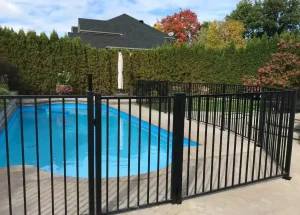
Commercial Sites Need a Deliberate Height and Post Selection
A two-meter panel is not automatically a two-meter security barrier. The post system does the work at the foundation. For a 2,000 mm high panel, a 60 mm by 40 mm rectangular post at 2,500 mm spacing is a common starting point, but a site with strong wind or a known climbing risk may need an 80 mm by 40 mm post or shorter spacing. Posts should be set in concrete piers or driven into prepared ground, with base plates used only where the slab has been checked for edge distance and pull-out. If the panel is tall and the post is too small, the whole run can lean within months.
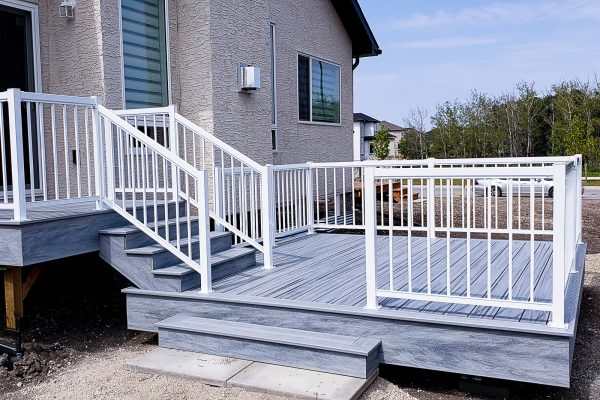
Installation Errors Weaken a 3D Wire Mesh Fence Line
I have seen a warehouse perimeter fail a security review not because the panel was weak, but because the installers reused undersized concrete piers and left the bracket bolts only hand-tight. Wind load worked each bolt loose over a season, and the panels began to rattle against the posts. The fix required lifting every panel, replacing the hardware, and re-setting the end posts. On another project, a distribution yard specified 3.0 mm wire for a perimeter that backed onto a public lane. Thieves peeled open a section with a crowbar in under two minutes. The replacement used 4.0 mm wire with a 50 mm by 100 mm mesh and anti-climb extensions over the gates, and the break-in attempts stopped.
The installation errors that repeat most often are easy to inspect: posts out of vertical, bracket bolts without locking washers, missing tension at the end posts, and panels installed with the V-ribs facing the wrong direction. None of these defects show up in a photo of the finished fence, but all of them shorten its service life. A written installation check should list post depth, concrete pier diameter, bolt torque, and panel alignment before the supplier closes the order.
If your project includes coastal salt exposure or a known cutting threat, the wire diameter and zinc coating mass deserve a written confirmation before the order is finalized. Send your site conditions and the required delay time to sales01@yulongkeji-ch.com.
A Factory Order Should Start With a Written Specification
Most quoting errors happen when a buyer sends only a photo and a height. The panel height may be correct, but the wire diameter, mesh opening, post section, coating system, and gate hardware are still unresolved. A factory direct order works better when the inquiry includes those five details plus linear meters, corner count, and site exposure. That way the quote covers the system that will actually stand on the site, not just the lowest panel price.
Send the wire diameter, mesh opening, panel height, post section, coating, linear meter quantity, and a simple site drawing to sales01@yulongkeji-ch.com or call +8619086315193. Hubei Yulong will check the specification against your security requirement and confirm the stock and production lead time.
Commercial Buyers Often Ask These Questions Before Ordering
What is the difference between 3D wire mesh panels and standard chain link fence?
A 3D wire mesh panel carries its strength in the pressed V-shaped ribs, so it resists bending across a wide span. Chain link relies on post spacing, tension wire, and fabric tightness. The panel system usually looks cleaner, keeps its line better, and is harder to peel open when the wire diameter is adequate. Chain link is lighter and more flexible, but it can be defeated more easily with hand tools unless it is reinforced. For commercial perimeters, I recommend 3D panels when the requirement includes a maintained boundary line and a modern appearance, and chain link only when budget or uneven terrain is the controlling factor.
Which coating stands up better in coastal or humid industrial areas?
A common assumption is that colored powder coat is the main corrosion barrier. It is not. The zinc layer underneath does the protection, and a polyester topcoat adds weathering and color control. In coastal or humid industrial sites, I specify hot-dip galvanizing to EN 10244-2 followed by a polyester powder coat, and I ask for the zinc coating mass rather than the paint thickness. That combination protects the cut edges and welds better than a zinc-only panel, and it keeps the appearance stable longer than paint over a thin zinc layer.
What panel height do commercial and industrial sites actually need?
The answer depends on whether the fence is controlling access, delaying a climber, or both. A 1,800 mm panel works for a controlled-access boundary with lighting and patrols. A 2,000 mm to 2,400 mm panel makes more sense for a perimeter that faces a public road or an unstaffed area. I would only go below 2,000 mm when the site has continuous surveillance. If a security review requires delay rather than deterrence, the height should be paired with a smaller mesh and a heavier post system.
Can 3D wire mesh panels work with cameras and detection systems?
The better question is which geometry creates fewer false alarms and fewer blind zones. A 3D panel with a 50 mm by 200 mm opening gives good sight lines while still presenting a hard face. The panel can carry cable ties, brackets, and detection hardware, but the post spacing and stiffness matter more than the panel itself. If the sensor detects vibration, the fence must not rattle in the wind. That means the bracket bolts and post foundations have to be designed for the sensor’s threshold.
How do I specify the correct post size for a large order?
In perimeter surveys we have supported, the most frequent mismatch is a tall panel on an undersized post. That creates a leaning line after one or two wind seasons. For most 2,000 mm to 2,400 mm panels, a 60 mm by 40 mm rectangular post at 2,500 mm spacing is adequate, but I would not use that post for a 2,400 mm panel in an open, windy site. The correct check is simple: state the panel height, maximum wind exposure, and corner count, then compare the post section and foundation against the panel’s wind load rather than against a catalog photo.
Send your panel height, wind exposure, and site drawing to sales01@yulongkeji-ch.com and we’ll confirm the post section and spacing for your perimeter.
If you’re interested, check out these related articles:
Wholesale Steel Garden Fence Panels: Distributor Pricing & Supply
Aluminum Gate Hardware: Hinges, Latches, and Lasting Security
Source Steel Fencing from China: An Expert Import Guide
Freestanding Outdoor Privacy Screens: Patio & Balcony Solutions